Guinea pigs have one nutritional need that surprises many new owners. Like people, they can’t make their own vitamin C. Without a steady daily supply, they can develop a serious deficiency in just a couple of weeks. This guide explains why vitamin C for guinea pigs is so important, how much they need and the easiest ways to provide it.
Quick Answer: Guinea pigs lack the enzyme needed to make vitamin C, so it must come from their diet every day. Most adult guinea pigs need about 10–30 mg per day, and more when pregnant, young or sick. Fresh vegetables like bell peppers, plus a fresh guinea pig pellet, are the best sources.
Why Guinea Pigs Need Vitamin C
Most mammals make vitamin C in the liver. Guinea pigs, along with humans and a few other species, lost that ability. Vitamin C helps the body make collagen, which holds together skin, joints, blood vessels and gums. It also supports the immune system and wound healing.
When guinea pigs don’t get enough, they develop scurvy. Our article on scurvy in guinea pigs covers the signs and treatment in detail.
How Much Vitamin C Do Guinea Pigs Need?
The Merck Veterinary Manual notes that guinea pigs need a dietary source of vitamin C daily. Common recommendations are:
| Guinea pig | Approximate daily vitamin C |
|---|---|
| Healthy adult | 10–30 mg |
| Pregnant or nursing | 30–50 mg |
| Young, growing | Toward the higher end of the adult range |
| Sick or recovering | Often higher; ask your vet |
Your vet can give a precise amount based on your guinea pig’s weight and health.
The Best Food Sources
Fresh vegetables are the most reliable natural source. Good options include:
| Food (about 1/4 cup) | Vitamin C level |
|---|---|
| Red or yellow bell pepper | Very high |
| Green bell pepper | High |
| Kale | High (feed in moderation due to calcium) |
| Parsley | High (feed in moderation due to calcium) |
| Broccoli | High |
| Romaine lettuce | Moderate |
| Strawberries | Moderate (occasional treat due to sugar) |
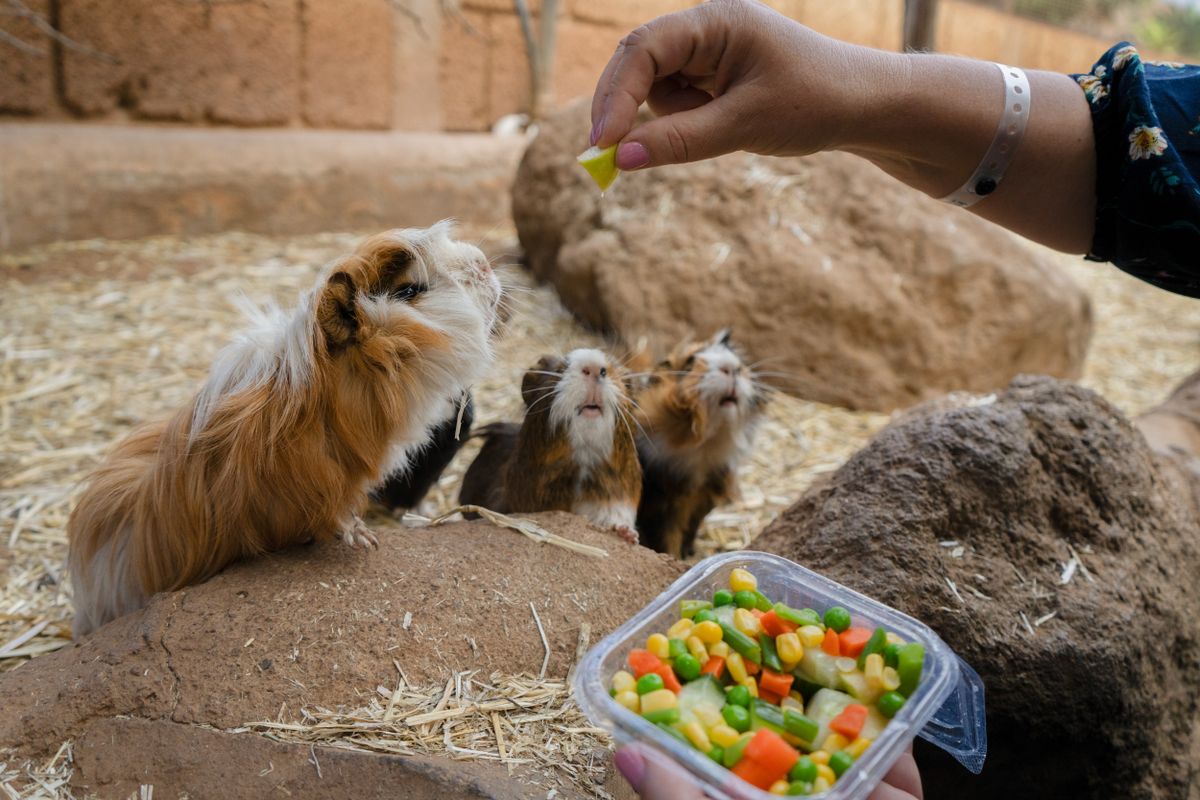
A daily mix of about one cup of fresh vegetables for an adult guinea pig, with bell pepper included most days, usually covers needs alongside fresh pellets.
Pellets: Check the Date
Many guinea pig pellets are fortified with vitamin C. However, vitamin C breaks down over time, especially with heat, light and moisture. Pellets can lose much of their vitamin C within about 90 days of being made.
Tips for pellets:
- Buy pellets made specifically for guinea pigs, not rabbits.
- Choose a brand that uses stabilized vitamin C.
- Check the milling or “best by” date.
- Store pellets in a cool, dark, airtight container.
- Buy smaller bags you’ll use within a couple of months.
Do Guinea Pigs Need Vitamin C Supplements?
Most healthy guinea pigs on a good diet don’t need extra supplements. Your vet may recommend one if your guinea pig is sick, pregnant, a picky eater or showing signs of deficiency.
Avoid vitamin C drops in water
Drops added to the water bottle aren’t recommended by many vets. Vitamin C breaks down quickly in water, so the dose is unreliable. Some guinea pigs also drink less if the water tastes different, which can cause dehydration.
Chewable tablets
If your vet recommends a supplement, a chewable guinea pig vitamin C tablet or a measured liquid given by mouth is more reliable.
Signs of Too Little Vitamin C
Watch for:
- Reluctance to move or a stiff, hunched posture
- Swollen or painful joints
- Rough coat or hair loss
- Bleeding gums or bruising
- Poor appetite and weight loss
- Diarrhea
- Slow wound healing
These signs can appear within 2 weeks of a vitamin C-deficient diet.
Can Guinea Pigs Get Too Much Vitamin C?
Vitamin C is water-soluble, so excess is usually passed in urine. Very high long-term doses may contribute to urinary stones in some animals, so it’s best not to give large supplement doses without your vet’s advice.
A Sample Daily Vitamin C Plan
- Unlimited grass hay, such as timothy, for fiber.
- About 1/8 cup of fresh guinea pig pellets per adult.
- About one cup of mixed vegetables, including a slice of bell pepper.
- Fresh water in a clean bottle or bowl.
Rotate vegetables through the week for variety. See our guide to guinea pig cage setup for help organizing feeding areas.
When to Call Your Vet
Book a vet visit soon if your guinea pig:
- Seems stiff, sore or reluctant to move
- Has a rough coat or is losing weight
- Is eating less than usual
Get care the same day if your guinea pig:
- Hasn’t eaten in 12 hours
- Has bleeding gums or blood in the urine
- Can’t walk normally
Frequently Asked Questions
Can I give my guinea pig orange juice?
No. Juice is too sugary and acidic. Fresh bell pepper is a better daily vitamin C source.
Do all guinea pig pellets have vitamin C?
Most do, but levels drop as the bag ages. Check dates and storage, and always offer fresh vegetables too.
Are human vitamin C tablets safe for guinea pigs?
Don’t use them without your vet’s guidance. Many contain sweeteners or other ingredients, and the dose is often far too high.
This article is for general information only and isn’t a substitute for professional veterinary advice. If you’re worried about your pet’s health, contact your veterinarian or an emergency animal hospital.