“No hoof, no horse” is one of the oldest sayings in the horse world, and it’s still true. Healthy hooves keep your horse sound, comfortable and able to work. Most hoof problems are preventable with daily care, regular farrier visits and good management. Here’s a guide to hoof care basics, including thrush and abscesses.
Key Takeaways:
- Pick out hooves daily and check for heat, odor and stones.
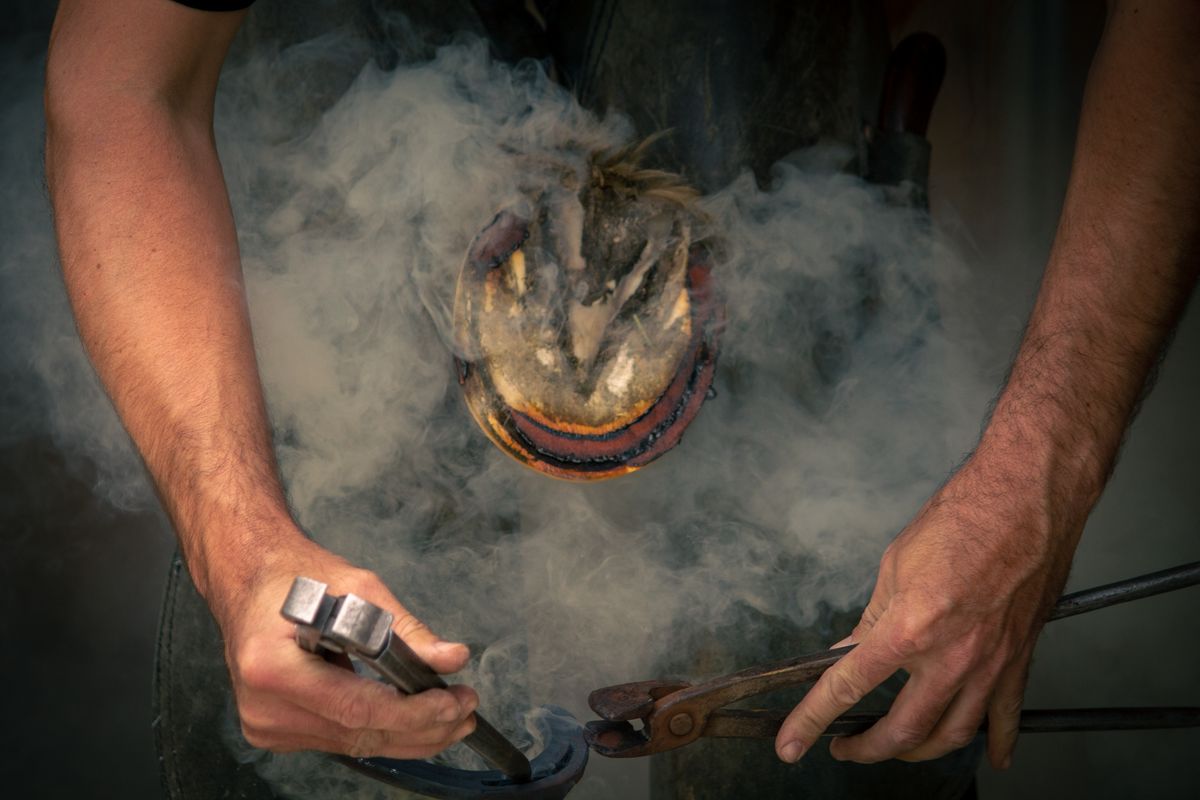
- Most horses need a trim or reset every 4 to 8 weeks.
- Thrush causes black, smelly discharge in the frog grooves.
- A sudden, severe lameness on one foot is often a hoof abscess.
Parts of the Hoof
| Part | Role |
|---|---|
| Hoof wall | Bears weight and protects inner structures |
| Sole | The underside; should be slightly concave |
| Frog | V-shaped pad that absorbs shock and helps circulation |
| White line | Where the wall meets the sole |
| Coronary band | Where the hoof wall grows from |
| Heel bulbs | Soft tissue at the back of the foot |
The hoof wall grows about 1/4 to 3/8 inch (6–10 mm) per month, so a full new hoof takes about a year to grow.
Daily Hoof Care Routine
- Pick out each hoof from heel to toe, staying clear of the frog’s sensitive areas.
- Check for stones, nails or debris.
- Smell for odor, which can signal thrush.
- Feel for heat in the hoof wall compared with other feet.
- Check the digital pulse at the back of the fetlock. A strong, bounding pulse can signal inflammation, such as laminitis.
- Look for cracks, chips or loose shoes.
Farrier Schedule
| Situation | Typical interval |
|---|---|
| Barefoot horses | Every 4–8 weeks |
| Shod horses | Every 5–8 weeks |
| Horses with hoof problems | As advised by your vet and farrier |
| Fast hoof growth (summer, young horses) | May need shorter intervals |
Waiting too long can lead to long toes, under-run heels and extra strain on tendons.
The Merck Veterinary Manual recommends regular trimming and daily foot care for all horses.
Thrush
Thrush is a bacterial infection of the frog, often in wet, dirty conditions.
Signs:
- Black, tar-like discharge in the grooves of the frog
- Strong, foul odor
- Soft, crumbly frog tissue
- Sensitivity or lameness in severe cases
Treatment:
- Clean and dry the hoof daily.
- Use a thrush treatment recommended by your vet or farrier.
- Trim away diseased tissue (farrier).
- Improve living conditions with dry footing and clean stalls.
Hoof Abscesses
A hoof abscess is a pocket of infection inside the hoof. Pressure builds up and causes sudden, severe pain.
Signs:
- Sudden, severe lameness, often on one foot, sometimes barely bearing weight
- Heat in the hoof
- Strong digital pulse
- Swelling up the leg in some cases
Treatment:
- Your vet or farrier finds and drains the abscess.
- Soaking in warm water with Epsom salts and poulticing as directed
- Protective bandaging or a hoof boot
- Pain relief as prescribed
Most horses feel much better within a day or two of drainage.
Other Common Hoof Problems
- Cracks: from dry or overly long hooves
- White line disease: a separation of the hoof wall
- Bruises: from rocky ground
- Laminitis: a serious emergency
- Navicular syndrome: heel pain and lameness
Supporting Healthy Hooves
- Balanced diet: good forage plus a ration balancer if needed. Biotin supplements may help some horses with poor hooves.
- Dry, clean footing: avoid constant mud and wet stalls.
- Regular exercise: movement improves circulation to the foot.
- Healthy weight: see body condition scoring for horses.
When to Call Your Vet
Call promptly if your horse:
- Is suddenly very lame
- Has a nail or object stuck in the foot (don’t remove deep punctures without vet guidance)
- Has heat and a strong pulse in more than one foot
- Has swelling above the hoof
Book a visit or farrier appointment if:
- You see cracks, thrush or uneven wear
Frequently Asked Questions
Should my horse wear shoes?
It depends on workload, terrain and hoof quality. Many horses do well barefoot; others need shoes or boots.
How long does an abscess take to heal?
Many improve within days of drainage, but full healing and hoof growth take weeks.
Can I treat thrush myself?
Mild thrush often responds to daily cleaning and a thrush product. Deep or persistent thrush needs your farrier and vet.
How do I find a good farrier?
Ask your vet and local horse owners for recommendations, and look for certification and experience.
Do hooves grow faster in summer?
Yes. Hoof growth often speeds up in warm weather and with good nutrition, which may mean shorter farrier intervals.
This article is for general information only and isn’t a substitute for professional veterinary advice. If you’re worried about your pet’s health, contact your veterinarian or an emergency animal hospital.