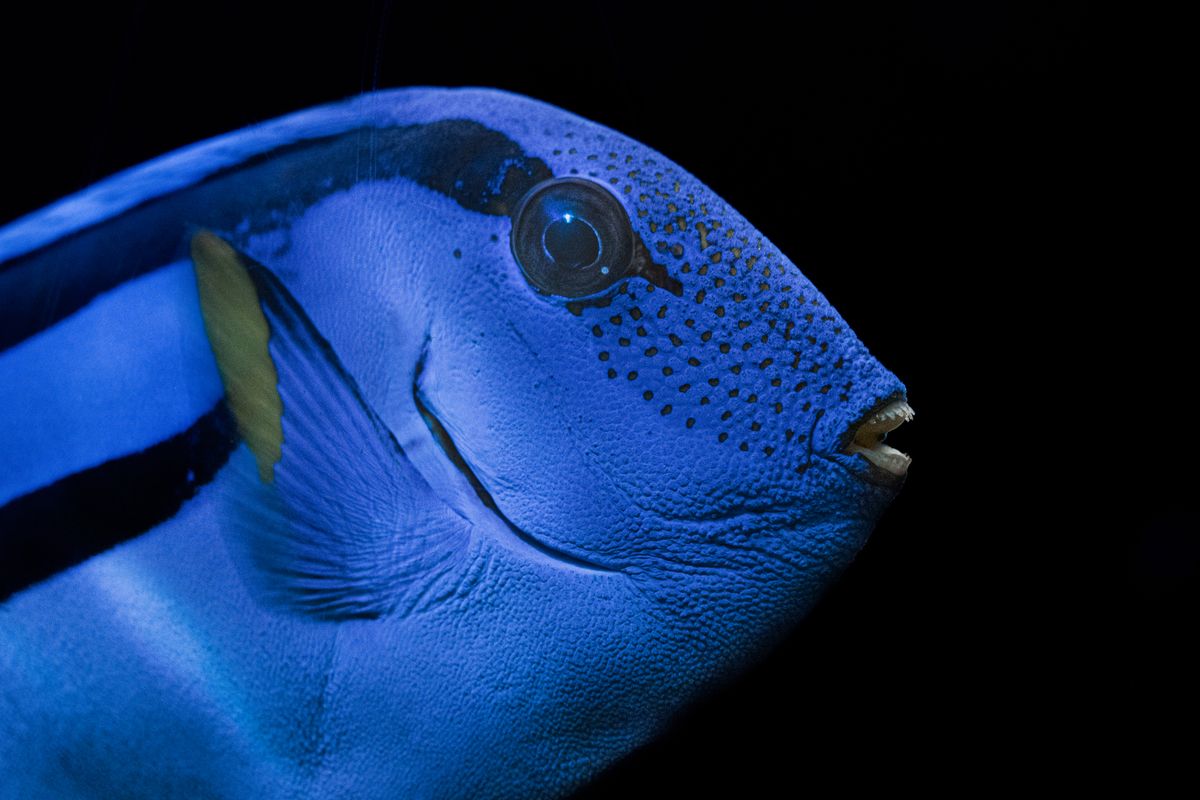
Tangs, also called surgeonfish, are among the most popular and colorful saltwater fish. Think of the blue hippo tang or the bright yellow tang. But they’re active swimmers that need large tanks and a diet rich in algae. This tang care guide covers what these fish need to thrive.
Quick Answer: Most tangs need large tanks, often 75 to 125 gallons or more, with plenty of open swimming space. They’re grazers that need marine algae daily. Tangs can be aggressive toward other tangs and are prone to marine ich and lateral line erosion. Quarantine them carefully and keep water quality high.
Popular Tang Species
| Species | Adult size | Suggested minimum tank | Notes |
|---|---|---|---|
| Yellow tang | 7–8 in (18–20 cm) | 75–100 gal | Hardy; can be territorial |
| Blue hippo tang | 10–12 in (25–30 cm) | 125+ gal | Prone to ich; skittish |
| Kole (yellow-eye) tang | 6–7 in (15–18 cm) | 75 gal | Peaceful algae grazer |
| Purple tang | 8–10 in (20–25 cm) | 100+ gal | Can be aggressive |
| Powder blue tang | 9 in (23 cm) | 125+ gal | Sensitive; not for beginners |
| Naso tang | 18 in (45 cm) | 180+ gal | Very large; needs huge tank |
Sizes and tank recommendations vary among experts. When in doubt, go bigger.
Why Tangs Need Big Tanks
Tangs swim constantly in the wild, covering large areas of reef. In small tanks, they can become stressed and aggressive. Stress also makes them more vulnerable to disease. Long, wide tanks are better than tall ones.
Feeding Tangs
Tangs are herbivores and grazers.
- Marine algae sheets (nori), clipped to the glass daily
- Spirulina-based pellets and flakes
- Frozen herbivore blends
- Some meaty foods, like mysis, for balance (especially for hippo tangs, which eat more plankton)
Offer algae throughout the day. See what to feed saltwater fish.
Tank Mates and Aggression
- Tangs are often aggressive toward other tangs, especially similar shapes or colors.
- Adding multiple tangs works best in very large tanks, added at the same time.
- Most tangs are peaceful with other fish families. See peaceful saltwater community fish.
- Tangs have sharp spines near the tail. Handle with care.
Common Health Problems
Marine ich
Tangs are famous “ich magnets.” Quarantine every tang before adding it to your display. See marine ich and quarantine new saltwater fish.
Head and lateral line erosion (HLLE)
HLLE causes pitting along the head and side. Causes aren’t fully understood, but poor diet, stray voltage and activated carbon dust have been suggested. A varied, algae-rich diet and good water quality may help.
Malnutrition
Tangs fed only meaty foods can lose color and condition.
The Merck Veterinary Manual notes that nutrition and water quality strongly influence disease in marine fish.
Signs of a Healthy Tang
- Bright, even color
- Full, rounded body, not pinched behind the head
- Active swimming
- Eating eagerly
Tips for Success
- Choose species suited to your tank size.
- Quarantine for at least 4 weeks.
- Feed algae daily.
- Keep stable water parameters. See saltwater tank water parameters.
- Add tangs last to reduce aggression toward new fish.
When to Get Help
Contact an aquatic vet or experienced fish store if your tang:
- Has white spots or a dusty coating
- Is breathing quickly
- Stops eating or looks thin
- Develops pitting on the head
Frequently Asked Questions
Are tangs reef safe?
Most tangs are considered reef-safe and help control algae. Some may nip at certain corals.
Can I keep a tang in a 55-gallon tank?
Most tangs outgrow a 55-gallon tank. Smaller species like the kole tang may suit tanks around 75 gallons.
Why is my tang so aggressive?
Tangs defend territory and food. Crowded tanks, similar-looking fish and new arrivals can trigger aggression.
Do tangs eat hair algae?
Many do, especially yellow, kole and bristletooth tangs.
How long do tangs live?
Many tangs live 10 years or more in well-maintained aquariums, and some much longer.
Can a tang live with a clownfish?
Yes. Tangs and clownfish are common, compatible tank mates when the tank is large enough.
What does a pinched stomach mean?
A sunken area behind the head or belly often means the tang isn’t getting enough food or has internal parasites. Increase feeding and talk to an aquatic vet.
Should I buy a small tang to grow out?
Small tangs still grow quickly. Only buy one if you already have, or will soon have, a tank big enough for its adult size.
How do I acclimate a new tang?
Float the bag to match temperature, then slowly drip or add tank water over 30 to 60 minutes before moving the fish with a net. Keep lights dim for the first day.
This article is for general information only and isn’t a substitute for professional veterinary advice. If you’re worried about your pet’s health, contact your veterinarian or an emergency animal hospital.