Your dog is pacing, drooling and trying to vomit, but nothing comes up. Their belly looks bigger than it did an hour ago. These are classic signs of bloat in dogs, and they need a vet right away. This guide explains what bloat is, which dogs are most at risk, what to do in an emergency, and how to lower your dog’s risk.
Quick Answer: Bloat, or gastric dilatation-volvulus (GDV), happens when a dog’s stomach fills with gas and then twists. It cuts off blood flow and can kill a dog within hours. If your dog is retching without bringing anything up and has a swollen belly, go to an emergency vet now. Don’t wait to see if it passes.
What Is Bloat in Dogs?
Vets use two terms. Gastric dilatation means the stomach swells with gas, fluid or food. Volvulus means the swollen stomach rotates on itself. Together they’re called gastric dilatation-volvulus, or GDV.
Once the stomach twists, gas can’t escape through the mouth or intestines. The swollen stomach presses on major blood vessels, so less blood returns to the heart. This leads to shock. Parts of the stomach wall and spleen can also lose their blood supply and start to die.
Even with fast surgery, the Merck Veterinary Manual reports that roughly 1 in 4 to 1 in 5 treated dogs don’t survive. Dogs that reach the vet sooner do better. Signs lasting more than 6 hours before treatment is one of the factors linked to a worse outcome.
Signs of Bloat in Dogs
Bloat often starts suddenly, sometimes a few hours after a meal. Watch for:
- Retching or trying to vomit with little or nothing coming up. This is the most telling sign.
- A swollen, tight belly, especially just behind the ribs. It may sound hollow if tapped.
- Restlessness, pacing, or being unable to settle or lie down.
- Heavy drooling.
- Looking at or guarding their belly, or crying when it’s touched.
- Fast or labored breathing.
- Pale gums, weakness or collapse. These are signs of shock.
Early bloat can be subtle. A dog may simply seem uncomfortable and keep trying to vomit. Belly swelling can be hard to see in deep-chested or very muscular dogs.
Which Dogs Are Most at Risk?
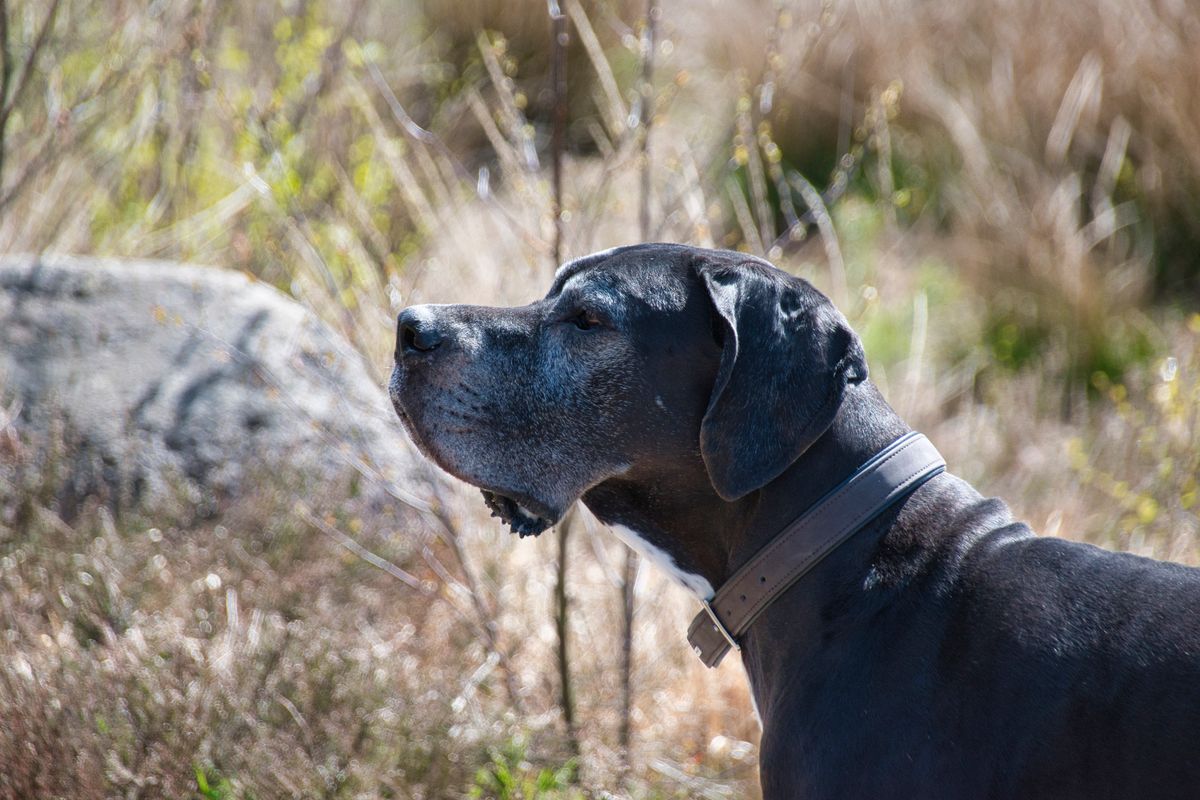
Any dog can bloat, but large and giant breeds with deep, narrow chests are at highest risk. According to Merck, breeds at increased risk include:
- Great Danes
- German Shepherds
- Saint Bernards
- Weimaraners
- Irish and Gordon Setters
- Standard Poodles
- Basset Hounds
Other risk factors include:
- Age: risk rises as dogs get older.
- Family history: a parent or sibling who had GDV.
- Feeding habits: one large meal a day, a diet of only dry kibble, and eating very fast.
- Temperament and stress: anxious or fearful dogs appear to be at higher risk.
- Body condition: lean dogs are more often affected.
What Happens at the Vet
Bloat is treated as a surgical emergency. Your vet will usually take an X-ray to confirm whether the stomach has twisted. The first priority is treating shock with IV fluids and oxygen.
Next, the vet releases the gas pressure. This is done with a tube passed into the stomach or a needle placed through the skin. Most dogs with a twisted stomach then need surgery to:
- Turn the stomach back into its normal position
- Check the stomach and spleen for damaged tissue and remove it if needed
- Perform a gastropexy, which stitches the stomach to the body wall so it can’t twist again
Without a gastropexy, bloat comes back in many dogs. After surgery, dogs are monitored closely for a day or more, since heart rhythm problems are common during recovery.
How to Lower Your Dog’s Risk
You can’t prevent every case, but these steps help:
- Feed two or more smaller meals a day instead of one large meal.
- Slow down fast eaters with a slow-feeder bowl or puzzle feeder.
- Avoid vigorous exercise around mealtimes.
- Keep meals calm. Feed anxious dogs away from other pets and household chaos.
- Use a floor-level bowl. Merck advises against raised food bowls for at-risk dogs.
- Ask about a preventive gastropexy. For high-risk breeds, vets can tack the stomach during a spay or neuter, often with a minimally invasive method. It prevents twisting, though the stomach can still swell.
A healthy weight also matters for overall health. Read our guide to helping an overweight dog, and see our tips for keeping your dog healthy.
When to Call Your Vet
Go to an emergency vet now if your dog:
- Is retching or trying to vomit but bringing up little or nothing
- Has a swollen or hard belly
- Is restless and can’t get comfortable, especially after eating
- Has pale gums, is weak or has collapsed
Book an appointment soon if:
- You own a high-risk breed and want to discuss a preventive gastropexy
- Your dog eats extremely fast or has frequent gassy, uncomfortable episodes
Call the emergency clinic while you’re on the way so the team can be ready.
Frequently Asked Questions
How long can a dog survive with bloat?
There’s no safe waiting period. Once the stomach twists, a dog can go into shock within hours, and delays make survival less likely. Treat any suspected bloat as an emergency.
Can a dog with bloat still poop or burp?
Sometimes, especially early on. Passing gas or stool doesn’t rule out bloat. Retching without results and a swollen belly are the signs to act on.
Can small dogs get bloat?
Yes, but it’s much less common. Large and giant breeds with deep chests are at highest risk. Any dog with bloat symptoms should still see a vet right away.
Do raised food bowls prevent bloat?
No. Raised bowls were once recommended, but current veterinary guidance suggests avoiding them for at-risk dogs. Smaller meals and slower eating are more helpful.
Is bloat surgery expensive?
Emergency GDV surgery and hospital care can cost several thousand dollars. A preventive gastropexy done during a spay or neuter usually costs much less. Pet health insurance can help with emergency costs.
This article is for general information only and isn’t a substitute for professional veterinary advice. If you’re worried about your pet’s health, contact your veterinarian or an emergency animal hospital.


