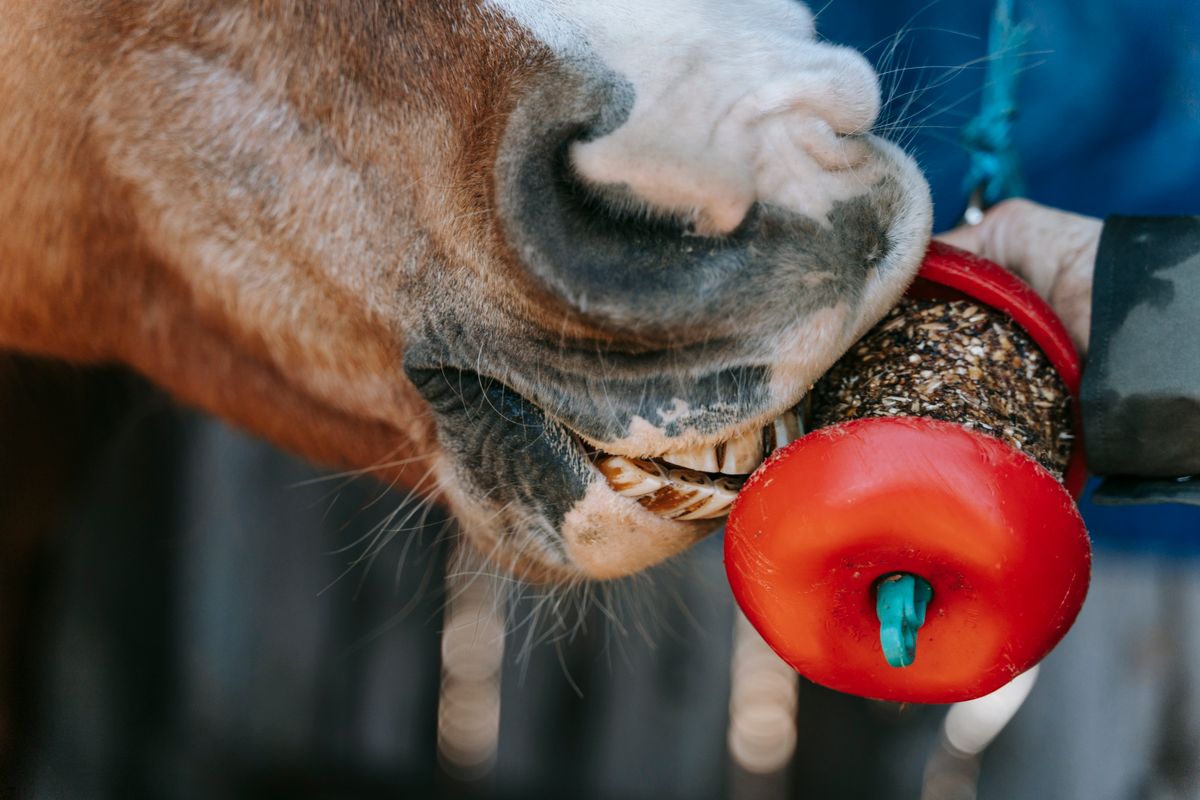
A horse’s teeth keep erupting throughout much of its life, worn down by chewing. Because horses chew in a circular motion and the upper jaw is wider than the lower, sharp points can form. Regular equine dental care keeps your horse comfortable, eating well and responsive under saddle. Here’s why floating matters.
Quick Answer: “Floating” is filing down sharp points and uneven surfaces on a horse’s teeth. Most adult horses need a dental exam at least once a year. Young and senior horses may need checks every 6 months. Signs of dental problems include dropping feed, weight loss, head tossing, bad breath and resistance to the bit.
How Horse Teeth Work
Adult horses usually have 36 to 44 teeth. The cheek teeth grind forage in a side-to-side motion. Teeth erupt slowly over many years to replace what’s worn away.
Because the upper jaw is wider than the lower jaw, sharp enamel points can form on the outer edges of the upper teeth and the inner edges of the lower teeth. These points can cut the cheeks and tongue.
Common Dental Problems
| Problem | What it is |
|---|---|
| Sharp enamel points | Edges that cut cheeks and tongue |
| Hooks and ramps | Overgrowth at the front or back of the cheek teeth rows |
| Wave mouth | Uneven wear along the tooth rows |
| Retained caps | Baby teeth that don’t fall out |
| Wolf teeth | Small teeth that may interfere with the bit |
| Diastemas | Gaps where food packs and causes gum disease |
| Fractured or infected teeth | Can lead to sinus infection or abscess |
| Missing teeth | Leaves the opposing tooth to overgrow |
The Merck Veterinary Manual notes that dental problems are common and can affect a horse’s ability to eat and perform.
Signs of Dental Problems
- Dropping feed while eating (“quidding”)
- Chewing slowly or with the head tilted
- Weight loss
- Long hay fibers or whole grain in manure
- Bad breath
- Nasal discharge from one nostril
- Facial swelling
- Head tossing, tail swishing or resisting the bit
- Choke
What Happens at a Dental Exam
- Sedation: most horses are lightly sedated for safety and a thorough exam.
- Speculum: a full-mouth speculum holds the mouth open.
- Exam: the vet looks and feels each tooth, often with a light and mirror or scope.
- Floating: sharp points and problem areas are filed with hand or power tools.
- Additional care: removing wolf teeth, caps or diseased teeth if needed.
- X-rays for suspected tooth root or sinus problems.
How Often Should Horses Have Dental Care?
| Age or situation | Typical frequency |
|---|---|
| Young horses (2–5 years) | Every 6 months, as baby teeth are shed |
| Adult horses | At least yearly |
| Senior horses (15+) | Every 6–12 months |
| Horses with known problems | As your vet recommends |
Dental Care and Senior Horses
As horses age, teeth wear down and can become loose or fall out. Senior horses may need softened feeds, chopped forage or complete senior feeds. See caring for senior horses.
Dental Problems and Colic
Horses that can’t chew properly are more likely to have choke and impaction colic. See colic in horses.
Choosing Your Dental Provider
- Licensed veterinarians can provide sedation, X-rays and full dental care.
- Ask about training and experience in equine dentistry.
- Some vets have advanced certification in equine dentistry.
Tips Between Visits
- Watch your horse eat once a week.
- Check manure for long fibers or whole grain.
- Track weight with a weight tape or body condition scoring.
- Note any bit resistance or head tossing.
When to Call Your Vet
Book a dental exam if your horse:
- Is dropping feed or losing weight
- Has bad breath or nasal discharge
- Is fighting the bit
Get prompt care if your horse:
- Has facial swelling
- Is choking, with feed or saliva coming from the nose
- Has stopped eating
Frequently Asked Questions
Does floating hurt my horse?
No. Teeth don’t have nerves in the part being filed. Sedation keeps your horse calm.
Do horses on pasture need dental care?
Yes. Pasture horses still develop sharp points and other problems.
What are wolf teeth?
Small, vestigial teeth in front of the upper cheek teeth. They can interfere with the bit and are often removed.
How long does a dental appointment take?
Most routine exams and floats take 30 to 60 minutes, including sedation time.
Do miniature horses and donkeys need dental care too?
Yes. Minis often have crowded teeth, and donkeys commonly develop dental disease. Both benefit from regular exams.
Can bit problems be caused by teeth?
Often. Sharp points, wolf teeth and ulcers in the mouth can make the bit uncomfortable. A dental exam is a good first step for bit resistance.
This article is for general information only and isn’t a substitute for professional veterinary advice. If you’re worried about your pet’s health, contact your veterinarian or an emergency animal hospital.