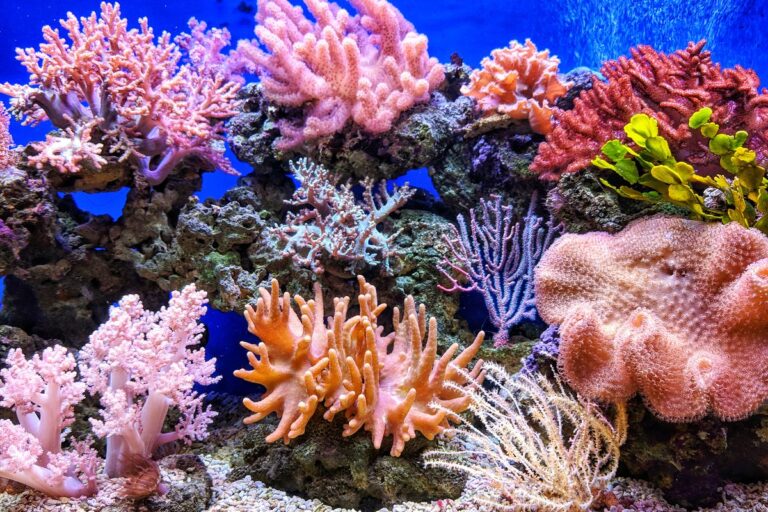
A beautiful saltwater tank doesn’t stay that way on its own. Regular maintenance keeps water stable, prevents algae and catches problems before they become emergencies. The good news is that a simple routine takes just a few minutes a day. Here’s a saltwater aquarium maintenance schedule you can follow.
At a Glance:
- Daily: check temperature, fish behavior and equipment; top off evaporated water; feed
- Weekly: test key parameters, clean glass, empty skimmer cup, change filter socks
- Every 1–2 weeks: 10–20% water change
- Monthly: clean pumps and equipment, check salinity calibration
- Every 6–12 months: replace bulbs or check LED output, deep clean equipment
Daily Tasks
| Task | Why |
|---|---|
| Check temperature | Prevents heater failures from harming fish |
| Watch fish and corals | Spot illness or aggression early |
| Check that pumps and heaters are running | Avoid flow or temperature crashes |
| Top off evaporated water with RO/DI | Keeps salinity stable |
| Feed | Small portions; remove leftovers |
| Count fish | Find missing or dead fish quickly |
Weekly Tasks
- Test water: salinity, nitrate, pH, and alkalinity for reefs. See saltwater tank water parameters.
- Clean the glass with an algae magnet or scraper.
- Empty and rinse the skimmer cup. See protein skimmers explained.
- Replace or clean filter socks or pads.
- Check the auto top-off reservoir.
- Wipe salt creep from lids, lights and equipment.
Every 1–2 Weeks: Water Changes
Water changes remove nitrate and phosphate and replenish trace elements.
- Mix new saltwater with RO/DI water at least 24 hours in advance.
- Match temperature and salinity to your tank.
- Unplug heaters and pumps as needed.
- Siphon out 10–20% of the water, vacuuming debris from sand surfaces.
- Add new water slowly.
- Restart equipment.
Monthly Tasks
- Clean powerheads and return pumps.
- Rinse or replace activated carbon or other media.
- Calibrate your refractometer.
- Check test kit expiration dates.
- Inspect hoses and plumbing for leaks.
Every 3–12 Months
| Task | Frequency |
|---|---|
| Soak pumps in vinegar to remove buildup | Every 3–6 months |
| Replace T5 or fluorescent bulbs | Every 6–12 months |
| Check LED settings and output | Every 6–12 months |
| Replace RO/DI filters and membranes | As the maker recommends |
| Deep clean the sump | As needed |
Sample Weekly Calendar
| Day | Task |
|---|---|
| Monday | Test parameters |
| Tuesday | Clean glass |
| Wednesday | Empty skimmer cup |
| Thursday | Replace filter socks |
| Friday | Check equipment and top-off reservoir |
| Saturday | Water change (every 1–2 weeks) |
| Sunday | Observe, take photos, plan |
Keep a Logbook
Record test results, water changes, additions and observations. Patterns help you spot problems early and explain issues to an aquatic vet.
Signs Your Tank Needs More Maintenance
- Rising nitrate or phosphate
- Persistent algae
- Cloudy water
- Fish stress or illness. See why are my saltwater fish dying.
The Merck Veterinary Manual stresses that routine water quality management is the foundation of fish health.
Frequently Asked Questions
How long does weekly maintenance take?
Many hobbyists spend 30 to 60 minutes a week, plus a few minutes daily.
Can I skip water changes if my nitrate is low?
Water changes also replenish trace elements and remove other compounds. Most tanks still benefit from regular changes.
Should I vacuum the sand?
Lightly vacuuming the surface helps remove debris. Avoid deeply disturbing established sand beds in reef tanks.
What should I do before a vacation?
Do maintenance a few days before you leave, fill the top-off reservoir and arrange an automatic feeder or a sitter.
What tools make maintenance easier?
An auto top-off, a dedicated water change bucket, a refractometer, an algae magnet and a good siphon save lots of time.
Can I do a big water change instead of small ones?
Occasional large changes are sometimes needed, but regular small changes keep conditions more stable.
Is it okay to clean everything on the same day?
It’s better to spread tasks out. Cleaning all filters, rock and sand at once can disturb beneficial bacteria.
How do I clean algae from rocks?
Remove the rock if possible and scrub it in old tank water with a soft brush. Manual removal combined with lower nutrients and a cleanup crew works best.
Should I clean my sand bed every week?
Lightly siphoning the surface during water changes is enough for most tanks. Avoid deep stirring of established sand beds.
What if I miss a week of maintenance?
Don’t panic. Test the water, do a normal water change and get back on schedule. Avoid an extra-large change to make up for it.
How often should I replace my RO/DI cartridges?
Follow the maker’s schedule and use a TDS meter. When the output reads above 0, it’s usually time to change the deionization resin.
This article is for general information only and isn’t a substitute for professional veterinary advice. If you’re worried about your pet’s health, contact your veterinarian or an emergency animal hospital.