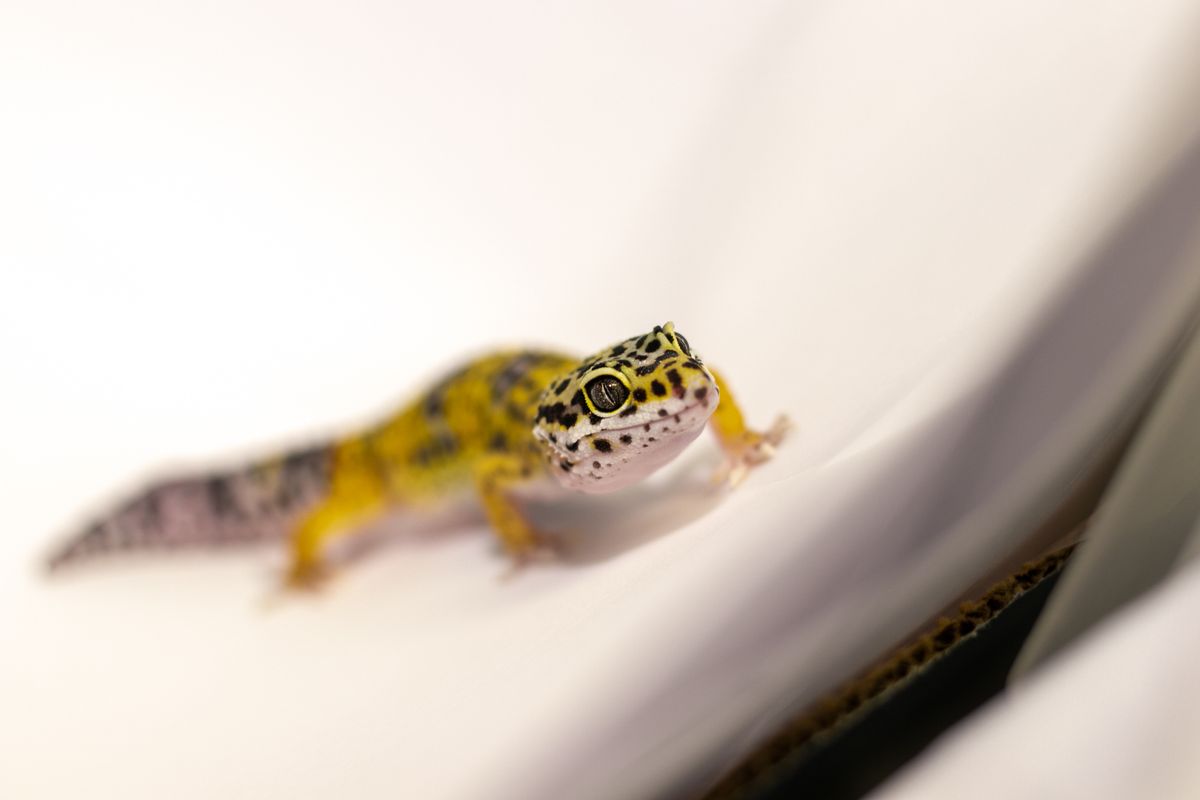
A leopard gecko’s tail is more than decoration. It’s a fat reserve, like a camel’s hump. A plump tail usually means a healthy, well-fed gecko. When the tail starts to shrink, it’s a sign your gecko is using up its reserves. Here’s what a leopard gecko thin tail can mean and what to do about it.
Quick Answer: A thinning tail means your gecko is burning more energy than it takes in. Common causes are parasites, low temperatures, not eating, poor diet, stress, breeding activity and illness such as cryptosporidiosis. Check husbandry first, then see a reptile vet for a fecal test and exam, especially if your gecko is also losing weight or has runny stools.
What a Healthy Tail Looks Like
A healthy adult leopard gecko’s tail is usually about as thick as its neck, or close to it. It should be rounded, not flat.
| Tail appearance | What it usually means |
|---|---|
| Plump, about as wide as the neck | Healthy fat stores |
| Thicker than the head | Possible overfeeding |
| Narrower than the neck | Losing condition |
| Very thin, “stick tail” with visible bones | Serious weight loss; see a vet soon |
Common Causes of a Thin Tail
1. Parasites
Intestinal parasites like pinworms, coccidia and others can steal nutrients. Your vet can check a fresh stool sample.
2. Cryptosporidiosis
Cryptosporidium is a serious parasite in leopard geckos. It causes progressive weight loss, especially in the tail, regurgitation and poor appetite. It’s highly contagious to other geckos and hard to treat. The Merck Veterinary Manual describes cryptosporidiosis as an important cause of wasting in lizards.
3. Low temperatures
Geckos need warmth to digest food. If the warm side is too cool, digestion slows, food may be regurgitated and your gecko may lose weight. Aim for a warm surface of about 88–92°F (31–33°C). See our leopard gecko care sheet.
4. Not eating enough
Appetite can drop with stress, shedding, wrong insect size or boring food.
5. Poor diet
Feeding only one type of insect, or skipping supplements, can lead to malnutrition and metabolic bone disease.
6. Breeding season
Males may eat less during breeding season. Females use lots of energy to produce eggs.
7. Impaction
Swallowed substrate, like loose calcium sand, can block the gut and stop eating.
8. Other illness
Infections, dental problems and organ disease can also cause weight loss.
Steps to Take at Home
- Weigh your gecko with a gram scale and record it weekly.
- Check temperatures on the warm and cool sides with a probe thermometer or temperature gun.
- Review the diet. Offer a variety of gut-loaded insects of the right size.
- Check supplements. Dust insects with calcium at most feedings.
- Look at stools. Runny, smelly or undigested stools need a vet.
- Reduce stress. Limit handling, provide enough hides and keep the tank in a quiet place.
- Separate geckos if you keep more than one.
What to Expect at the Vet
Your reptile vet may:
- Do a physical exam and weigh your gecko
- Test a fecal sample for parasites
- Recommend specific testing for Cryptosporidium
- Take X-rays to check for impaction or bone problems
- Prescribe deworming medication or other treatment
- Provide a high-calorie recovery diet
Helping a Gecko Regain Weight
- Feed smaller, more frequent meals if your vet advises.
- Offer favorite insects like silkworms or occasional waxworms as an appetite boost.
- Keep the warm side at the right temperature.
- Your vet may recommend a critical care formula given by syringe.
Weight gain is slow. A healthy tail may take weeks to months to rebuild.
When to Call Your Vet
Book a visit soon if your gecko:
- Has a tail narrower than its neck
- Is losing weight week over week
- Has runny or unusual stools
Seek prompt care if your gecko:
- Is regurgitating food
- Hasn’t eaten in several weeks and is losing weight
- Is weak, lethargic or has sunken eyes
Frequently Asked Questions
Can a leopard gecko’s tail get too fat?
Yes. A tail wider than the head and fat pads in the armpits can signal obesity. Cut back on fatty insects like waxworms.
My gecko lost its tail. Will it regrow?
Yes, leopard gecko tails regrow, though they look smoother and different. During regrowth, feed well, because tail fat stores need rebuilding.
How fast should a gecko gain weight back?
Slowly. A few grams over several weeks is typical. Weigh weekly and track progress.
Is a thin tail always serious?
Not always, but it’s never something to ignore. Find the cause early.
Can stress alone cause a thin tail?
Yes. A new home, too much handling or a busy room can lower appetite for a while. If weight keeps dropping after a couple of weeks, look for a medical cause.
This article is for general information only and isn’t a substitute for professional veterinary advice. If you’re worried about your pet’s health, contact your veterinarian or an emergency animal hospital.