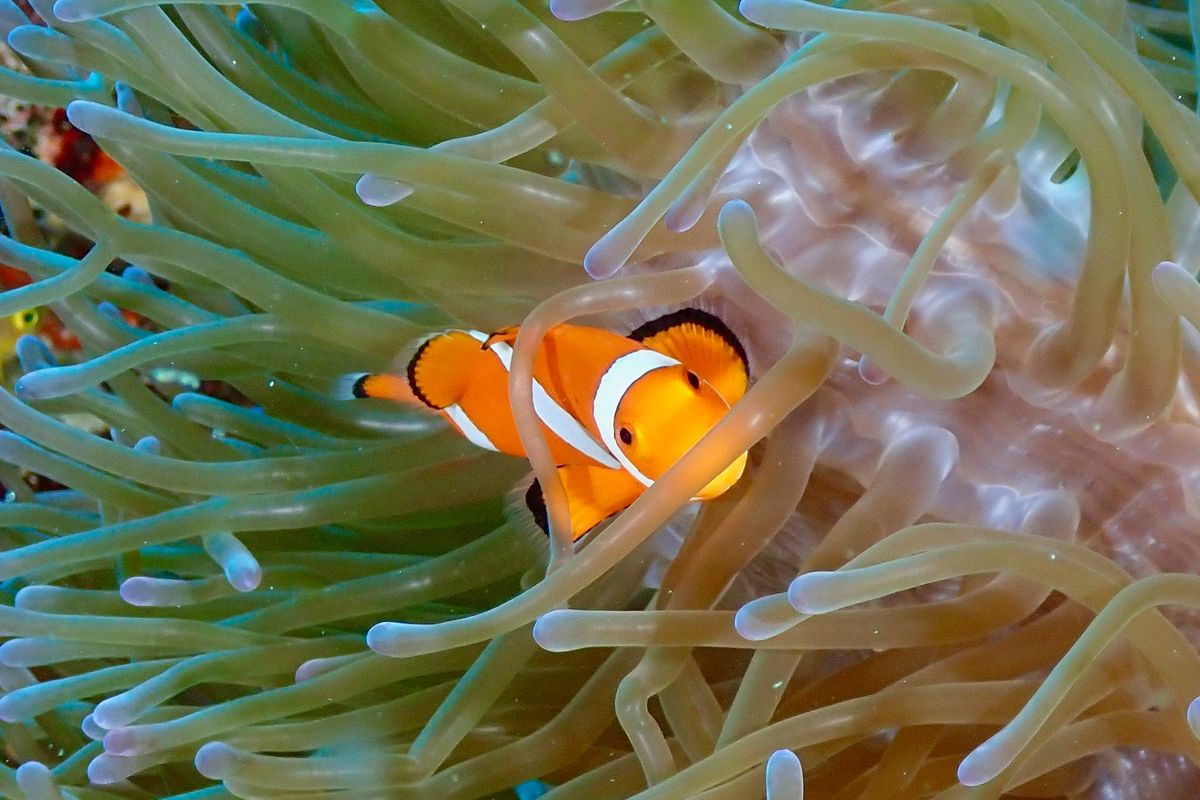
Clownfish are the most recognizable saltwater fish in the world, and one of the best for beginners. Captive-bred clownfish are hardy, full of personality and easy to feed. Here’s everything you need to know about clownfish care, from tank setup to tank mates and anemones.
Quick Answer: Ocellaris and percula clownfish do well in tanks of 20 gallons or more, with stable saltwater, a varied diet of pellets and frozen foods, and peaceful tank mates. They don’t need an anemone. Keep one clownfish or a single pair; adding more often leads to fighting.
Clownfish Basics
| Fact | Detail |
|---|---|
| Common species | Ocellaris, percula, maroon, tomato |
| Size | 3–4 in (8–10 cm) for ocellaris; maroons larger |
| Lifespan | Often 10–15+ years; some over 20 |
| Temperament | Peaceful to semi-aggressive, especially when guarding |
| Reef safe | Yes |
Tank Setup
- Tank size: 20 gallons minimum for a pair of ocellaris; 30+ gallons for maroons
- Water: salinity 1.024–1.026, temperature 76–80°F (24–27°C), pH 8.0–8.4
- Filtration: stable, cycled system with good flow
- Decor: live rock with caves and hiding spots
See saltwater tank water parameters and our saltwater aquarium for beginners guide.
Do Clownfish Need an Anemone?
No. Captive-bred clownfish live happily without anemones. Many will “host” in corals, powerheads or even a corner of the tank.
If you want an anemone:
- Wait until your tank has been stable for at least 6 to 12 months.
- Choose a species that hosts clownfish, like the bubble tip anemone.
- Provide strong lighting and stable water.
- Cover powerhead intakes, as anemones can move.
Feeding Clownfish
Clownfish are omnivores and easy to feed.
- Quality marine pellets
- Frozen mysis shrimp and brine shrimp
- Frozen foods with marine algae
- Flake food
Feed small amounts once or twice a day. See what to feed saltwater fish.
Pairing Clownfish
Clownfish are born male. In a pair, the larger, dominant fish becomes female. If the female dies, the male can change into a female.
- Buy two juveniles together, or a known pair.
- Different-sized fish pair more easily.
- Expect some chasing and “twitching” while they establish roles.
Tank Mates
Good tank mates:
- Gobies and blennies
- Royal grammas
- Cardinalfish
- Chromis
- Many invertebrates and corals
Poor tank mates:
- Large predators like lionfish and groupers
- Aggressive damsels
- Other clownfish species in the same tank
See peaceful saltwater community fish.
Common Health Problems
| Problem | Signs |
|---|---|
| Brooklynella (“clownfish disease”) | Thick mucus, peeling skin, rapid breathing |
| Marine ich | White spots, scratching |
| Marine velvet | Dusty coating, gasping |
| Bacterial infections | Red patches, frayed fins |
Brooklynella can be fatal quickly. Quarantine new clownfish and act fast if signs appear. See quarantine new saltwater fish.
The Merck Veterinary Manual notes that parasitic and bacterial diseases are common in newly acquired fish.
Breeding Clownfish
Established pairs may lay eggs on rock near their hosting spot. The male guards and fans them. Raising babies requires live food like rotifers and a separate setup.
When to Get Help
Contact an aquatic vet or experienced fish store if your clownfish:
- Stops eating for several days
- Has heavy mucus, spots or dust
- Breathes rapidly
Frequently Asked Questions
Can I keep three clownfish together?
Usually no. The group often fights until only a pair remains.
Are clownfish good for beginners?
Yes. Captive-bred clownfish are among the hardiest saltwater fish.
Do clownfish bite?
They may nip your hand when guarding their host or eggs. It’s usually harmless.
Why is my clownfish swimming oddly?
Clownfish naturally “wiggle.” But listlessness, clamped fins or rapid breathing can signal illness.
How big do clownfish get?
Ocellaris clownfish usually reach about 3 inches. Females are larger than males. Maroon clownfish can grow to about 6 inches and are more aggressive.
Can clownfish live alone?
Yes. A single clownfish can thrive. Pairs are popular because they’re fun to watch together.
What colors do clownfish come in?
Besides classic orange and white, captive breeders produce black and white, snowflake, platinum and many other designer varieties. Care is the same for all.
Why is my clownfish hosting a powerhead?
Clownfish without an anemone often choose an object to host. Make sure it isn’t getting hurt, and consider a hosting coral like a torch or frogspawn in a reef tank.
How often should I feed clownfish?
Once or twice a day, small portions they can finish in a minute or two.
Are clownfish safe with shrimp?
Yes. Clownfish generally ignore cleaner shrimp and other ornamental shrimp, making them good reef companions.
Can clownfish live in a nano tank?
A pair of ocellaris can live in a well-maintained 20-gallon tank. Smaller tanks are less stable and harder to keep healthy.
Do clownfish need special flow?
Moderate flow is best. Clownfish aren’t strong swimmers and may tire in very strong currents.
This article is for general information only and isn’t a substitute for professional veterinary advice. If you’re worried about your pet’s health, contact your veterinarian or an emergency animal hospital.