Forage is the foundation of every horse’s diet. Horses evolved to graze for most of the day, and their digestive systems work best with a steady supply of fiber. So how much hay does a horse need? This guide explains the basic rule, how to adjust it and how to feed hay safely.
Quick Answer: Most adult horses need about 1.5% to 2.5% of their body weight in forage (hay and pasture) per day, on a dry-matter basis. For a 1,100-pound (500 kg) horse, that’s about 16.5 to 27.5 pounds (7.5–12.5 kg) of hay per day. Easy keepers need the low end; hard keepers and horses in heavy work need more.
The Basic Rule
| Horse weight | 1.5% of body weight | 2% of body weight | 2.5% of body weight |
|---|---|---|---|
| 800 lb (363 kg) | 12 lb (5.4 kg) | 16 lb (7.3 kg) | 20 lb (9.1 kg) |
| 1,000 lb (454 kg) | 15 lb (6.8 kg) | 20 lb (9.1 kg) | 25 lb (11.3 kg) |
| 1,100 lb (500 kg) | 16.5 lb (7.5 kg) | 22 lb (10 kg) | 27.5 lb (12.5 kg) |
| 1,200 lb (544 kg) | 18 lb (8.2 kg) | 24 lb (10.9 kg) | 30 lb (13.6 kg) |
Most horses should eat at least 1.5% of body weight in forage daily to keep the gut healthy. The Merck Veterinary Manual emphasizes forage as the basis of equine diets.
Weigh Your Hay
Flakes vary a lot in weight, from about 3 to 7 pounds or more. Weigh a few flakes with a hanging scale to know how much you’re really feeding.
Estimating Your Horse’s Weight
- Livestock scale: most accurate
- Weight tape: quick estimate around the girth
- Formula: (heart girth² × body length) ÷ 330 = weight in pounds (measurements in inches)
Recheck weight monthly.
Adjusting for Your Horse
| Horse | Forage guide |
|---|---|
| Easy keeper or overweight | About 1.5% of body weight; consider low-sugar hay and slow feeders |
| Average adult in light work | About 2% |
| Hard keeper or heavy work | 2–2.5%, plus concentrates as needed |
| Lactating mare | Up to about 3% |
| Senior with poor teeth | May need hay cubes, pellets or soaked forage |
Types of Hay
| Hay | Notes |
|---|---|
| Timothy, orchard grass, brome | Common grass hays; moderate calories |
| Bermuda, coastal | Popular in the South |
| Alfalfa | Higher in protein, calcium and calories; good for hard keepers |
| Grass-alfalfa mix | Middle ground |
For horses with metabolic issues or a history of laminitis, ask your vet about testing hay for sugar and starch. Soaking hay can reduce sugar content.
Pasture Counts, Too
Horses on good pasture may eat a lot of their forage from grass. Reduce hay accordingly, but watch weight closely, especially in spring and fall when grass is rich in sugar.
Feeding Tips
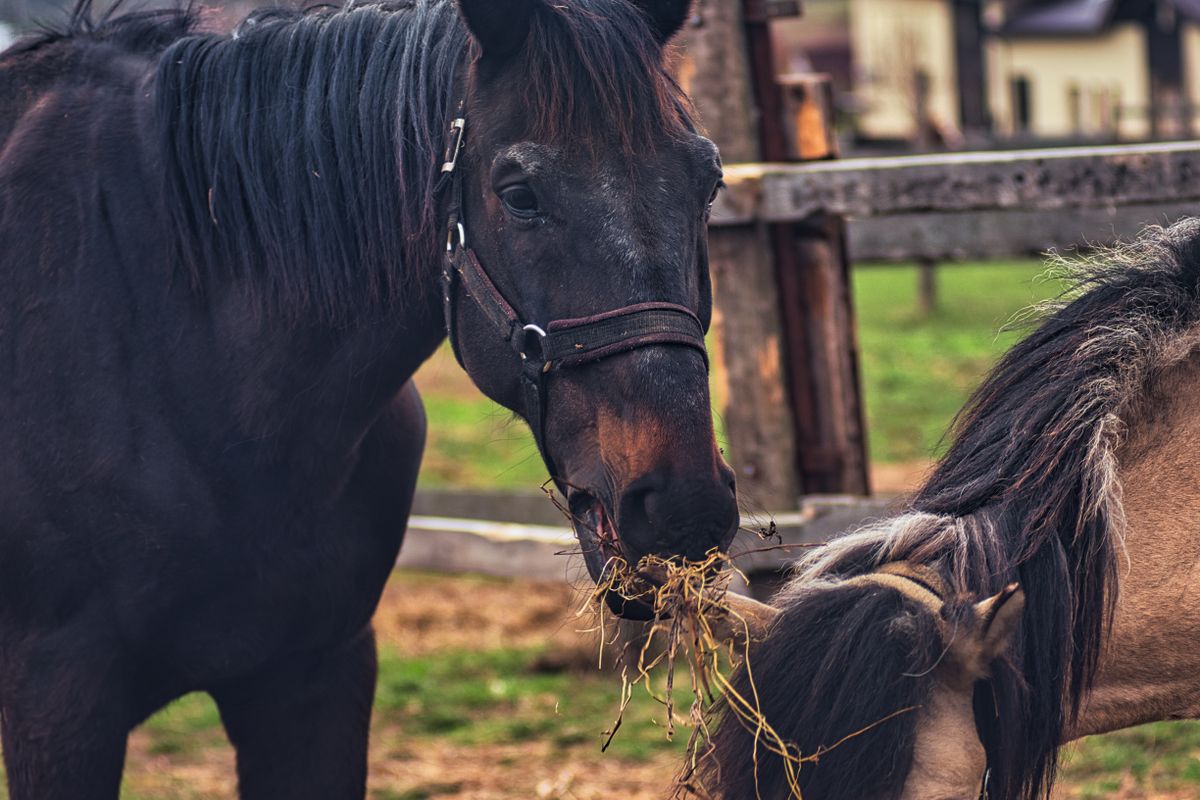
- Feed little and often. Spread hay across the day, or use slow feeders.
- Avoid long gaps without forage, which can contribute to ulcers.
- Make changes slowly over 1 to 2 weeks to reduce colic risk.
- Feed off the ground in sandy areas to avoid sand colic.
- Check hay quality. Avoid dusty or moldy hay.
- Provide fresh water. Horses drink more when eating hay.
- Add a salt source and a ration balancer if your vet recommends.
Signs You’re Feeding Too Much or Too Little
- Too much: weight gain, fat pads on the neck and tailhead, cresty neck
- Too little: ribs easily visible, weight loss, hip bones prominent
Use body condition scoring to monitor.
Winter Feeding
Horses use more energy to stay warm in cold weather. Digesting hay produces body heat, so adding extra hay rather than grain is often the best way to help horses stay warm.
When to Call Your Vet
Call your vet if your horse:
- Loses weight despite eating
- Drops hay while chewing. See equine dental care.
- Shows signs of colic
- Develops a cresty neck or fat pads, which can signal metabolic disease
Frequently Asked Questions
Can a horse eat too much hay?
Yes, especially easy keepers. Free-choice hay can lead to weight gain. Slow feeders help.
How many bales does a horse need per year?
It depends on bale size and pasture. A 1,000-pound horse eating 20 pounds a day needs about 7,300 pounds of hay per year without pasture.
Should I feed hay at night?
Yes. Many horses benefit from a large portion of their hay in the evening and overnight.
Is round bale hay safe?
Round bales can work well if they’re good quality and protected from weather. Moldy outer layers should be removed.
This article is for general information only and isn’t a substitute for professional veterinary advice. If you’re worried about your pet’s health, contact your veterinarian or an emergency animal hospital.