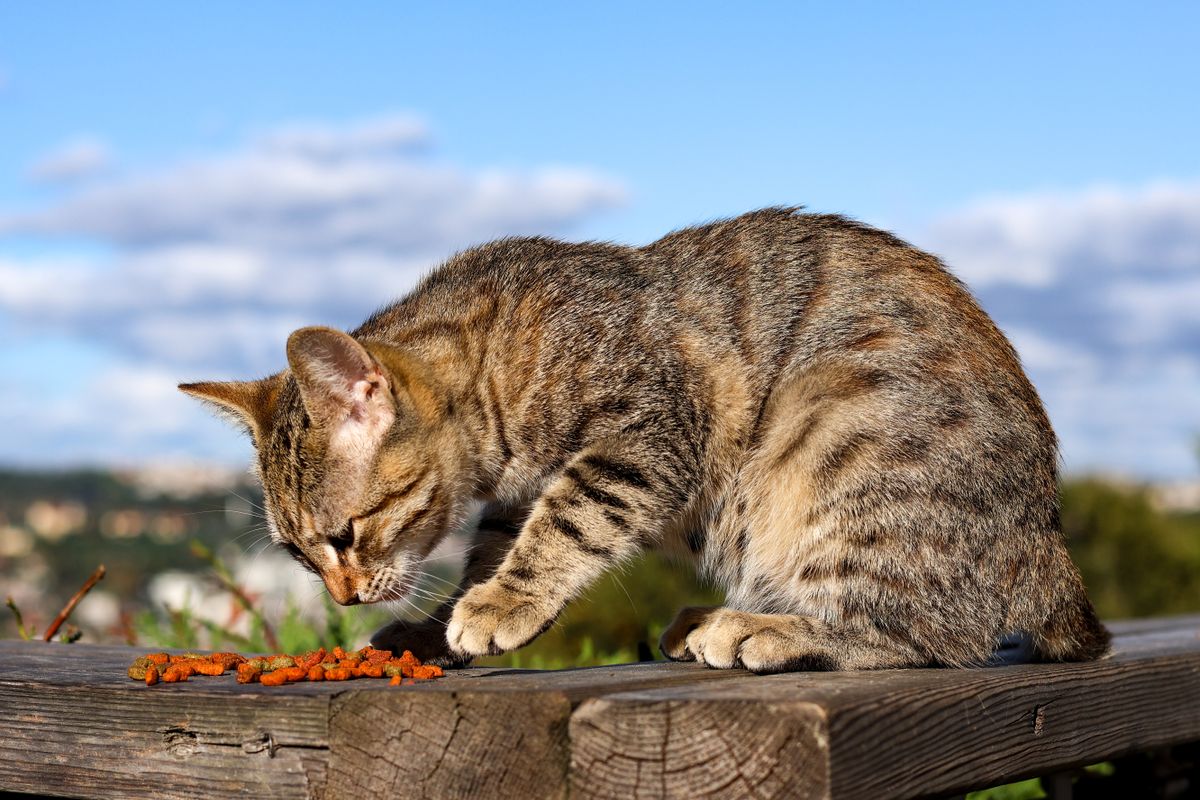
Feeding the right amount is one of the most important things you can do for your cat’s health. Overfeeding is common and leads to obesity, diabetes and arthritis. Underfeeding is less common but can cause weight loss and nutrient deficiencies. Here’s how to work out how much to feed your cat.
Quick Answer: Many healthy, indoor adult cats need roughly 20 calories per pound (about 45 kcal per kg) of ideal body weight per day. A 10-pound (4.5 kg) cat often needs about 200 calories a day. Kittens, active cats and nursing mothers need more; less active or neutered cats may need less. Use the food label as a starting point and adjust based on body condition.
Daily Calorie Estimates
| Cat | Approximate daily calories |
|---|---|
| Indoor adult, 8 lb (3.6 kg) | About 160–180 kcal |
| Indoor adult, 10 lb (4.5 kg) | About 180–220 kcal |
| Indoor adult, 12 lb (5.4 kg) | About 210–250 kcal |
| Active adult | About 10–20% more |
| Weight-loss plan | Set by your vet based on ideal weight |
| Kittens | About 2–3 times adult needs per pound |
| Pregnant or nursing cats | Much higher; often free-fed |
These are estimates. Individual cats vary a lot.
How to Calculate a Portion
- Find your cat’s ideal weight with your vet.
- Estimate daily calories based on ideal weight.
- Check the food label for calories per cup or can (kcal/cup or kcal/can).
- Divide daily calories by calories per cup or can.
- Subtract treats (keep them under 10% of daily calories).
Example
- Ideal weight: 10 lb
- Daily calories: about 200 kcal
- Dry food: 400 kcal per cup
- Daily dry food: about 1/2 cup, split into meals
Use a Kitchen Scale or Measuring Cup
“Eyeballing” portions often leads to overfeeding. A gram scale is the most accurate.
Body Condition Scoring
Your vet may use a 1–9 body condition score.
| Score | Description |
|---|---|
| 1–3 | Underweight: ribs and spine easily seen or felt with no fat |
| 4–5 | Ideal: ribs easily felt with slight fat; visible waist |
| 6–7 | Overweight: ribs hard to feel; waist barely visible; belly fat |
| 8–9 | Obese: ribs can’t be felt; heavy fat over the body |
See obesity in cats.
Feeding by Life Stage
Kittens
Feed kitten food 3 to 4 times a day until about 6 months, then 2 to 3 times a day. See our kitten care checklist.
Adults
Feed 2 or more measured meals a day. Many cats do well with several small meals or puzzle feeders.
Seniors
Needs vary. Some older cats gain weight; others lose weight and muscle. See caring for a senior cat.
Free-Feeding vs. Meal Feeding
| Method | Pros | Cons |
|---|---|---|
| Free-feeding dry food | Convenient | Often leads to overeating and weight gain |
| Measured meals | Easier weight control; notice appetite changes | Requires a routine |
| Automatic feeders | Consistent portions | Cost |
| Puzzle feeders | Slow eating, enrichment | Learning curve |
Multi-Cat Households
- Feed cats in separate spaces to prevent food stealing.
- Microchip feeders open only for a specific cat.
- Watch each cat’s weight.
Wet Food Portions
A typical 3-ounce can contains about 70–100 calories. Check the label. See wet vs. dry cat food.
When to Call Your Vet
Call your vet if your cat:
- Gains or loses weight unexpectedly
- Is eating more but losing weight, which can signal hyperthyroidism or diabetes
- Stops eating for more than a day
Frequently Asked Questions
Is the feeding guide on the bag accurate?
It’s a starting point. Many cats need less than the label suggests, especially indoor and neutered cats.
How often should I weigh my cat?
Monthly at home, or at each vet visit.
Can I feed my cat once a day?
Most cats do better with at least two meals a day.
How many treats can my cat have?
Treats should be less than 10% of daily calories.
Why is my cat always hungry?
Some cats are simply food-motivated, but constant hunger can also signal medical problems like hyperthyroidism or diabetes.
Should I change portions in winter?
Indoor cats usually don’t need more food in winter. Adjust based on weight, not the season.
What’s the best time to feed my cat?
Choose times that fit your routine and keep them consistent. Many owners feed morning and evening.
My cat begs at night. What can I do?
Feed a portion of the daily food late in the evening or use a timed automatic feeder for an early morning meal.
Do outdoor cats need more food?
Often, yes, since they’re usually more active. Track weight and adjust portions accordingly.
Can I use a cup from the kitchen to measure?
Use a standard 8-ounce measuring cup, or better, a gram scale. Mugs and scoops vary a lot.
This article is for general information only and isn’t a substitute for professional veterinary advice. If you’re worried about your pet’s health, contact your veterinarian or an emergency animal hospital.