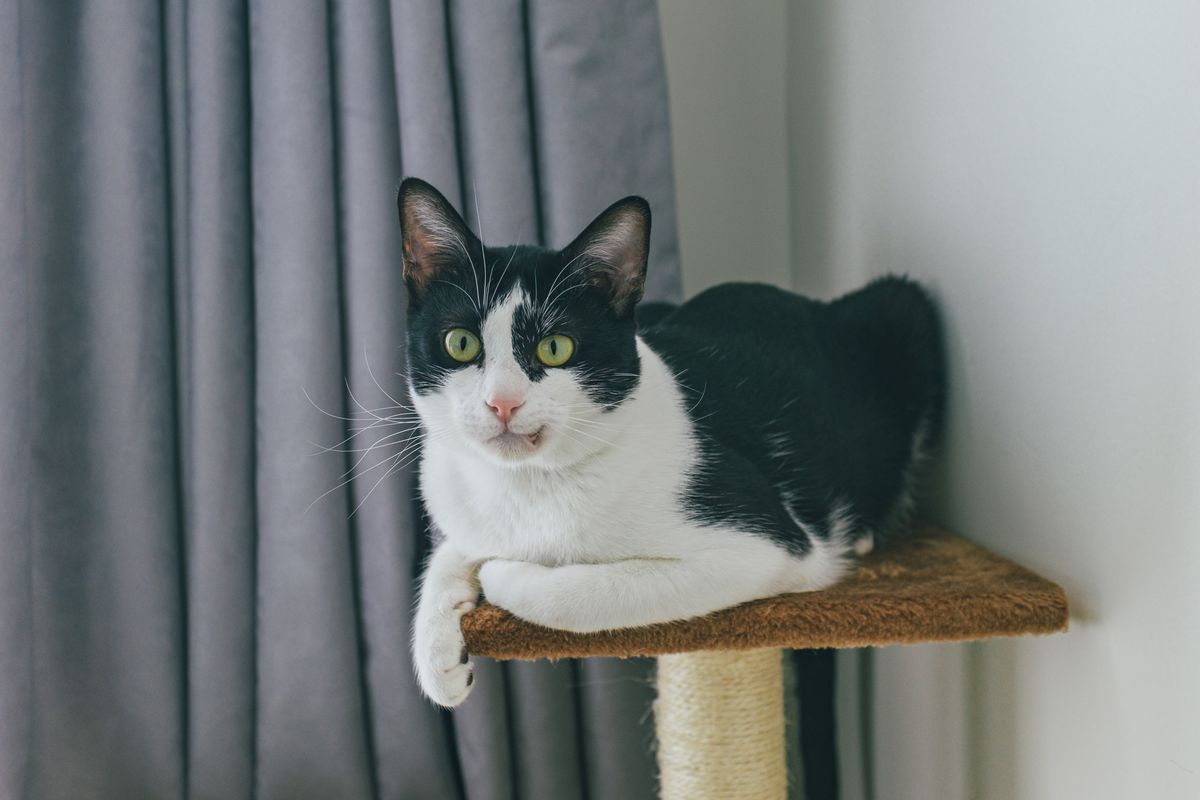
Scratching is a normal, healthy cat behavior, not a sign of a “bad” cat. Cats scratch to keep their claws healthy, stretch their bodies and mark territory. The goal isn’t to stop scratching but to redirect it to appropriate places. Here’s how to protect your furniture without declawing.
Quick Answer: Provide sturdy scratching posts in places your cat already scratches, offer both vertical and horizontal options, make furniture less appealing with double-sided tape or covers, reward use of posts and keep nails trimmed. Declawing is an amputation surgery that many veterinary organizations discourage except for medical reasons.
Why Cats Scratch
- Claw care: removes old outer layers of the claws
- Stretching: works muscles in the legs, back and shoulders
- Scent marking: glands in the paws leave scent
- Visual marking: scratches signal territory
- Emotional release: cats often scratch after waking or when excited
Choosing the Right Scratching Post
| Feature | What to look for |
|---|---|
| Height | Tall enough for a full stretch, at least 30 inches (76 cm) |
| Stability | Heavy base; it shouldn’t wobble or tip |
| Material | Sisal rope or sisal fabric is popular; cardboard; carpet for some cats |
| Orientation | Vertical posts and horizontal pads; some cats prefer angled |
| Number | At least one per cat, plus extras in key areas |
Where to Put Scratching Posts
- Near the furniture your cat is scratching
- Near sleeping areas, since cats often scratch after waking
- Near entrances to rooms
- In social areas where the family spends time
How to Redirect Scratching
- Place a post right next to the furniture your cat scratches.
- Make the furniture less appealing with double-sided tape, plastic covers or a throw.
- Make the post appealing with catnip, silvervine or treats.
- Play near the post using a wand toy that drags across it.
- Reward your cat with praise or treats when it uses the post.
- Gradually move the post to a better spot once the habit forms, if needed.
Nail Trimming
Trimming nails every 2 to 4 weeks reduces damage.
- Gently press the paw pad to extend the claw.
- Trim only the clear tip, avoiding the pink “quick.”
- Do one or two nails at a time if your cat is nervous.
- Reward afterward.
Nail Caps
Soft plastic nail caps glued over the claws are another option. They usually last 4 to 6 weeks and need replacing as claws grow.
Why Not Declaw?
Declawing (onychectomy) removes the last bone of each toe. The American Veterinary Medical Association and the American Association of Feline Practitioners discourage declawing as an elective procedure, and some places ban it.
Possible problems after declawing include:
- Pain, sometimes long-term
- Changes in gait
- Litter box avoidance. See why is my cat peeing outside the litter box.
- Increased biting
What Not to Do
- Don’t punish scratching. It can increase stress.
- Don’t remove all scratching options.
- Don’t use spray bottles, which damage trust.
Multi-Cat Homes
Each cat should have access to scratching posts without competition. Extra posts reduce conflict. See stress in cats.
Kittens
Start training early with posts and gentle nail trims. See our kitten care checklist.
Pet Health Man also has a guide on how to stop your cats from scratching furniture.
When to Call Your Vet
Call your vet if your cat:
- Has torn, infected or ingrown nails
- Is limping or licking paws often
- Suddenly scratches much more or less than usual
Frequently Asked Questions
Why does my cat ignore its scratching post?
It may be too short, wobbly, in the wrong place or the wrong texture. Try different types.
Do cats scratch out of spite?
No. Scratching is normal behavior, not revenge.
Are cardboard scratchers good?
Many cats love them, especially for horizontal scratching. Replace them when worn.
Can older cats learn to use a post?
Yes, with patience and the right setup.
How many scratchers do I need?
At least one per cat, placed in different areas, plus extras near favorite furniture targets.
Are scratching sprays effective?
Some attractant sprays help draw cats to posts. Deterrent sprays on furniture work for some cats but not all.
Should I trim my cat’s back claws?
Back claws grow more slowly and usually need less trimming, but check them during nail trims.
Do cats need to scratch every day?
Most cats scratch daily, often after waking. Having posts near sleeping spots makes good habits easier.
Is it okay to cover furniture permanently?
Covers and throws are a simple long-term option if your cat keeps returning to a favorite spot.
Can scratching posts be made at home?
Yes. Wrapping sisal rope around a sturdy wooden post works well.
This article is for general information only and isn’t a substitute for professional veterinary advice. If you’re worried about your pet’s health, contact your veterinarian or an emergency animal hospital.