Cats are creatures of habit. Changes that seem small to us, like moving furniture or a new work schedule, can feel big to them. Ongoing stress affects behavior and health, including the bladder and immune system. Here’s how to recognize stress in cats and create a calmer home.
Quick Answer: Signs of stress include hiding, overgrooming, changes in appetite, peeing outside the litter box, aggression, excessive vocalizing and less play. Common triggers include moving, new pets or people, conflict with other cats and changes in routine. Reduce stress with predictable routines, plenty of resources, hiding places, vertical space and daily play.
Why Stress Matters
Chronic stress can contribute to:
- Feline idiopathic cystitis (bladder inflammation)
- Overgrooming and hair loss
- Digestive upset
- Weakened immune response, including flare-ups of feline herpesvirus. See upper respiratory infections in cats.
- Behavior problems
Signs of Stress
| Sign | What it looks like |
|---|---|
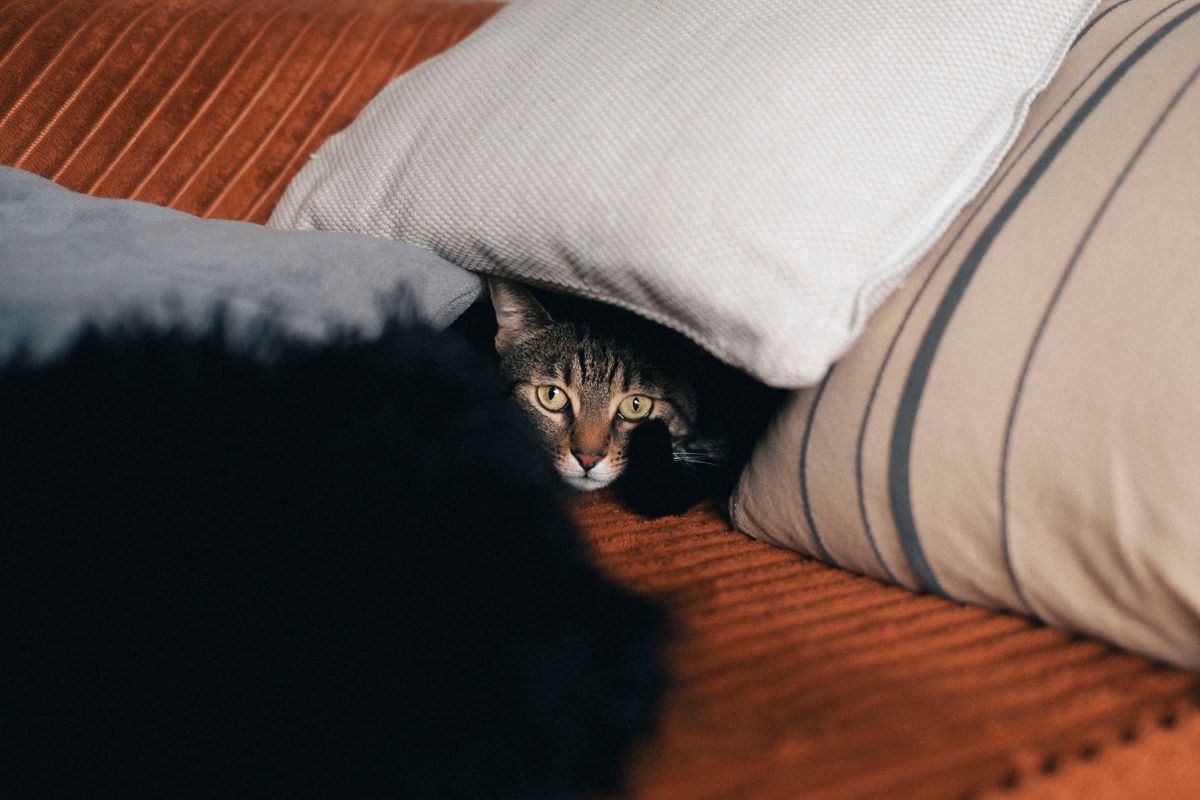
| Hiding | Spending more time under beds or in closets |
| Overgrooming | Bald patches, especially on the belly or legs |
| Litter box changes | Peeing or pooping outside the box |
| Appetite changes | Eating less or more |
| Aggression | Hissing, swatting, biting |
| Vocalizing | More meowing or yowling |
| Less play | Withdrawal from toys and people |
| Body language | Crouched posture, tucked tail, wide eyes, flattened ears |
Common Triggers
- Moving to a new home
- New pets, babies or roommates
- Conflict with another cat. See how to introduce a new cat.
- Outdoor cats visible through windows
- Loud noises, construction or parties
- Changes in schedule
- Vet visits and travel
- Dirty or poorly placed litter boxes
- Boredom
How to Reduce Stress
Provide the five pillars of a healthy cat environment
The American Association of Feline Practitioners (AAFP) and International Society of Feline Medicine describe five key needs:
- A safe place: hiding spots and high perches.
- Multiple, separated resources: food, water, litter boxes, scratching posts and beds in different locations.
- Opportunity for play and predatory behavior: daily play and foraging.
- Positive, consistent human interaction: on the cat’s terms.
- Respect for the cat’s sense of smell: avoid strong scents and let cats keep familiar smells.
Keep a routine
Feed, play and clean litter boxes at similar times daily.
Add vertical space
Cat trees, shelves and window perches let cats observe from safety.
Block outdoor triggers
Cover lower windows if outdoor cats cause stress.
Play daily
Two or three short play sessions with wand toys can relieve tension.
Use pheromones
Synthetic feline facial pheromone diffusers may help some cats feel more secure.
Reducing Stress at the Vet
- Leave the carrier out at home with soft bedding and treats.
- Cover the carrier during travel.
- Ask your vet about pre-visit medication for very anxious cats.
- Look for “cat friendly” clinics.
Moving With a Cat
- Set up one quiet room in the new home with all essentials.
- Keep your cat there while unpacking.
- Gradually open the rest of the house.
- Keep routines the same.
Calming Products
Some cats benefit from calming diets or supplements, but evidence varies. Ask your vet before trying them, and never use essential oils, which can be toxic to cats.
The Cornell Feline Health Center also lists household hazards that can cause both stress and harm.
When to Call Your Vet
Call your vet if your cat:
- Is peeing outside the box or straining
- Has bald patches from overgrooming
- Stops eating
- Becomes suddenly aggressive
Medical problems can look like stress. See signs your cat is in pain.
Frequently Asked Questions
Can cats get depressed?
Cats can show withdrawal, appetite changes and less interest in play, especially after losses or major changes.
Do cats get stressed when owners leave?
Some cats show signs of separation-related stress. Keep departures calm and provide enrichment.
Does a second cat reduce stress?
Not always. Some cats prefer to be the only cat.
How long does it take a cat to adjust to change?
Many adjust in days to weeks. Some need longer.
Are some cats more anxious than others?
Yes. Genetics, early socialization and past experiences all affect how a cat copes.
Can medication help stressed cats?
For some cats, yes. Vets may prescribe anti-anxiety medication alongside changes at home.
Does music help cats?
Some studies suggest cat-specific music may help calm cats in certain situations, like vet visits.
Is hiding always a sign of stress?
No. Cats naturally rest in hidden spots. It’s a concern when hiding is new, constant or paired with appetite or litter box changes.
Can stress make a cat sick?
Yes. Stress is linked to bladder inflammation and flare-ups of some infections. Reducing stress supports physical health.
This article is for general information only and isn’t a substitute for professional veterinary advice. If you’re worried about your pet’s health, contact your veterinarian or an emergency animal hospital.