A good home is the foundation of guinea pig health. Many store-bought cages are too small, and the wrong bedding can lead to breathing and foot problems. This guinea pig cage setup guide covers space, bedding, hides and cleaning so you can create a safe, comfortable space.
Quick Answer: Two guinea pigs need at least 7.5 square feet (0.7 m²) of floor space, and more is better. Use soft, absorbent bedding such as paper or fleece, provide one hide per guinea pig, and keep hay available at all times. Spot-clean daily and fully clean weekly.
How Much Space Do Guinea Pigs Need?
Guinea pigs are social and should live in pairs or small groups. They need floor space to run, popcorn and explore.
| Number of guinea pigs | Minimum floor space | Recommended |
|---|---|---|
| 2 | 7.5 sq ft (about 30 x 36 in) | 10.5 sq ft (about 30 x 50 in) |
| 3 | 10.5 sq ft | 13 sq ft |
| 4 | 13 sq ft | More is better |
Guinea pigs don’t climb well, so floor space matters more than height. Ramps and tall levels can lead to falls.
Types of Cages
- C&C cages (cubes and coroplast): popular, affordable and easy to expand.
- Large commercial guinea pig pens with solid bases.
- Indoor playpens with a waterproof liner.
Avoid wire-bottom cages. They can cause sores and lead to bumblefoot.
Choosing Bedding
| Bedding | Pros | Cons |
|---|---|---|
| Paper bedding | Absorbent, soft, low dust | Needs frequent changes |
| Fleece liners with absorbent layer | Reusable, soft, low dust | Must be washed often |
| Aspen shavings | Affordable, absorbent | Can be dusty |
| Cedar or untreated pine | Not recommended | Aromatic oils can irritate airways |
Dusty bedding and ammonia from urine can contribute to respiratory infections, so choose low-dust options and clean often.
Essential Cage Items
Hay
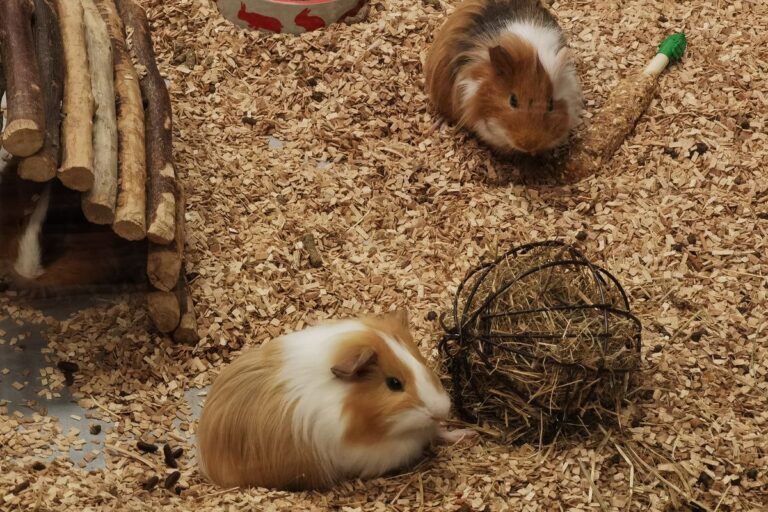
Unlimited grass hay, such as timothy or orchard grass, should be available all day. Use a hay rack, bag or pile it in a corner. Hay supports healthy teeth and digestion.
Hides
Provide at least one hide per guinea pig, plus an extra. Guinea pigs are prey animals and feel safer with places to retreat. Hides with two exits help prevent one guinea pig from trapping another.
Food bowls
Use heavy ceramic bowls that can’t tip. Offer one bowl per guinea pig to reduce squabbles.
Water
A water bottle, a heavy bowl, or both. Check and refill daily.
Enrichment
- Tunnels and fleece “forests”
- Cardboard boxes
- Safe chews, such as untreated willow or apple sticks
- Hay balls and foraging toys
Where to Put the Cage
- Indoors, in a room that stays around 65–75°F (18–24°C)
- Away from drafts, direct sunlight, heaters and air conditioners
- In a living area where guinea pigs can see and hear family activity
- Away from loud TVs or speakers and out of reach of cats and dogs
Guinea pigs are very sensitive to heat. Temperatures above about 80°F (27°C) can cause heatstroke.
Cleaning Routine
| How often | Task |
|---|---|
| Daily | Remove wet spots and droppings, refresh hay, wash bowls, refill water |
| Twice weekly | Change bedding in the kitchen and toilet areas |
| Weekly | Full bedding change and wipe down the base |
| Monthly | Deep clean with a pet-safe cleaner or diluted vinegar |
Many guinea pigs choose a “toilet corner,” often near the hay. Putting extra bedding or a litter tray there makes daily cleaning easier.
Setting Up the Cage Step by Step
- Lay down a waterproof base and absorbent bedding.
- Place the hay area in one corner, ideally near where they toilet.
- Add hides along the sides, away from the main walkway.
- Put food bowls and water in an easy-to-reach spot.
- Leave an open area for running and popcorning.
- Add tunnels and toys, then rotate them weekly.
When to Call Your Vet
Call your vet if you notice:
- Red, swollen or scabbed feet
- Sneezing, crusty eyes or noisy breathing
- A guinea pig hiding constantly and eating less
- Wounds from fighting with a cage-mate
Frequently Asked Questions
Can guinea pigs live outside?
Many experts recommend keeping guinea pigs indoors. Outdoor hutches expose them to heat, cold, damp and predators.
Can one guinea pig live alone?
Guinea pigs are herd animals and are happiest with at least one companion of the same species.
Do guinea pigs need a wheel?
No. Wheels can injure guinea pigs’ backs and feet. Floor space and floor time are what they need.
How often should I replace hides and toys?
Replace wooden and cardboard items once they’re heavily chewed, soiled or moldy. Fabric hides can be washed weekly with unscented detergent.
What temperature is too cold for guinea pigs?
Keep them above about 60°F (16°C). Cold, damp conditions raise the risk of respiratory illness, so avoid unheated garages and drafty spots.
This article is for general information only and isn’t a substitute for professional veterinary advice. If you’re worried about your pet’s health, contact your veterinarian or an emergency animal hospital.