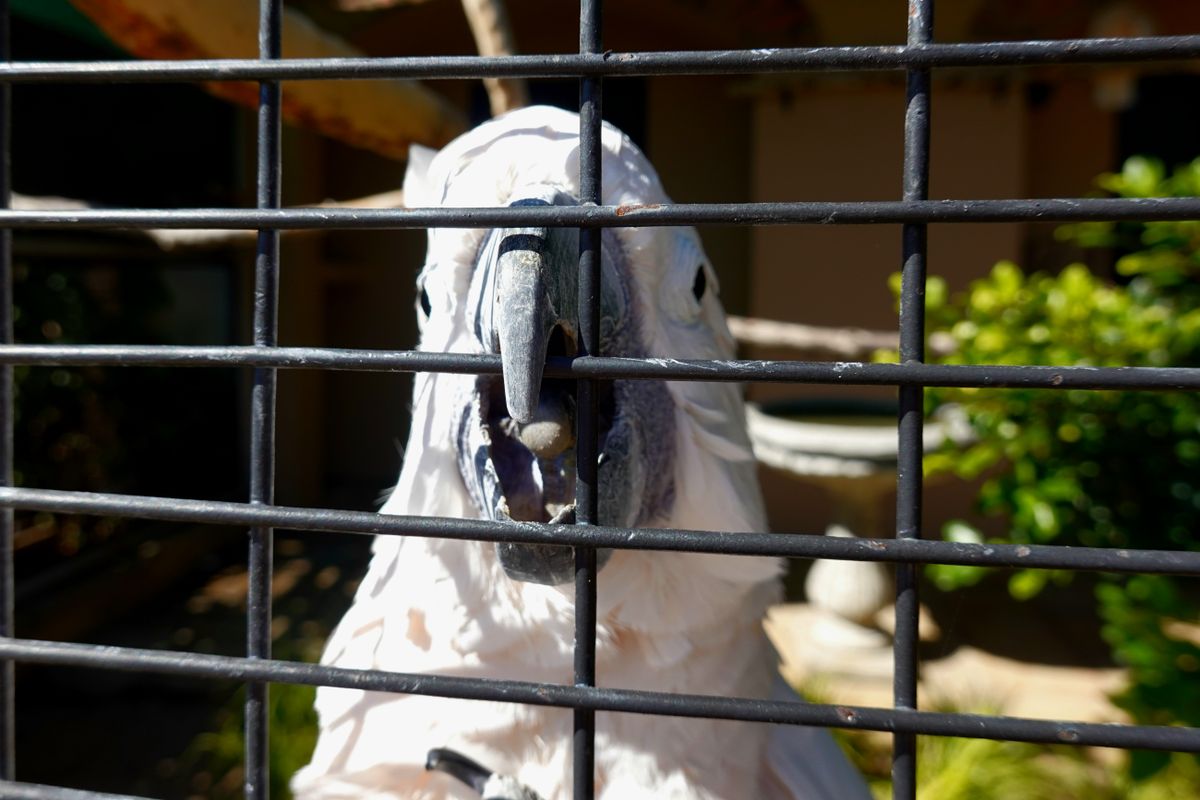
Cockatoos are large, strong and extremely curious. They can bend weak bars, open simple latches and chew through cheap materials. A good cockatoo cage keeps your bird safe, supports healthy activity and gives them a secure home base. Here’s how to choose and set one up.
At a Glance: For medium cockatoos like the umbrella cockatoo, choose a cage at least about 36 x 24 x 48 inches (91 x 61 x 122 cm), with bar spacing around 1 to 1.5 inches (2.5–3.8 cm) and heavy-gauge stainless steel or powder-coated steel. Larger species need bigger cages, plus several hours of out-of-cage time daily.
Cage Size by Species
| Species | Minimum cage size (W x D x H) | Bar spacing |
|---|---|---|
| Goffin’s cockatoo | 32 x 23 x 36 in (81 x 58 x 91 cm) | 3/4–1 in (1.9–2.5 cm) |
| Umbrella cockatoo | 36 x 24 x 48 in (91 x 61 x 122 cm) | 1–1.5 in (2.5–3.8 cm) |
| Moluccan cockatoo | 40 x 30 x 60 in (102 x 76 x 152 cm) | 1–1.5 in (2.5–3.8 cm) |
| Sulphur-crested cockatoo | 40 x 30 x 60 in (102 x 76 x 152 cm) | 1–1.5 in (2.5–3.8 cm) |
These are minimums. Your cockatoo should be able to spread its wings fully and move between perches without touching the sides. Bigger is always better.
Choosing Cage Materials
Look for
- Stainless steel, the most durable and easiest to clean
- High-quality powder-coated steel from a reputable maker
- Heavy-gauge bars that can’t be bent
- Bird-proof locks, since cockatoos learn to open simple latches
- A pull-out tray and grate
Avoid
- Galvanized or zinc-coated wire, which can cause heavy metal poisoning
- Older cages with chipped paint that may contain lead
- Thin, flimsy bars
- Decorative scrolls that can trap heads or feet
Learn more in our guide to household hazards for pet birds.
Perches
Offer at least three perches of different sizes and textures:
- Natural wood branches, like manzanita or java wood, for foot health
- Rope perches for comfort, checked often for fraying
- A calcium or concrete perch for nail wear, used sparingly
Place perches at different heights, but not directly over food and water bowls.
Toys and Enrichment
Cockatoos are powerful chewers. Plan to replace toys often.
- Shreddable palm leaf, cardboard and balsa toys
- Foraging toys and puzzle feeders
- Wood blocks for chewing
- Swings and ladders
See our list of parrot enrichment ideas for more.
Food and Water Bowls
Use stainless steel bowls that lock into place. Cockatoos love to dump bowls. Clean them daily.
Setting Up the Cage Step by Step
- Place the cage against a wall so your bird feels secure from behind.
- Line the tray with plain paper so you can check droppings.
- Put the main perch high in the cage, where your bird will sleep.
- Add food and water bowls near a lower perch.
- Hang 3 to 5 toys, leaving clear flight and climbing paths.
- Add a foraging station on the floor or a lower level.
Where to Put the Cage
- In a room where the family spends time
- Away from the kitchen to avoid cooking fumes
- Away from drafts, heating vents and direct sun
- Not directly in front of a window facing busy outdoor areas or predators
- At eye level or slightly lower, not towering above people
Play Stands and Sleep Cages
A play stand outside the cage gives your bird a second space during out-of-cage time. Many owners also use a small, quiet sleep cage in another room so the bird gets 10 to 12 hours of undisturbed sleep.
Cleaning Routine
| How often | Task |
|---|---|
| Daily | Change tray paper, wash bowls, remove old fresh food |
| Weekly | Scrub perches and grate, check toys for damage |
| Monthly | Deep clean the full cage with bird-safe cleaner |
Avoid strong chemical sprays near your bird.
When to Call Your Vet
Call an avian vet if your cockatoo:
- Has injuries to the feet, beak or face from the cage
- May have chewed metal or paint
- Shows signs of illness like fluffing, weakness or changes in droppings. See signs your bird is sick.
Frequently Asked Questions
Can my cockatoo live in an aviary?
A large, secure indoor or outdoor aviary can be wonderful, as long as it’s predator-proof, sheltered from weather and built with safe materials.
How many hours should a cockatoo spend outside the cage?
Most experts recommend at least 3 to 4 hours of supervised out-of-cage time daily.
Should I cover the cage at night?
Covering can help some birds sleep. Make sure there’s good airflow and the cover can’t be pulled into the cage and chewed.
Is a dome-top or play-top cage better?
Play-top cages give extra out-of-cage space but take away some interior height. Choose based on your bird’s size and your room layout.
How often should I replace perches?
Replace perches when they’re heavily chewed, cracked or dirty beyond cleaning. Rope perches should be checked weekly for loose threads.
This article is for general information only and isn’t a substitute for professional veterinary advice. If you’re worried about your pet’s health, contact your veterinarian or an emergency animal hospital.