In the wild, parrots spend hours every day searching for food, chewing, flying and socializing. Pet parrots need outlets for these same behaviors. Without them, boredom can lead to screaming, feather plucking and stress. Here are 15 parrot enrichment ideas to keep your bird busy and healthy.
Quick Answer: Good parrot enrichment mixes foraging (working for food), chewing and shredding, puzzle solving, training, social time, bathing and safe exploration. Rotate toys weekly and aim to have your bird “work” for part of its daily food.
Why Enrichment Matters
Parrots are very intelligent. Research on captive parrots shows that foraging opportunities and environmental enrichment can reduce problem behaviors like feather damaging. Lack of stimulation is a common factor in feather plucking and excessive screaming.
15 Parrot Enrichment Ideas
Foraging
- Paper cup surprises. Put a treat in a paper cup, twist the top and hang it in the cage.
- Cardboard boxes. Fill a small plain box with shredded paper and a few treats.
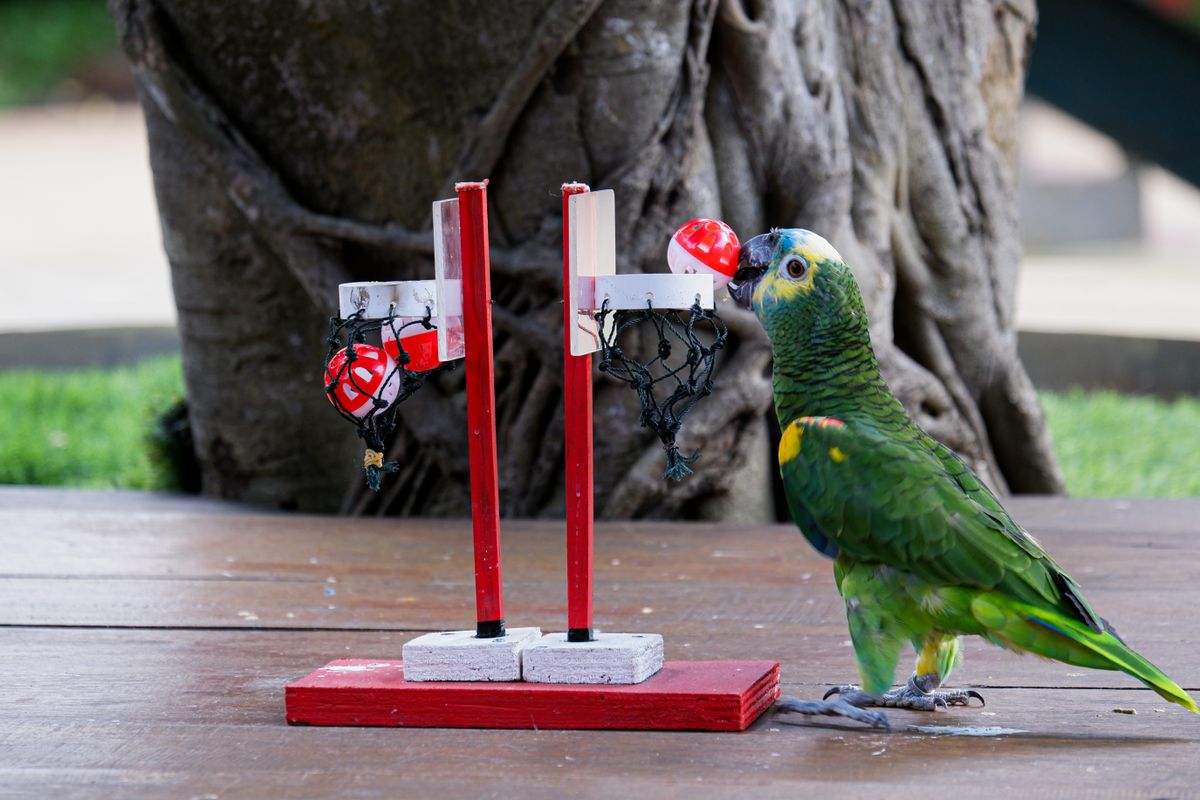
- Foraging toys. Commercial toys with compartments, drawers or sliding doors.
- Foraging trays. A shallow tray of shredded paper with pellets and treats mixed in.
- Whole foods. Offer a whole pea pod, corn cob piece or unshelled nuts so your bird works to get the food.
Chewing and shredding
- Palm leaf and balsa toys that are safe to destroy.
- Untreated wood blocks from bird-safe woods like pine, balsa and apple.
- Paper and cardboard without glossy coatings or ink-heavy prints.
Puzzles and problem solving
- Puzzle feeders that need twisting, lifting or pulling.
- Stacking cups or rings for larger parrots.
Social and training
- Target training. Teach your bird to touch a stick, then use it to teach tricks.
- Recall practice. For flighted birds, practice flying to you for a treat.
- Talking and whistling time. Spend time chatting, singing and playing music.
Environmental
- Bath time. Many birds love a gentle mist from a spray bottle or a shallow dish of water.
- Window time or safe outdoor time. Some birds enjoy watching outdoor life, or supervised time in a secure outdoor aviary or harness.
Setting Up a Toy Rotation
| Week | Ideas to swap in |
|---|---|
| Week 1 | Foraging box, palm leaf toy, new perch |
| Week 2 | Puzzle feeder, wooden block toy, foraging tray |
| Week 3 | Paper cup surprises, acrylic toy, rope swing |
| Week 4 | Stacking cups, shreddable basket, bath time focus |
Keep 3 to 5 toys in the cage at once, and swap a couple each week. Toys that come back after a few weeks feel new again.
Introducing New Toys to a Nervous Bird
Some parrots are afraid of new objects. Try:
- Placing the toy near, but outside, the cage for a few days.
- Playing with the toy yourself where your bird can see.
- Moving it into the cage on the floor or low perch.
- Rewarding your bird for approaching it.
Toy Safety Checklist
- Avoid zinc-coated or galvanized metal and lead, which can cause heavy metal poisoning. See household hazards for pet birds.
- Check for loose threads, rope fraying and small parts.
- Use stainless steel quick links and hardware.
- Choose toys sized for your bird. Small toys can trap large beaks.
- Avoid mirrors for birds that become obsessed with them.
Foraging for Beginners
If your bird has never foraged, start easy:
- Place a treat on top of shredded paper in a bowl.
- Next, partly cover it.
- Then fully bury it.
- Move to paper cups and boxes as your bird learns.
When to Call Your Vet
Call an avian vet if your bird:
- Stops playing and sits fluffed up
- Starts plucking or chewing feathers
- Has bleeding from the beak or feet
- May have swallowed metal or toy parts
Frequently Asked Questions
How many toys does a parrot need?
Enough to provide variety without crowding the cage. Most birds do well with 3 to 5 toys at a time, rotated weekly.
Can I make homemade toys?
Yes. Plain paper, cardboard, untreated wood and natural fibers make great DIY toys. Avoid glue, glossy paper and dyes.
How much out-of-cage time does a parrot need?
Many experts recommend at least 2 to 3 hours a day, depending on the species.
My bird ignores toys. What should I do?
Start with easy foraging, show your bird how to play, and try different textures. Some birds prefer shredding, others prefer puzzles.
Is it safe to give my parrot natural branches?
Yes, if they come from bird-safe trees that haven’t been sprayed. Wash and dry branches well, and bake them at a low temperature to kill pests if your vet recommends it.
This article is for general information only and isn’t a substitute for professional veterinary advice. If you’re worried about your pet’s health, contact your veterinarian or an emergency animal hospital.