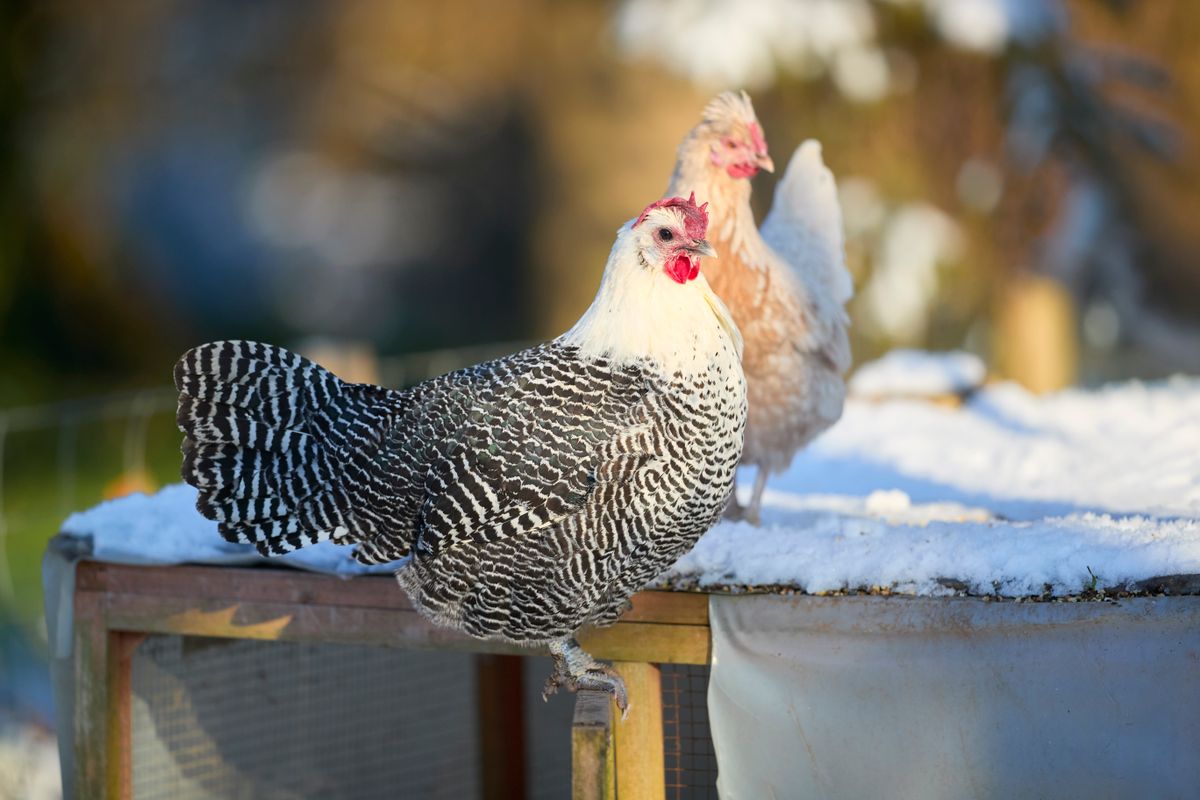
Chickens are tougher in cold weather than many people think. A healthy, well-feathered flock can handle freezing temperatures with the right setup. The bigger dangers in winter are dampness, drafts, frozen water and frostbite. Here’s how to provide good winter chicken care.
Quick Answer: Most cold-hardy chickens don’t need supplemental heat. Focus on a dry, draft-free coop with good ventilation, unfrozen water, plenty of feed and protection from frostbite. Avoid heat lamps, which are a serious fire risk. Egg laying naturally slows in winter because of shorter days.
How Chickens Stay Warm
Chickens fluff their feathers to trap warm air, tuck their heads and feet, and huddle together on the roost. Digesting food also produces body heat.
Priority 1: Keep the Coop Dry and Ventilated
Moisture from breath and droppings causes frostbite and respiratory illness.
- Keep vents open high on the walls, above roosting birds.
- Close only low drafts near roosts.
- Change wet bedding promptly.
- Consider the deep litter method for warmth.
Priority 2: Keep Water From Freezing
Chickens need water all day, even in cold weather. Dehydration reduces laying and can cause illness.
- Use heated waterers or heated bases made for poultry.
- Swap waterers several times a day if you don’t have power.
- Black rubber pans absorb sunlight and thaw faster.
- Keep extension cords and heaters safely secured and away from bedding.
Priority 3: Prevent Frostbite
Frostbite most often affects combs, wattles and toes.
Prevention:
- Ventilate to reduce humidity.
- Use wide roosts (2×4 with wide side up) so birds cover toes with feathers.
- Choose breeds with small combs for cold climates.
- Some keepers apply a thin layer of petroleum jelly to large combs, though evidence is limited.
Signs: pale, gray or black areas on combs or toes; swelling or blisters.
Don’t rub frostbitten areas. Warm the bird slowly and contact a vet.
Priority 4: Feed Well
- Offer complete layer feed free-choice.
- A small handful of scratch grains in the evening adds extra calories for overnight warmth.
- Keep oyster shell available.
See what to feed backyard chickens.
Should You Heat the Coop?
Most experts advise against heat lamps. They cause many coop fires each year and can make it harder for birds to adapt to cold. If you do add heat for very young, sick or cold-sensitive breeds, use a flat-panel radiant heater designed for coops, securely mounted.
Winter Egg Laying
Shorter days naturally reduce laying. Some keepers add light on a timer to extend daylight to about 14 hours; others let hens rest. See why chickens stop laying eggs.
Collect eggs more often in freezing weather so they don’t crack.
Keep Chickens Active
- Clear a patch of snow in the run, or lay down straw.
- Provide a covered area so they can go outside.
- Offer a hanging cabbage or flock block for entertainment.
Cold-Hardy Breeds
| Breed | Notes |
|---|---|
| Buff Orpington | Fluffy, calm, good winter layer |
| Plymouth Rock | Hardy and friendly |
| Wyandotte | Rose comb resists frostbite |
| Brahma | Feathered feet, very cold-tolerant |
| Chantecler | Developed for cold climates |
See best chicken breeds for beginners.
The Merck Veterinary Manual highlights ventilation and dry housing as key to preventing respiratory disease in backyard poultry.
When to Call a Vet
Call a vet if a chicken:
- Has black or blistered combs or toes
- Is lethargic, hunched or not eating
- Has sneezing, wheezing or discharge
Frequently Asked Questions
What temperature is too cold for chickens?
Healthy, cold-hardy adult chickens can tolerate temperatures well below freezing if they’re dry and out of drafts.
Should I close all the windows in winter?
Close windows near roosts to block drafts, but keep high vents open for airflow.
Do chickens need to go outside in winter?
They don’t have to, but many enjoy it. Provide shelter from wind and snow.
Can I give chickens warm water?
Yes. Warm water in the morning can encourage drinking.
Are bantams OK in winter?
Many bantams are hardy, but their small size means they lose heat faster. Make sure they can huddle with the flock.
Should I wash chickens in winter?
Avoid bathing chickens in cold weather unless necessary. Wet feathers lose their insulation.
Do chickens molt in winter?
Most molt in late summer or fall, but some molt late. Molting hens need extra protein and shelter from cold.
How do I know if my chickens are too cold?
Shivering, standing hunched on one foot for long periods, lethargy and pale combs can mean a bird is struggling. Check for drafts and dampness first.
Is straw or shavings better in winter?
Both insulate. Shavings absorb moisture well; straw traps warmth but can hold moisture and mites. Keep whichever you use dry.
This article is for general information only and isn’t a substitute for professional veterinary advice. If you’re worried about your pet’s health, contact your veterinarian or an emergency animal hospital.