Cats are masters at hiding pain. In the wild, showing weakness can attract predators, so even pet cats instinctively mask discomfort. Many owners don’t realize their cat is hurting until the problem is advanced. Here are the subtle signs your cat is in pain and what to do about them.
Quick Answer: Signs of pain in cats include hiding, reduced activity, changes in posture, squinting, a tense face, flattened ears, decreased appetite, grooming changes, litter box changes, irritability and reluctance to jump. If you notice any of these, especially more than one, contact your veterinarian.
Why Cats Hide Pain
Cats are both predators and prey. Hiding pain helps them avoid looking vulnerable. This means changes may be small: a cat that sleeps a bit more, stops jumping onto the counter or grooms less.
Behavior Changes
| Sign | What it may look like |
|---|---|
| Hiding | Spending more time under beds or in closets |
| Less activity | Sleeping more, playing less |
| Reluctance to jump | Avoiding favorite high spots |
| Irritability | Hissing, swatting or biting when touched |
| Less interaction | Not greeting you or seeking affection |
| Restlessness | Trouble getting comfortable |
Changes in Posture
- Sitting hunched with the head lowered
- Tucked-in paws and a tight body
- Lying in an unusual position
- Limping or a stiff gait
- Arched back or tucked belly
Facial Expressions: The Feline Grimace Scale
Researchers have developed the Feline Grimace Scale, which helps vets assess pain using five facial features:
- Ear position: ears flattened or rotated outward
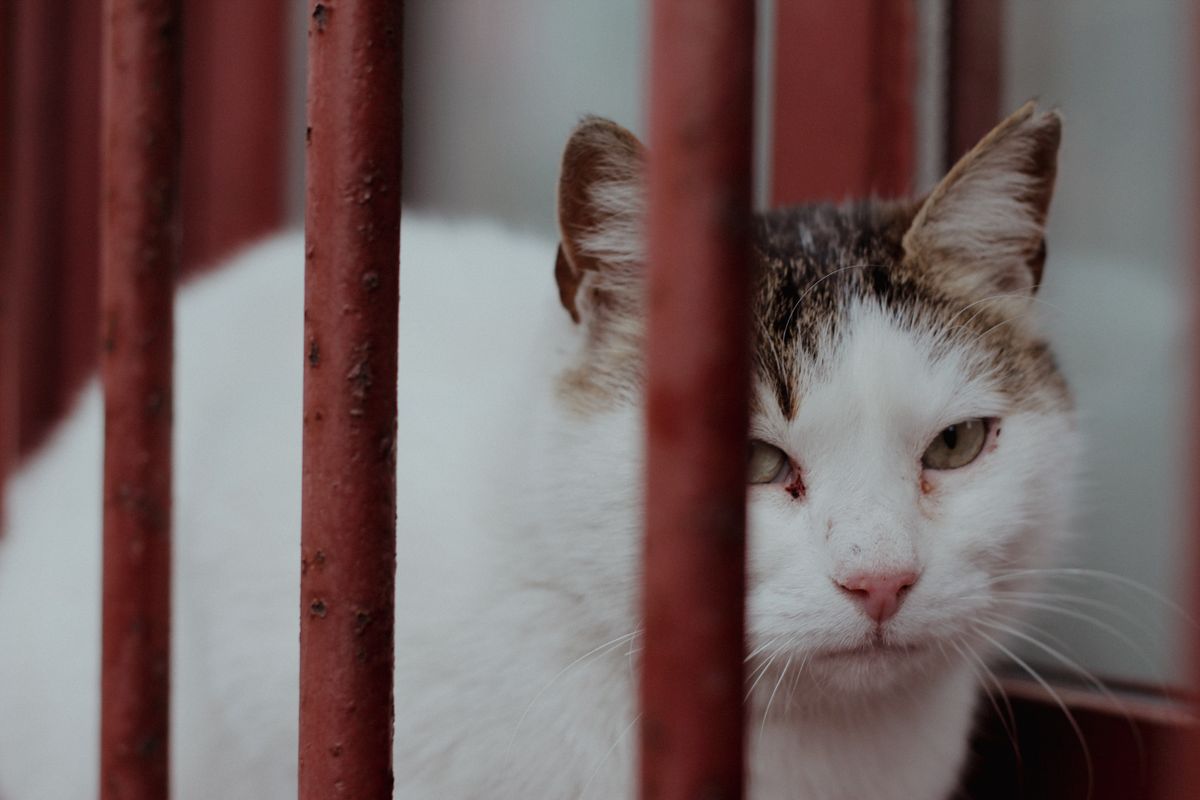
- Orbital tightening: squinting or partially closed eyes
- Muzzle tension: tense, more oval-shaped muzzle
- Whisker position: whiskers straight and pulled back or forward
- Head position: head lowered below the shoulders
Grooming Changes
- Less grooming: a greasy, matted or unkempt coat, often from arthritis
- Overgrooming: licking one area until bald, which can signal pain underneath
Appetite and Litter Box Changes
- Eating less or chewing on one side, which may point to dental disease
- Urinating or defecating outside the box, especially if climbing into the box hurts. See why is my cat peeing outside the litter box.
- Straining in the litter box, which can be an emergency. See urinary blockage in male cats.
Common Causes of Pain in Cats
- Arthritis (very common in older cats)
- Dental disease
- Urinary tract problems
- Injuries
- Pancreatitis and other abdominal problems
- Cancer
The VCA Animal Hospitals notes that arthritis is common and often underdiagnosed in older cats.
What to Do
- Write down what you’ve noticed, including when it started.
- Take a video of unusual behavior, like limping or straining.
- Call your vet.
- Don’t give human pain medications. Acetaminophen (Tylenol) is extremely toxic to cats, and ibuprofen and aspirin can be dangerous.
Never give your cat human pain relievers. Even small doses of acetaminophen can be fatal.
Helping a Cat With Ongoing Pain
Your vet may recommend:
- Pain medications made for cats
- Joint supplements
- Weight management
- Ramps or steps to favorite spots
- Low-sided litter boxes
- Soft, warm bedding
When to Call Your Vet
Go to an emergency vet now if your cat:
- Is straining to urinate with little or no urine
- Has trouble breathing
- Cries out in pain or can’t walk
- Has a swollen or hard belly
Book an appointment soon if your cat:
- Is hiding more or less active
- Stops jumping or grooming
- Has changes in appetite or litter box habits
Frequently Asked Questions
Do cats purr when they’re in pain?
Yes, sometimes. Purring can be a self-soothing behavior, so it doesn’t always mean a cat is happy.
Can arthritis pain in cats be treated?
Yes. Vets can prescribe safe medications, and there are newer treatments specifically for arthritis pain in cats.
Why is my cat suddenly aggressive?
Pain is a common cause of sudden aggression. A vet exam is a good first step.
Are older cats always in some pain?
No. Aging isn’t the same as pain. Many older cats can be kept comfortable with good care.
How do vets measure pain in cats?
Vets use physical exams, behavior observations and tools like the Feline Grimace Scale.
Can I give my cat CBD for pain?
Talk to your vet first. Product quality varies, and some ingredients can be unsafe for cats.
What does a cat in pain sound like?
Some cats yowl or growl, but many stay silent. Behavior changes are often more reliable than sounds.
Can I check my cat’s pain at home?
Watch for changes in daily habits like jumping, grooming, litter box use and eating. Keeping notes and short videos helps your vet.
This article is for general information only and isn’t a substitute for professional veterinary advice. If you’re worried about your pet’s health, contact your veterinarian or an emergency animal hospital.