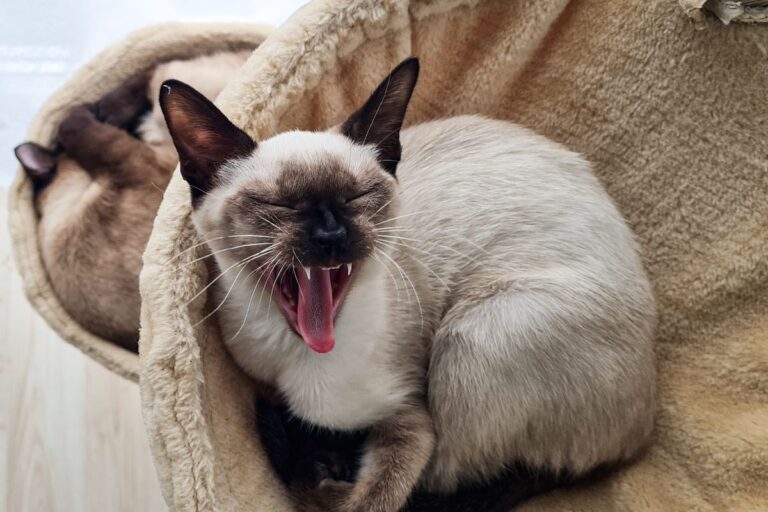
Obesity is one of the most common health problems in pet cats. Many owners don’t realize their cat is overweight, since a chubby cat can look “normal” when so many others look the same. Extra weight raises the risk of serious disease. Here’s how to recognize obesity in cats and help your cat slim down safely.
Quick Answer: A cat is overweight when you can’t easily feel the ribs, there’s no visible waist and the belly sags with fat. Safe weight loss is slow, about 0.5–2% of body weight per week, with a measured, calorie-controlled diet, more play and regular weigh-ins. Never put a cat on a crash diet, because rapid weight loss can cause fatty liver disease.
Why Obesity Matters
Overweight cats are at higher risk of:
- Diabetes. See diabetes in cats.
- Arthritis and joint pain. See signs your cat is in pain.
- Urinary problems, including blockages in males
- Skin problems from being unable to groom properly
- Fatty liver disease if they stop eating
- Shorter lifespan
The Cornell Feline Health Center notes that obesity is a major and preventable health issue in cats.
Is My Cat Overweight?
The hands-on test
| Check | Ideal | Overweight |
|---|---|---|
| Ribs | Easily felt with a thin fat layer | Hard to feel |
| Waist (from above) | Visible tuck behind the ribs | No waist or bulging sides |
| Belly (from the side) | Slight tuck; small fat pad OK | Hanging, swinging belly |
| Base of the tail | Smooth | Fat pads |
Your vet can give a body condition score (1–9) and an ideal weight target.
Common Causes
- Free-feeding dry food
- Too many treats
- Indoor life with little activity
- Neutering (lowers calorie needs)
- Age
- Multi-cat homes where cats eat each other’s food
How to Help Your Cat Lose Weight
1. See your vet first
Rule out medical issues and get a target weight and calorie goal.
2. Measure every meal
Use a gram scale. See how much to feed your cat.
3. Consider a weight-loss diet
Prescription or high-protein, lower-calorie diets help cats feel full while losing fat, not muscle.
4. Choose more wet food
Wet food is lower in calories per bite. See wet vs. dry cat food.
5. Limit treats
Keep treats under 10% of daily calories, and count them.
6. Make food work for them
Use puzzle feeders, food balls and scatter feeding to slow eating and add activity.
7. Play every day
Two or three 10-minute sessions with wand toys, laser pointers (end with a real toy to “catch”) or chasing games.
8. Weigh regularly
Every 2 to 4 weeks at home or at the vet.
Safe Weight-Loss Rate
| Starting weight | Safe weekly loss (about 0.5–2%) |
|---|---|
| 14 lb (6.4 kg) | About 1–4.5 oz (30–130 g) |
| 18 lb (8.2 kg) | About 1.5–5.5 oz (40–160 g) |
Reaching goal weight can take 6 months to a year. That’s normal and safe.
Never starve a cat to make it lose weight. Cats that stop eating for even a few days can develop hepatic lipidosis (fatty liver disease), which can be fatal.
Multi-Cat Homes
- Feed cats separately.
- Use microchip feeders.
- Raise the thin cat’s bowl onto a high shelf the overweight cat can’t reach.
Maintaining a Healthy Weight
Once your cat reaches its goal, your vet will adjust calories to maintain it. Keep weighing monthly.
When to Call Your Vet
Call your vet if your cat:
- Stops eating during a diet
- Loses weight too quickly
- Is drinking or urinating more
- Has trouble grooming or jumping
Frequently Asked Questions
Is my cat just big-boned?
Some breeds are larger, but body condition (fat cover) matters more than size.
Can I feed my overweight cat less of its current food?
Cutting portions of a regular food can reduce nutrients too much. Weight-loss diets are formulated to prevent deficiencies.
Do weight-loss diets taste worse?
Many cats accept them well, especially when switched gradually.
Will my cat be hungry?
Some begging is normal. High-protein, high-fiber diets and frequent small meals help.
Does neutering make cats fat?
Neutering lowers calorie needs, but cats only gain weight if portions aren’t adjusted.
Are automatic feeders helpful?
Yes. They provide measured meals on schedule and reduce begging.
What’s a realistic goal?
Your vet will set a target. Even a 10% weight loss can improve mobility and health.
Can overweight cats still play?
Yes. Start with short, gentle sessions and build up. Even 5 minutes of play a few times a day helps.
Should I use a laser pointer?
Laser play is great exercise. End each session by letting your cat “catch” a real toy or treat to avoid frustration.
This article is for general information only and isn’t a substitute for professional veterinary advice. If you’re worried about your pet’s health, contact your veterinarian or an emergency animal hospital.