Budgies are hardy little birds, but they’re prone to a handful of health problems. Because they hide illness, owners often notice signs late. Knowing the most common budgie illnesses helps you catch problems early. Here’s a guide to what to watch for.
Key Takeaways:
- Budgies often hide illness until they’re quite sick.
- Common problems include scaly face mites, tumors, respiratory infections, obesity and goiter.
- Weigh your budgie weekly and watch droppings daily.
- A fluffed, sleepy budgie needs a vet the same day.
Scaly Face and Leg Mites
Knemidokoptes mites burrow into the skin of the cere, beak, eyes and legs. They’re one of the most common problems in budgies.
Signs:
- White, crusty, honeycomb-like growths on the cere or beak
- Crusty legs and feet
- Beak overgrowth or deformity in long-standing cases
Treatment: an avian vet can prescribe an antiparasitic medication. Treatment is usually very effective. Clean and disinfect the cage, and treat all budgies in the household as advised.
Tumors
Budgies are known for developing tumors more often than many other pet birds.
- Lipomas: fatty lumps, often on the chest or belly, linked to obesity
- Kidney and gonad tumors: can cause lameness in one leg because they press on nerves
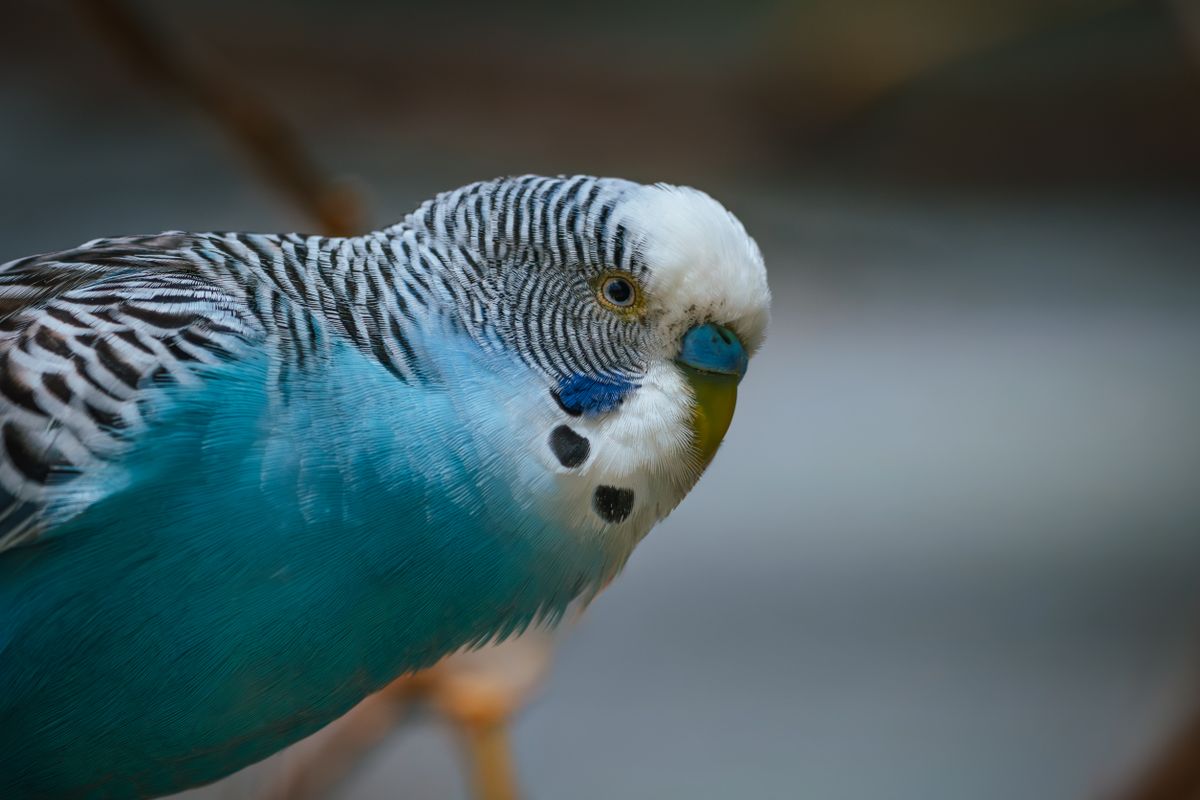
- Changes in cere color: a male budgie’s blue cere turning brown can be a sign of a testicular tumor
The Merck Veterinary Manual notes that tumors are common in budgerigars.
Respiratory Infections
Bacterial, fungal and other infections can affect the airways.
Signs: sneezing, discharge from the nostrils, clicking breathing, tail bobbing and fluffed feathers.
Avian chlamydiosis (psittacosis) is a bacterial infection that can affect budgies and spread to people. Wash your hands after handling birds and tell your doctor you keep birds if you develop flu-like symptoms.
Obesity and Fatty Liver
Seed-heavy diets and too little exercise often lead to obesity. Overweight budgies are at risk of fatty liver disease and lipomas.
Prevention: feed a pellet-based diet with vegetables, limit millet and seeds, and give daily out-of-cage time. See seeds vs. pellets for parrots.
Goiter (Thyroid Enlargement)
Iodine deficiency can cause the thyroid gland to enlarge and press on the airway and esophagus. It’s mostly seen in budgies on seed-only diets.
Signs: wheezing, clicking, regurgitation and changes in voice.
Megabacteriosis (Avian Gastric Yeast)
A yeast called Macrorhabdus ornithogaster infects the stomach.
Signs: weight loss despite eating, regurgitation and whole seeds in droppings.
Egg Binding in Females
Female budgies can lay eggs even without a male. Chronic egg laying drains calcium and can lead to egg binding.
Signs: straining, sitting on the cage floor, fluffed feathers and a swollen belly. This is an emergency.
Quick Symptom Guide
| Sign | Possible causes |
|---|---|
| Crusty beak or cere | Scaly face mites |
| Lump on chest or belly | Lipoma or other tumor |
| Limping on one leg | Kidney or gonad tumor, injury |
| Tail bobbing, clicking | Respiratory infection, goiter |
| Weight loss with seeds in droppings | Avian gastric yeast |
| Sitting on the floor, straining | Egg binding |
| Brown cere in a male | Possible testicular tumor |
How to Keep Your Budgie Healthy
- Feed a balanced diet with pellets and vegetables.
- Weigh your budgie weekly on a gram scale.
- Check droppings daily.
- Keep the cage clean.
- Quarantine new birds for at least 30 days.
- Avoid nonstick cookware and aerosol sprays. See household hazards for pet birds.
- Book yearly avian vet checkups.
For a full beginner overview, see our budgie care guide.
When to Call Your Vet
Get emergency care if your budgie:
- Is on the cage floor or can’t perch
- Is straining or seems egg bound
- Is breathing with an open mouth or bobbing its tail hard
- Is bleeding
Book a visit soon if your budgie:
- Has crusty growths, lumps or limping
- Is losing weight
- Has changes in droppings for more than a day
Frequently Asked Questions
Can budgies get sick from people?
Most human colds don’t infect budgies. Good hand hygiene protects both of you.
Are budgie tumors treatable?
Some lumps, like lipomas, can be managed with diet or removed surgically. Internal tumors are harder to treat. Your vet can explain options.
Do budgies need vaccines?
Pet budgies in most homes don’t routinely receive vaccines. Your avian vet will advise based on your situation.
How long do budgies live with mites?
Mites are very treatable. With prompt care, most budgies recover fully, although severe beak damage may need ongoing trimming.
Why is my budgie losing feathers?
Normal molting, mites, stress, poor diet and other illnesses can all cause feather loss. An avian vet can find the cause.
This article is for general information only and isn’t a substitute for professional veterinary advice. If you’re worried about your pet’s health, contact your veterinarian or an emergency animal hospital.