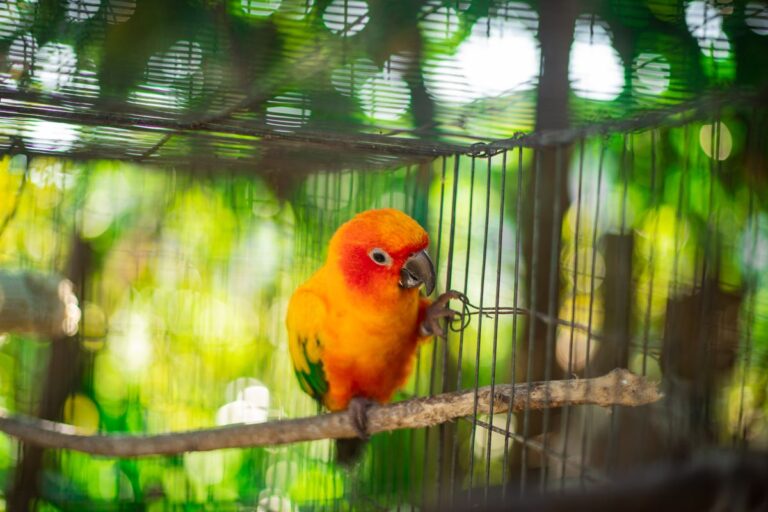
Budgies, also called budgerigars or parakeets, are among the world’s most popular pet birds. They’re small, social, clever and full of personality. They’re also more than “starter pets.” With the right care, they can live 10 years or more. This guide covers budgie care basics for beginners.
Quick Answer: Budgies need a spacious cage with horizontal bars, a balanced diet of pellets, fresh vegetables and some seeds, daily social time, toys and 10 to 12 hours of sleep. They’re flock birds, so many do best in pairs. Find an avian vet for a checkup soon after you bring your budgie home.
Budgie Basics
| Fact | Detail |
|---|---|
| Size | About 7 in (18 cm) long |
| Weight | About 30–40 g (some show budgies more) |
| Lifespan | Often 7–10 years, sometimes up to 15 |
| Personality | Social, playful, curious |
| Noise level | Chatty but not very loud |
| Talking | Many males learn words and phrases |
Choosing a Cage
- Size: at least about 30 x 18 x 18 inches (76 x 46 x 46 cm) for one or two budgies. Wider is better than taller, since budgies fly side to side.
- Bar spacing: about 1/2 inch (1.2 cm) or less so heads can’t get stuck.
- Horizontal bars on at least two sides for climbing.
- Safe materials: avoid zinc-coated or chipped painted cages.
What goes inside
- 3 to 4 perches of different widths, including natural wood
- Food and water bowls
- A cuttlebone or mineral block
- A few toys: bells, swings, ladders and shreddable items
- A shallow bath dish
What Do Budgies Eat?
Wild budgies eat mostly grass seeds, but pet budgies on seed-only diets often develop obesity, fatty liver and vitamin deficiencies.
A balanced budgie diet looks like this:
- Pellets: about half the diet or more
- Fresh vegetables: daily, such as leafy greens, broccoli, carrot and bell pepper
- Seeds: a smaller portion, about 20–25%, plus millet as a treat
- Fruit: occasional small amounts
- Fresh water: changed daily
See our guide to seeds vs. pellets for parrots and the list of toxic foods for parrots.
One Budgie or Two?
Budgies are flock birds. A pair can keep each other company, especially if you’re away during the day. A single budgie can do well too, but needs much more daily interaction from you. Single birds sometimes bond more closely with people and may learn to talk more readily.
Daily Care Routine
| Time | Task |
|---|---|
| Morning | Uncover cage, fresh food and water, quick health check |
| Daytime | Toys, social time, out-of-cage time in a safe room |
| Evening | Fresh vegetables, play, training |
| Night | Quiet, dark room for 10–12 hours of sleep |
| Weekly | Clean perches, wash bowls, rotate toys, weigh your budgie |
Taming and Handling
Taming takes patience. Start by sitting by the cage and talking softly. Then offer millet through the bars, then with your hand inside the cage. Our guide on how to tame and hand-train a budgie walks through each step.
Safe Out-of-Cage Time
- Close windows and doors, and cover mirrors and glass.
- Turn off ceiling fans.
- Keep other pets out of the room.
- Remove toxic plants and cover cords.
- Never use nonstick pans or aerosol sprays nearby. See household hazards for pet birds.
Male or Female?
You can often tell an adult budgie’s sex by the color of the cere, the skin above the beak. See our guide to telling male and female budgies apart.
Health Checks
Watch for fluffed feathers, sleeping more, tail bobbing and changes in droppings. Budgies are prone to tumors, mites, respiratory problems and obesity. See common budgie illnesses and signs your bird is sick.
When to Call Your Vet
Book an avian vet visit:
- Within the first week or two after bringing your budgie home
- Every year for a wellness check
Call promptly if your budgie:
- Is fluffed up and sleepy
- Has changes in droppings for more than a day
- Has crusty growths on the beak or legs
- Has a lump on the body
Frequently Asked Questions
Can budgies talk?
Yes, many can, especially males. Some learn dozens of words.
Do budgies need baths?
Most enjoy bathing. Offer a shallow dish of water or a light mist a few times a week.
Can budgies live outside?
They’re safest indoors. Outdoor aviaries need protection from predators, weather and wild birds that may carry disease.
How do I keep my budgie from getting bored?
Rotate toys weekly, offer foraging opportunities and spend time talking and training every day.
What temperature do budgies need?
Normal indoor temperatures, about 65–80°F (18–27°C), suit most budgies. Avoid drafts and direct sun on the cage.
This article is for general information only and isn’t a substitute for professional veterinary advice. If you’re worried about your pet’s health, contact your veterinarian or an emergency animal hospital.