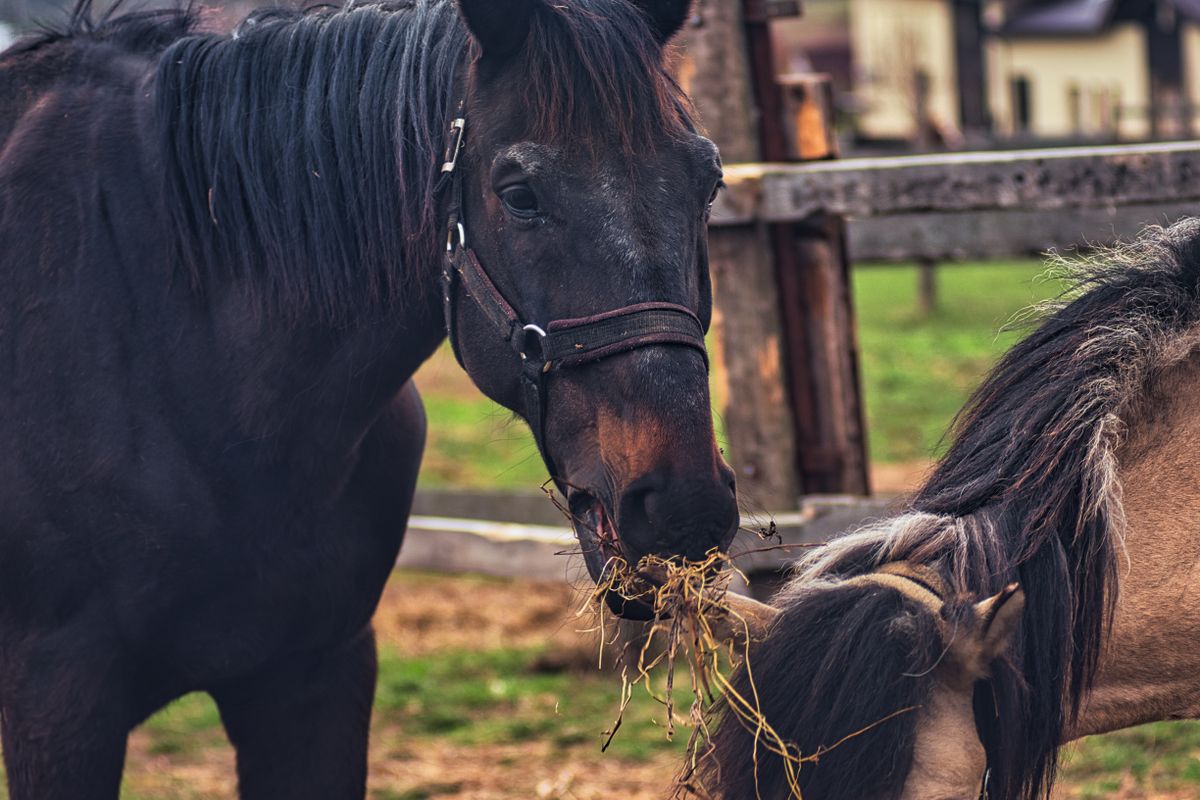
Horses evolved to graze for many hours a day, eating small amounts almost constantly. Stalled horses that get two large hay meals often finish quickly and then stand for hours with nothing to eat. Slow feed hay nets help stretch out eating time. Hay Chix is one of the best-known brands. This review looks at how the nets work, their benefits and the safety points to keep in mind.
Verdict at a Glance: Hay Chix nets are durable, knotless slow feed nets that many owners use to extend eating time and cut hay waste. They work well for many horses, including easy keepers on restricted hay. Choose the hole size carefully, introduce the net gradually and hang or secure it so a horse can’t catch a hoof or shoe.
At a Glance
| Feature | Details |
|---|---|
| Type | Small-hole slow feed hay net |
| Hole sizes | Several, commonly about 1 to 2 inches (check current range) |
| Construction | Knotless netting |
| Sizes | Small bags to large round bale nets |
| Best for | Stalled horses, easy keepers and reducing hay waste |
What It Is and How It Works
Small mesh holes make horses pull out a little hay at a time. This slows eating and spreads a ration over more hours.
Longer eating times may support gut health. A horse’s stomach produces acid continuously, and long gaps without forage are linked to a higher risk of gastric ulcers. Slow feeding also helps easy keepers whose hay must be limited, since they’re less likely to stand with an empty stomach for long periods.
Nets reduce waste too. Horses are less likely to trample, soil or scatter hay that’s held in a net. See how much hay does a horse need for daily guidelines.
Pros and Cons
| Pros | Cons |
|---|---|
| Durable knotless netting | Shod horses can catch shoes in low-hanging nets |
| Slows eating to mimic grazing | Some horses get frustrated at first |
| Reduces hay waste | Takes longer to fill than loose hay |
| Several hole sizes and bag sizes | Possible extra wear on incisors, according to some owners and vets |
| Helps stretch limited hay rations |
Choosing a Hole Size
| Hole size | Typical use |
|---|---|
| About 1 inch | Strong slowing effect; easy keepers and experienced net users |
| About 1.5 to 1.75 inches | Moderate slowing; a common starting point |
| About 2 inches | Mild slowing; horses new to nets or coarse hay |
Start with a larger hole size and move to smaller holes once your horse is comfortable. Some horses become frustrated with very small holes at first. Coarse or stemmy hay is harder to pull through small holes than soft, leafy hay.
Things to Consider Before Buying
- Choose a hole size that suits your horse and hay.
- Decide how you’ll hang or secure the net.
- Introduce it gradually alongside some loose hay.
- Check daily for holes or wear.
- Ask your farrier or vet if your horse wears shoes.
Tips for Using It
- Hang nets so the bottom stays above hoof height even when empty, or use them inside a tub or frame.
- Weigh the hay you put in each net to track daily intake.
- Use several nets spread around a paddock to encourage movement.
Who It Suits
| Good fit if… | Consider something else if… |
|---|---|
| Your horse finishes hay too quickly | Your horse wears shoes and you can’t hang the net safely |
| Your horse is an easy keeper on limited hay | Your horse has dental issues that make pulling hay difficult |
| You want to reduce wasted hay |
Alternatives to Consider
| Option | How it differs |
|---|---|
| Slow feed hay boxes or tubs | Net secured inside a container |
| Hay hut or round bale feeders | Larger-scale slow feeding |
| Multiple small meals | Spread hay across more feedings |
When to Call Your Vet
Contact your vet if:
- Your horse shows signs of colic
- Your horse loses weight or stops eating
- You notice tooth wear or mouth injuries
Frequently Asked Questions
Are Hay Chix nets safe for shod horses?
They can be, with care. The main risk is a shoe catching in a net that hangs too low, so hang it high enough that it stays above hoof height when empty or secure it inside a feeder.
What hole size should I start with?
Many owners start with a larger hole size, such as 1.75 to 2 inches, and move smaller once the horse adjusts. Very small holes can frustrate horses that are new to nets.
Do slow feed nets help prevent ulcers?
Longer eating times may help, since horses produce stomach acid continuously. Slow feeding is one part of ulcer prevention, alongside turnout and diet. Ask your vet if you suspect ulcers.
Will a hay net wear down my horse’s teeth?
Some owners and vets have raised concerns about extra incisor wear. Regular dental exams help catch any problems early.
How do I introduce a hay net?
Fill it loosely at first and offer some loose hay at the same time. Over a week or two, put more of the ration in the net.
Can I use Hay Chix nets in a pasture?
Yes. Large nets are made for round and square bales. Secure them well and check them regularly for damage.
How long do Hay Chix nets last?
With normal use, they’re known for durability. Lifespan depends on how hard your horse pulls and chews, so check for holes regularly.
Can a horse eat enough hay from a slow feeder?
Most horses adjust within a few days. Weigh the hay you put in and check how much is left to make sure your horse is eating its full ration.
Pet Health Man is independent and isn’t paid by the brands we review. Product formulas, specifications and prices change, so check the current label or the manufacturer’s information before you buy.
This article is for general information only and isn’t a substitute for professional veterinary advice. If you’re worried about your pet’s health, contact your veterinarian or an emergency animal hospital.