Diet is the single biggest factor in a rabbit’s long-term health. The right rabbit diet keeps teeth worn down, the gut moving and weight steady. The wrong one can lead to dental disease, obesity and life-threatening GI stasis. Here’s exactly how much hay, pellets and greens your rabbit needs.
Quick Answer: A healthy adult rabbit diet is about 80% grass hay, 10–15% leafy greens, about 5% pellets and no more than about 5% treats. Hay should be available all the time. A common guide is roughly 1 cup of leafy greens per 2 pounds of body weight daily, and about 1/4 cup of plain timothy pellets per 5 pounds.
The Rabbit Diet Pyramid
| Food | Share of diet | Why it matters |
|---|---|---|
| Grass hay | About 80% | Wears down teeth, keeps the gut moving |
| Leafy greens | About 10–15% | Vitamins, minerals, moisture |
| Pellets | About 5% | Balanced nutrients in a small portion |
| Treats (fruit, root vegetables) | No more than 5% | Enrichment; high in sugar |
| Fresh water | Always available | Hydration and gut health |
Hay: The Foundation
Rabbits evolved to graze for hours each day. Hay provides the long fiber their digestive system depends on. It also grinds down their constantly growing teeth.
Good hays for adult rabbits:
- Timothy hay
- Orchard grass
- Meadow hay
- Oat hay
Alfalfa hay is a legume, higher in calcium and protein. It’s suitable for young rabbits under about 6 months, but too rich for most adults.
Offer a pile of fresh hay at least the size of your rabbit every day. Replace it daily so it stays clean and appealing.
Leafy Greens
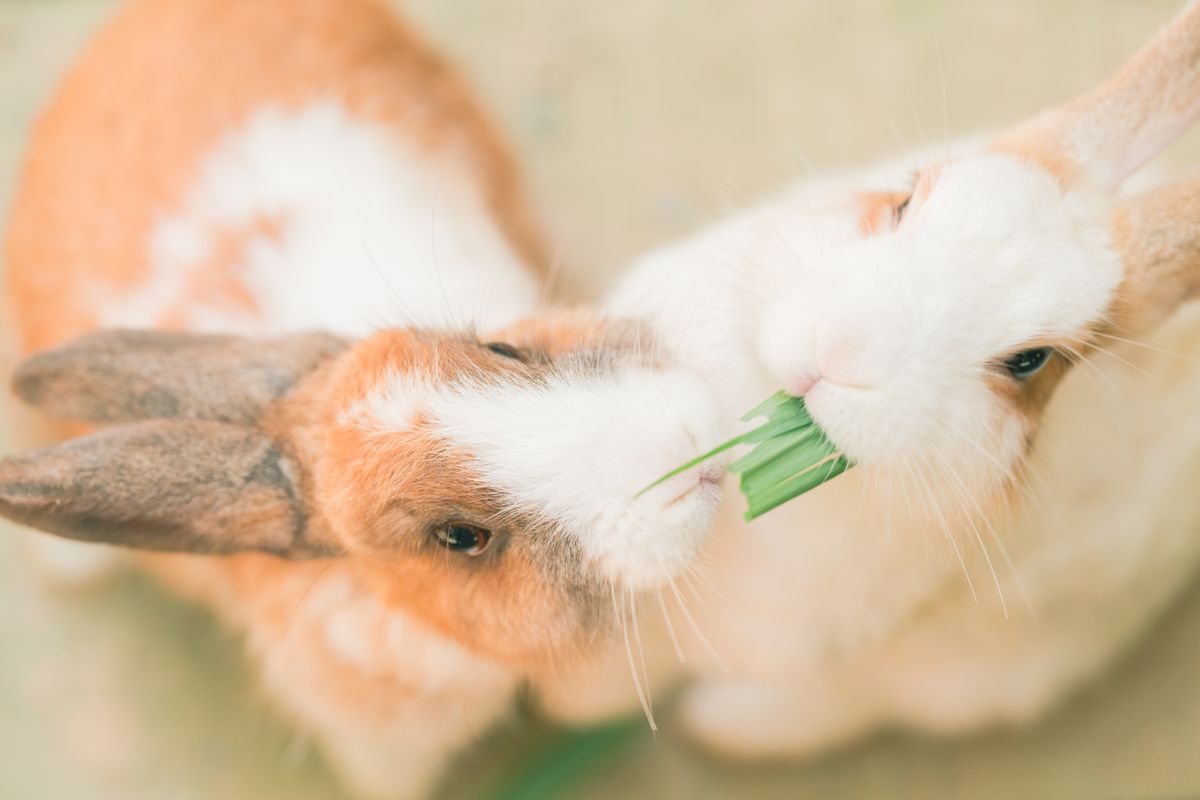
Fresh greens add nutrients and water. The House Rabbit Society suggests a varied mix of leafy greens each day.
Daily greens to rotate:
- Romaine lettuce and other dark leaf lettuces
- Cilantro
- Parsley (in moderation)
- Basil
- Dill
- Bok choy
- Carrot tops
- Dandelion greens
- Fennel tops
Use in moderation because they’re high in calcium or oxalates: kale, spinach, mustard greens and Swiss chard.
Introduce new greens one at a time over a week or two, and watch droppings for changes.
Pellets
Pellets are a supplement, not the main meal. Choose plain timothy-based pellets without seeds, dried fruit or colored pieces.
| Rabbit weight | Approximate pellets per day |
|---|---|
| Under 5 lb (2.3 kg) | 1/8 cup |
| 5–10 lb (2.3–4.5 kg) | 1/4 cup |
| Over 10 lb (4.5 kg) | 1/4–1/2 cup |
Young rabbits under 6 months can have more pellets, often alfalfa-based, as they grow.
Treats
Treats should be tiny, about 1 to 2 tablespoons per 5 pounds of body weight per day, at most.
Healthy treat options:
- Apple (no seeds)
- Banana slice
- Strawberries or blueberries
- Carrot (it’s a root vegetable high in sugar)
- Bell pepper
Foods to Avoid
- Iceberg lettuce (little nutrition)
- Bread, crackers, cereal and other starchy human food
- Chocolate
- Avocado
- Onions, garlic, leeks and chives
- Seeds and nuts
- Yogurt drops and commercial “rabbit treats” with sugar
- Rhubarb
- Houseplants, unless you know they’re safe
Sample Daily Plan for a 5-Pound Rabbit
- Morning: fresh pile of timothy hay and refill water
- Midday: about 1 1/4 cups of mixed leafy greens
- Evening: 1/4 cup timothy pellets, top up hay
- Training treat: one blueberry or a thin apple slice
Scatter some greens or pellets in a foraging toy to make mealtimes more interesting.
How Diet Protects Against Disease
- Dental disease: chewing hay wears teeth evenly. See rabbit dental disease.
- GI stasis: fiber keeps the gut moving. See GI stasis in rabbits.
- Obesity: limiting pellets and treats helps prevent excess weight.
- Bladder sludge: too much calcium, often from alfalfa or excess pellets, can contribute to it.
Switching Your Rabbit’s Diet
If your rabbit eats mostly pellets or a seed mix today, change slowly:
- Increase hay so it’s always available.
- Reduce pellets gradually over 2 to 4 weeks.
- Add one new green at a time.
- Watch droppings. They should stay large, round and plentiful.
When to Call Your Vet
Call your vet today if your rabbit:
- Stops eating, including hay
- Produces few or no droppings
- Has a bloated belly or sits hunched
Book an appointment soon if:
- Droppings become small, soft or uneven
- Your rabbit is gaining or losing weight
- Your rabbit eats only pellets and refuses hay
Frequently Asked Questions
Can rabbits live on pellets alone?
No. Pellet-only diets lack the long fiber rabbits need and are linked to dental disease, obesity and gut problems.
Are carrots good for rabbits?
In small amounts as a treat. Carrots are high in sugar, so the leafy tops are a better daily choice.
How much water does a rabbit drink?
Many rabbits drink about 50–150 mL per kilogram of body weight each day. Many prefer a heavy bowl to a bottle.
This article is for general information only and isn’t a substitute for professional veterinary advice. If you’re worried about your pet’s health, contact your veterinarian or an emergency animal hospital.