A rabbit’s teeth never stop growing, about 2 to 3 millimeters a week for the front teeth. When the teeth don’t wear down evenly, painful problems develop. Rabbit dental disease is one of the most common reasons rabbits see a vet. Here’s how to spot it and what to do.
Quick Answer: Rabbit dental disease usually starts with too little hay in the diet, which lets teeth overgrow. Signs include drooling, dropping food, weight loss and watery eyes. Sharp molar spurs can cut the tongue and cheeks. A rabbit-savvy vet can trim teeth and treat infections, but feeding plenty of hay is the best prevention.
How Rabbit Teeth Work
Rabbits have 28 teeth, including 4 large front incisors, 2 small “peg teeth” behind the top incisors, and rows of cheek teeth (premolars and molars). All of them grow continuously throughout life.
In the wild, rabbits chew tough grasses for hours a day. This side-to-side grinding wears teeth down at the same rate they grow.
Common Rabbit Dental Problems
Overgrown incisors
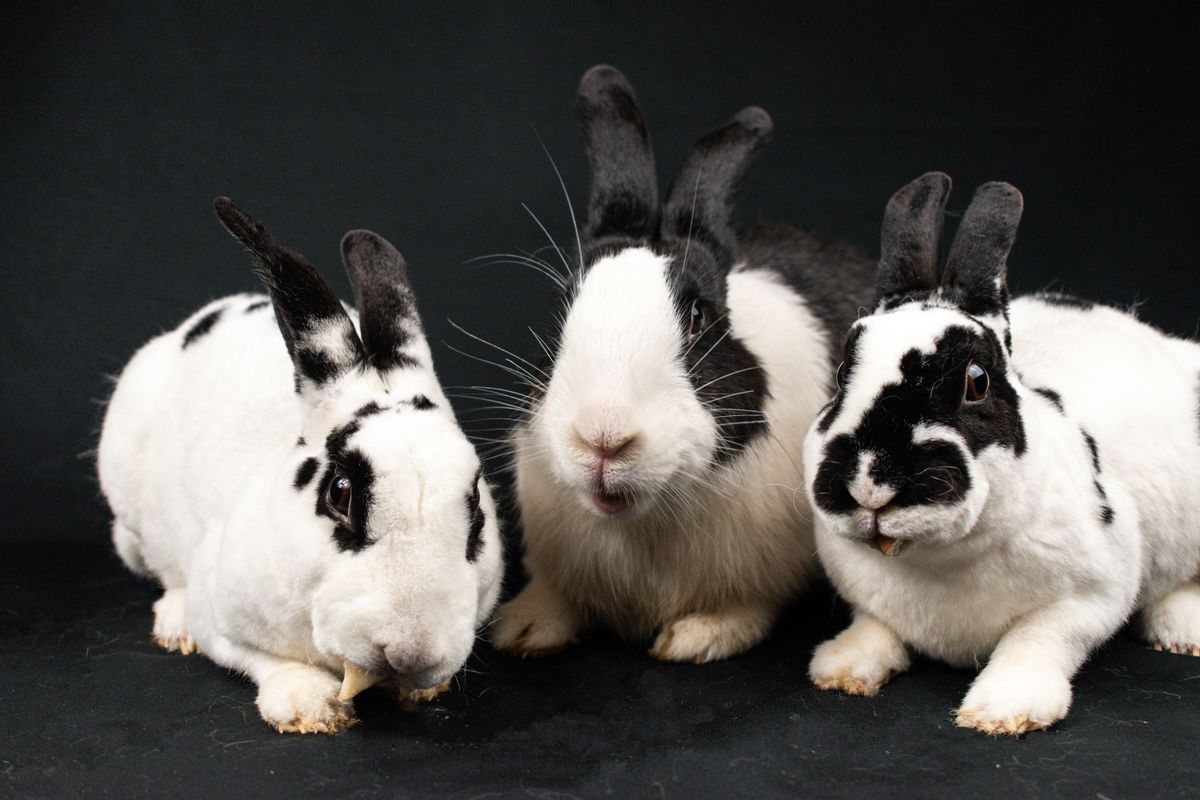
Front teeth that don’t meet properly can grow long and curl. They may grow into the lips or gums.
Molar spurs
Uneven wear on the cheek teeth creates sharp points. These spurs can cut the tongue and cheeks, making eating painful. They’re hard to see without a proper exam.
Malocclusion
Malocclusion means the teeth don’t line up. It can be inherited, especially in dwarf and lop breeds, or develop over time from poor diet.
Tooth root problems
Overgrown tooth roots can push into the eye socket or jawbone. This can cause runny eyes or bumps along the jaw.
Abscesses
Infections around tooth roots can cause firm swellings on the face or jaw. Rabbit abscesses contain thick pus and are hard to treat.
Signs of Dental Disease
- Drooling or a wet chin and chest
- Dropping food or chewing slowly
- Choosing soft foods over hay
- Weight loss
- Smaller droppings or fewer droppings
- Runny or watery eyes
- Lumps along the jaw or under the eye
- Grinding teeth loudly
- An unkempt coat, especially around the back end, because grooming hurts
The Merck Veterinary Manual notes that dental disease is a major cause of poor appetite and GI problems in pet rabbits.
How Vets Diagnose and Treat It
Your vet will check the incisors and use a special scope or speculum to view the back teeth. Rabbits often need sedation for a full exam. Skull X-rays or CT scans can show tooth roots.
Treatment may include:
- Burring or filing teeth to remove spurs and reshape them, usually under sedation
- Removing incisors in severe or repeated cases. Rabbits manage well without them
- Pain relief
- Antibiotics and surgery for abscesses
- Assisted feeding while your rabbit recovers
Many rabbits with malocclusion need regular dental trims every few weeks to months.
Never clip a rabbit’s teeth with nail clippers. It can crack the tooth, expose the pulp and lead to infection.
How to Prevent Dental Disease
- Feed unlimited grass hay. It should make up about 80% of the diet. See our rabbit diet guide.
- Limit pellets. Rabbits that fill up on pellets chew less hay.
- Offer leafy greens daily for extra chewing.
- Provide safe chew toys, like untreated willow or apple wood.
- Check the front teeth weekly.
- Weigh your rabbit regularly.
- Schedule annual dental checks with a rabbit-savvy vet.
Dental Disease and GI Stasis
Painful teeth often make rabbits stop eating. A rabbit that doesn’t eat can quickly develop GI stasis, which is an emergency.
When to Call Your Vet
Get same-day care if your rabbit:
- Stops eating
- Produces few or no droppings
- Has a swelling on the face that’s growing quickly
Book a visit soon if your rabbit:
- Drools or has a wet chin
- Is dropping food or eating slowly
- Has runny eyes
- Is losing weight
Frequently Asked Questions
Are some rabbit breeds more prone to dental disease?
Yes. Dwarf breeds and lops have shorter skulls, which can lead to inherited malocclusion.
Can a rabbit live without front teeth?
Yes. Many rabbits do well after incisor removal. Greens can be chopped, and the lips help them grab food.
How often do rabbits need their teeth checked?
At least once a year, and more often for rabbits with a history of problems.
Can hay alone keep my rabbit’s teeth healthy?
Hay is the most important tool, but inherited malocclusion can still cause problems in rabbits fed a perfect diet. Regular checkups catch these cases early.
Is dental surgery safe for older rabbits?
Many older rabbits handle sedation well with a rabbit-experienced vet. Your vet may recommend bloodwork first to check organ function.
This article is for general information only and isn’t a substitute for professional veterinary advice. If you’re worried about your pet’s health, contact your veterinarian or an emergency animal hospital.