“Turtle” covers a huge range of animals, from water-loving sliders to land-dwelling box turtles and tortoises. Their diets are very different. Feeding the wrong foods can cause shell deformities, vitamin deficiencies and obesity. Here’s what pet turtles eat, broken down by type.
Quick Answer: Most aquatic turtles, like red-eared sliders, eat a mix of commercial turtle pellets, leafy greens and occasional animal protein. Young turtles eat more protein; adults eat more plants. Box turtles are omnivores that need insects, vegetables and some fruit. Tortoises mostly eat grasses, weeds and leafy greens.
Diet by Type of Turtle
| Type | Examples | Diet basics |
|---|---|---|
| Aquatic omnivores | Red-eared sliders, cooters, painted turtles | Pellets, leafy greens, aquatic plants, some protein |
| Mostly carnivorous aquatic turtles | Musk and mud turtles | Pellets, insects, worms, fish; few plants |
| Box turtles | Eastern and ornate box turtles | Insects, worms, vegetables, some fruit, a little pellet |
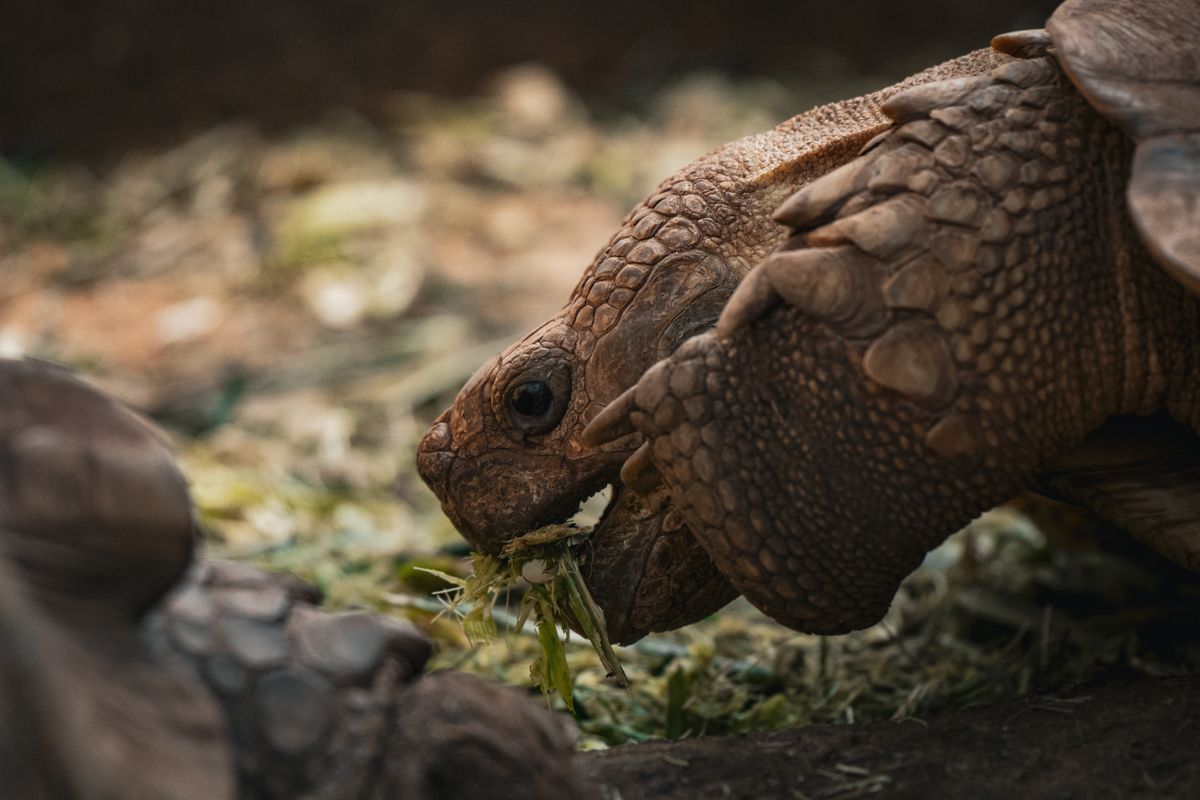
| Grazing tortoises | Sulcata, Russian, Hermann’s | Grasses, hay, weeds, leafy greens; very little fruit |
Always research your exact species, or ask your reptile vet.
Aquatic Turtles (Sliders, Cooters and Painted Turtles)
What to feed
- Commercial aquatic turtle pellets: a balanced base
- Leafy greens and aquatic plants: romaine, dandelion greens, collard greens, duckweed, water lettuce
- Protein: earthworms, gut-loaded insects, occasional feeder fish such as guppies
Age matters
| Age | Protein vs. plants |
|---|---|
| Hatchlings and juveniles | More protein, fed daily |
| Adults | More greens, protein a few times a week |
How much and how often
- Juveniles: daily, a portion of pellets about the size of their head
- Adults: pellets every 2 to 3 days, with fresh greens available most days
Box Turtles
Box turtles are true omnivores.
- About half animal protein: earthworms, crickets, dubia roaches, snails, mealworms (sparingly)
- About half plants: leafy greens, squash, carrots, mushrooms, berries and melon in moderation
- Dust food with calcium powder as directed by your vet
Tortoises
Many tortoises are grazers that need high fiber and low protein:
- Grass and grass hay
- Weeds like dandelion, clover and plantain (pesticide-free)
- Leafy greens such as endive and escarole
- A calcium supplement as recommended
Most grazing tortoises should get little or no fruit. Too much protein can contribute to shell “pyramiding.”
Calcium and Vitamin D3
Turtles need calcium for strong shells and bones, plus UVB light to absorb it. Offer:
- A cuttlebone in the tank for aquatic turtles
- Calcium powder on food as your vet advises
- Proper UVB lighting. See aquatic turtle tank setup.
Vitamin A
Vitamin A deficiency is common in turtles fed iceberg lettuce, meat or poor diets. It causes swollen eyes and infections. Dark leafy greens, orange vegetables and quality pellets help. See vitamin A deficiency in turtles.
Foods to Avoid
- Iceberg lettuce (low nutrition)
- Raw meat, hamburger and processed meat
- Dairy
- Bread and processed human food
- Spinach and beet greens in large amounts (bind calcium)
- Avocado and rhubarb
- Wild-caught insects that may carry pesticides or parasites
Feeding Tips
- Feed aquatic turtles in the water, since they need water to swallow.
- Try a separate feeding tub to keep the main tank clean.
- Remove uneaten food within about 15 minutes.
- Weigh your turtle regularly and watch for fat rolls around the legs.
The Merck Veterinary Manual notes that nutritional problems are among the most common health issues in pet reptiles.
When to Call Your Vet
Call a reptile vet if your turtle:
- Stops eating for more than a week (outside normal brumation)
- Has a soft shell or swollen eyes
- Is losing weight
- Has a misshapen or pyramiding shell
Frequently Asked Questions
Can turtles eat fruit?
Some can in small amounts. Box turtles enjoy berries and melon. Aquatic turtles may have occasional fruit. Most grazing tortoises should rarely have fruit.
Can turtles eat dog or cat food?
No. It’s too high in protein and fat and can damage kidneys and shells.
How long can a turtle go without eating?
Healthy adults can go a while, but a sudden loss of appetite is a warning sign. Check temperatures and see a vet.
Do turtles need vitamins?
Many need calcium supplementation. Multivitamins should be used only as your vet recommends, since too much vitamin A can also be harmful.
Should I feed live fish to my turtle?
Occasional feeder fish can provide enrichment and protein for aquatic turtles, but they can also carry parasites. Buy from a reliable source and don’t make fish the main diet. Goldfish and rosy reds are high in thiaminase, which can cause vitamin B1 deficiency, so many keepers avoid them.
How do I get my turtle to eat greens?
Try floating greens in the water, chopping them finely, or mixing them with pellets. Offering greens first, before pellets, also helps when your turtle is hungry.
My turtle eats everything I offer. Should I feed more?
Turtles are opportunistic and will often overeat. Stick to measured portions and watch body condition to avoid obesity.
This article is for general information only and isn’t a substitute for professional veterinary advice. If you’re worried about your pet’s health, contact your veterinarian or an emergency animal hospital.