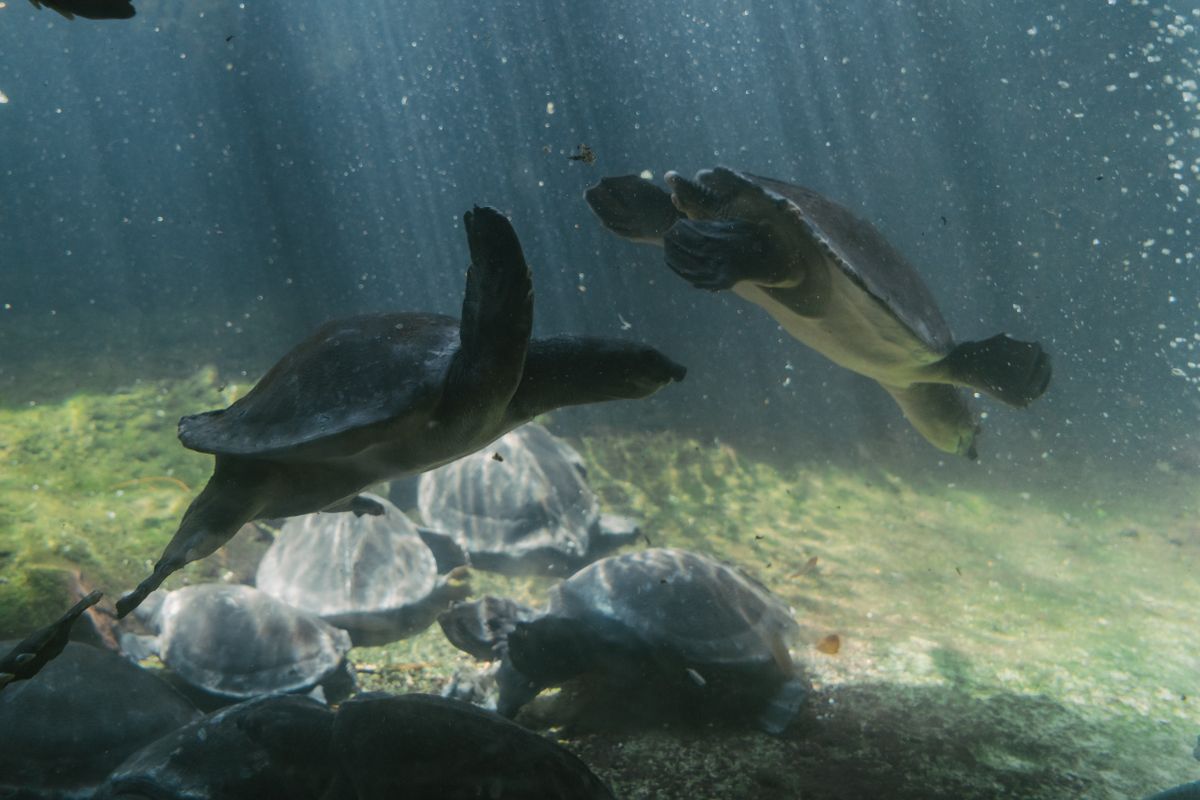
Aquatic turtles are fascinating to watch, but their setups are more demanding than many people expect. They need lots of water, powerful filtration, a dry basking spot, heat and UVB light. Getting this right prevents most common turtle illnesses. Here’s a complete aquatic turtle tank setup guide.
At a Glance: A common rule is about 10 gallons of water per inch of shell length. Provide a filter rated for two to three times the tank volume, a dry basking platform with a heat lamp at about 85–95°F (29–35°C), water at about 75–80°F (24–27°C) for many common species, and a UVB light for 10–12 hours a day.
Tank Size
Turtles grow, and many common species like red-eared sliders reach 8 to 12 inches (20–30 cm).
| Shell length | Approximate minimum water volume |
|---|---|
| 4 in (10 cm) | 40 gallons (150 L) |
| 6 in (15 cm) | 60 gallons (225 L) |
| 8 in (20 cm) | 80 gallons (300 L) |
| 10 in (25 cm) | 100+ gallons (380+ L), or a stock tank or pond |
Plan for your turtle’s adult size. Many owners use large stock tanks or indoor ponds for adults.
Filtration
Turtles produce a lot of waste. Poor water quality is a major cause of shell rot and infections.
- Choose a canister filter rated for two to three times your tank’s volume.
- Clean or replace filter media as the maker recommends, but don’t clean everything at once. Beneficial bacteria live there.
- Do partial water changes of about 25% weekly, more often if needed.
- Test ammonia, nitrite and nitrate with an aquarium test kit.
- Use a dechlorinator when adding tap water.
Basking Area
Turtles must be able to leave the water completely and dry off.
- Use a stable platform, floating dock or above-tank basking area.
- Make sure it can hold your turtle’s weight.
- The ramp should be easy to climb.
- Place the heat lamp and UVB light above the basking spot.
Heat
| Zone | Typical target for common aquatic species |
|---|---|
| Basking surface | 85–95°F (29–35°C) |
| Water | 75–80°F (24–27°C) |
| Air | 75–85°F (24–29°C) |
Exact needs vary by species, so check guidelines for your turtle. Use a submersible heater with a guard so the turtle can’t break it, and a digital thermometer for both water and basking spot.
UVB Lighting
Turtles need UVB to make vitamin D3 and absorb calcium. Without it, they can develop metabolic bone disease and soft shells.
- Use a reptile UVB bulb (linear tubes often work best).
- Mount it within the distance the maker recommends, with no glass or plastic between the bulb and turtle.
- Run it for 10 to 12 hours a day.
- Replace it as recommended, often every 6 to 12 months, even if it still glows.
The Merck Veterinary Manual emphasizes proper heat and UVB for reptile health.
Substrate and Decor
- Bare bottom: easiest to clean.
- Large river rocks: too big to swallow.
- Fine sand: some keepers use it, but it can cloud water.
- Avoid gravel small enough to swallow, which can cause impaction.
- Use smooth decor without sharp edges.
Setting Up Step by Step
- Place the tank on a strong, level stand.
- Add substrate if using, then fill with dechlorinated water.
- Install the filter and heater.
- Add the basking platform.
- Mount the heat lamp and UVB light over the basking spot.
- Run everything for a few days and check temperatures before adding your turtle.
Daily and Weekly Care
| How often | Task |
|---|---|
| Daily | Check temperatures, remove uneaten food, watch behavior |
| Weekly | 25% water change, test water, wipe basking area |
| Monthly | Rinse some filter media in old tank water |
| Every 6–12 months | Replace UVB bulb |
Feeding Tip
Many keepers feed turtles in a separate container to keep the main tank cleaner. See what pet turtles eat.
Hygiene and Safety
Turtles can carry Salmonella. Wash hands after cleaning, and don’t clean tank equipment in the kitchen sink. See Salmonella and pet turtles.
When to Call Your Vet
Call a reptile vet if your turtle:
- Has swollen eyes. See vitamin A deficiency in turtles.
- Has a soft or pitted shell
- Floats lopsided or can’t dive
- Stops eating or basking
Frequently Asked Questions
Can turtles live in a small tank while young?
They can for a while, but they grow quickly. Buying a large tank from the start saves money and stress.
Do turtles need a heater if my house is warm?
Most indoor homes are too cool for tropical turtles’ water. A heater keeps temperatures stable.
Can I keep fish with my turtle?
Turtles often eat or injure fish. Some keepers use feeder-safe fish carefully, but many avoid mixing them.
How long do aquatic turtles live?
Many common species live 20 to 40 years or more with good care, so plan for a long commitment.
This article is for general information only and isn’t a substitute for professional veterinary advice. If you’re worried about your pet’s health, contact your veterinarian or an emergency animal hospital.