If your turtle’s eyes are swollen shut, vitamin A deficiency is one of the most likely causes. It’s common in young aquatic turtles, especially sliders fed poor diets. The good news is it’s preventable, and often treatable when caught early. Here’s what to know about vitamin A deficiency in turtles.
Quick Answer: Vitamin A deficiency (hypovitaminosis A) happens when a turtle’s diet lacks vitamin A or the beta-carotene it can convert to vitamin A. Signs include puffy, closed eyes, eye discharge, ear swellings and respiratory infections. A reptile vet can treat it with vitamin A and supportive care. Prevention means a balanced diet with quality pellets and dark leafy greens.
Why Turtles Need Vitamin A
Vitamin A keeps the linings of the eyes, mouth, respiratory tract and other tissues healthy. Without it, these tissues change and become blocked with debris. That opens the door to infections.
The Merck Veterinary Manual lists hypovitaminosis A as a common nutritional disorder of pet turtles.
Common Causes
- Diets of iceberg lettuce, plain meat or feeder fish only
- Low-quality or old pellets
- Picky eaters that refuse greens
- Young, fast-growing turtles with high needs
Signs of Vitamin A Deficiency
| Area | Signs |
|---|---|
| Eyes | Swollen eyelids, eyes closed, discharge, rubbing eyes |
| Ears | Swellings on the side of the head (aural abscesses) |
| Breathing | Bubbles from the nose, open-mouth breathing, wheezing |
| Skin and shell | Excessive or abnormal shedding |
| General | Not eating, lethargy, weight loss |
Because a turtle with swollen eyes can’t see its food, it often stops eating, which makes the deficiency worse.
Aural Abscesses
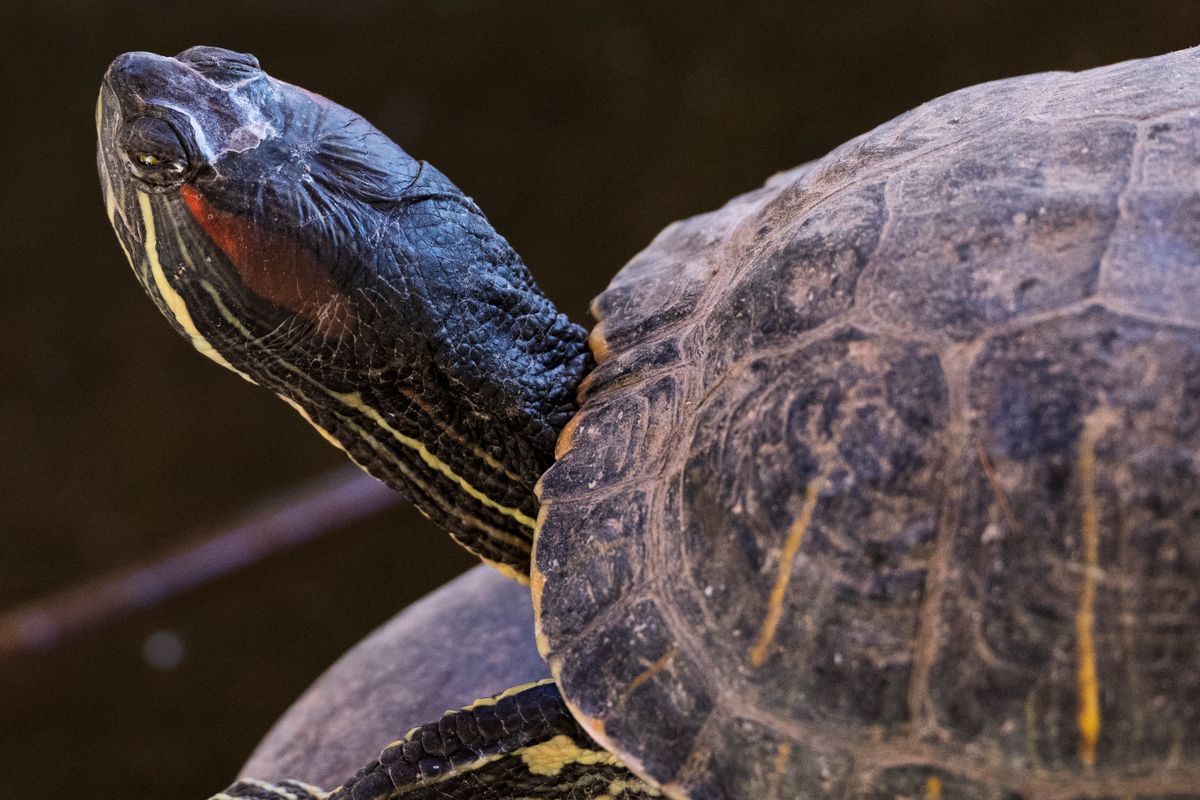
Ear abscesses are firm swellings behind the eyes on one or both sides of the head. Vitamin A deficiency is one factor. They need surgery by a reptile vet to remove the thick, cheesy pus.
How Vets Diagnose and Treat It
Your vet will examine your turtle and ask detailed questions about diet and habitat. Treatment usually includes:
- Vitamin A supplementation, given carefully. Too much vitamin A can be toxic and cause skin damage, so never inject or dose it at home without veterinary direction.
- Eye drops or ointments to soothe and treat infection.
- Antibiotics for respiratory or ear infections.
- Assisted feeding if your turtle isn’t eating.
- Habitat corrections for temperature, water quality and UVB.
Many turtles improve within a couple of weeks, though eye swelling can take longer to resolve.
Prevention Through Diet
- Quality turtle pellets: fresh and stored in a cool, dry place
- Dark leafy greens: dandelion greens, collard greens, mustard greens and romaine
- Orange and yellow vegetables: carrot, squash and sweet potato (shredded small)
- Aquatic plants: water lettuce and duckweed
- Variety: rotate greens through the week
See our full guide to what pet turtles eat.
Why Habitat Matters Too
Cold water, poor water quality and missing UVB stress the immune system and make infections more likely. Check that your setup meets your turtle’s needs. Our aquatic turtle tank setup guide explains temperatures and filtration.
Home Care During Treatment
- Keep water clean and warm.
- Offer food near your turtle’s mouth, since it may not see well.
- Use tongs to hand-feed pellets or greens.
- Provide a warm, dry basking area.
When to Call Your Vet
See a reptile vet soon if your turtle:
- Has puffy eyes or keeps its eyes closed
- Has swellings on the side of the head
- Isn’t eating
Get urgent care if your turtle:
- Is breathing with its mouth open
- Floats lopsided, which can signal pneumonia
- Is very lethargic
Frequently Asked Questions
Can I give my turtle vitamin A drops at home?
Only under a vet’s direction. Overdosing vitamin A is a real risk in reptiles.
Can vitamin A deficiency cause blindness?
Swollen eyes make turtles temporarily unable to see. Most regain vision with treatment, but long-standing damage can affect the eyes.
Do tortoises get vitamin A deficiency?
It’s less common in tortoises eating fresh greens, but it can happen with poor diets.
How long does it take to recover?
Many turtles improve within 2 to 4 weeks. Ear abscesses or serious infections can take longer.
Can I prevent vitamin A deficiency with supplements alone?
Supplements shouldn’t replace a good diet, and overdosing is a risk. Fresh greens, orange vegetables and quality pellets are the safest prevention. Use any supplement only as your vet directs.
Why does my turtle keep its eyes closed only when basking?
Some turtles close their eyes while basking and resting, which is normal. Constantly closed or swollen eyes, especially in the water, are a warning sign.
Can vitamin A deficiency come back?
Yes, if the diet slips back to poor foods. Keep the diet varied and replace old pellets regularly.
This article is for general information only and isn’t a substitute for professional veterinary advice. If you’re worried about your pet’s health, contact your veterinarian or an emergency animal hospital.