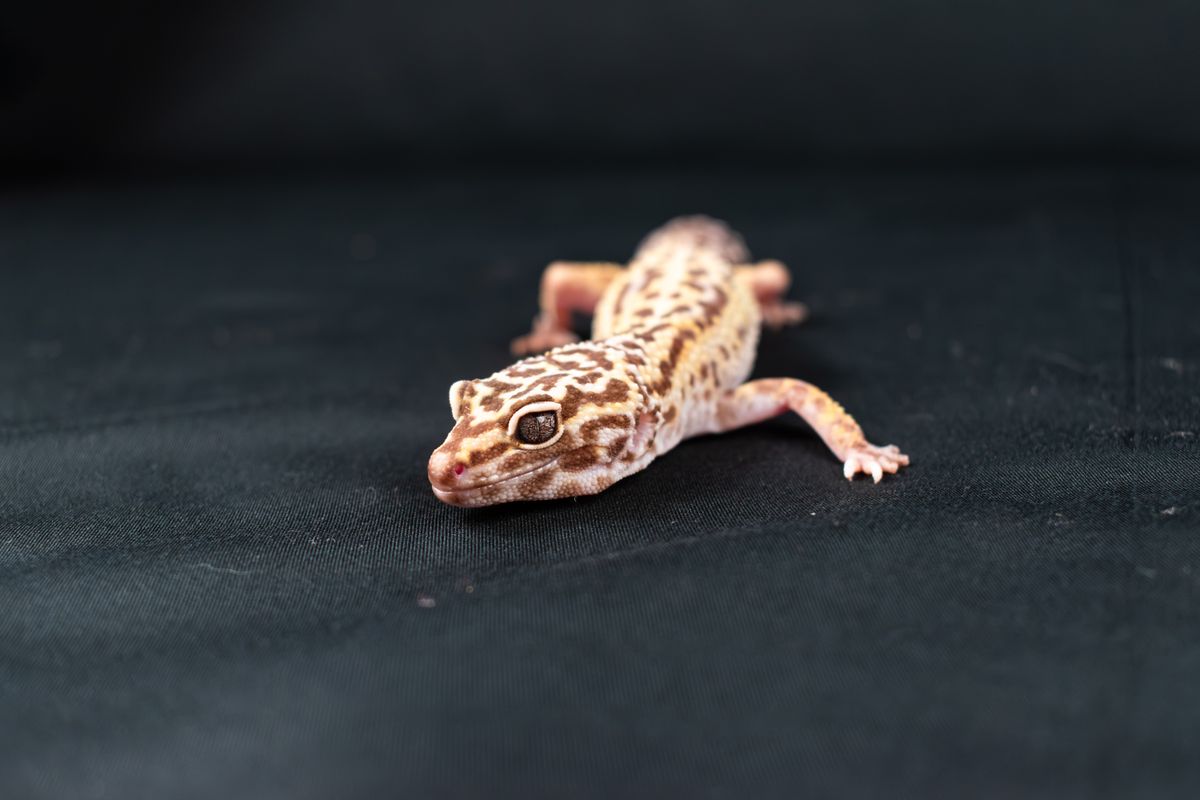
Leopard geckos are one of the most popular pet reptiles, and for good reason. They’re gentle, hardy and don’t need huge setups. With good care, many live 15 to 20 years. This leopard gecko care sheet covers everything you need to get started.
At a Glance:
- Tank: at least a 20-gallon long (30 x 12 in); 40 gallons (36 x 18 in) is better
- Warm side surface: about 88–92°F (31–33°C); cool side about 75–80°F (24–27°C)
- Night: can drop to about 65–70°F (18–21°C)
- Diet: live insects dusted with calcium and vitamins
- Lifespan: often 15–20 years
About Leopard Geckos
Leopard geckos (Eublepharis macularius) come from dry grasslands and rocky areas of Pakistan, Afghanistan, India and nearby regions. They’re mostly active at dawn, dusk and night. Unlike many geckos, they have eyelids and can’t climb glass.
Enclosure
| Item | Recommendation |
|---|---|
| Minimum tank | 20-gallon long (30 x 12 x 12 in) for one adult |
| Better tank | 40-gallon breeder (36 x 18 x 16 in) or larger |
| Lid | Secure mesh lid |
| Housemates | Best housed alone; never house males together |
Heating
Leopard geckos digest food using belly heat and need a temperature gradient so they can move between warm and cool areas.
- Heat source: an under-tank heat mat on one side, controlled by a thermostat, or an overhead heat lamp or deep heat projector.
- Warm hide: directly over the heat source.
- Cool side: the opposite end of the tank.
- Use a digital thermometer with a probe, or a temperature gun, to check surface temperatures.
Always use a thermostat with heat mats. Unregulated mats can overheat and cause serious belly burns.
Lighting and UVB
Leopard geckos were long kept without UVB, but many reptile vets and keepers now recommend low-level UVB (such as a 5–7% T5 bulb with shade areas) to support vitamin D3 and calcium use. Provide a regular day-night cycle of about 12 hours light and 12 hours dark.
Hides
Provide at least three hides:
- Warm hide on the hot side
- Cool hide on the cool side
- Humid hide with damp moss or paper towel to help shedding
See our guide to stuck shed in geckos.
Substrate
| Option | Notes |
|---|---|
| Paper towel | Easy to clean; good for quarantine and juveniles |
| Slate or tile | Easy to clean; holds heat well |
| Soil-sand mix | More natural; allows digging |
| Loose calcium sand | Not recommended; can be eaten and cause impaction |
Diet
Leopard geckos are insectivores. They eat live insects only.
Good feeder insects
- Crickets
- Dubia roaches
- Mealworms
- Black soldier fly larvae
- Silkworms
- Occasional waxworms (fatty treat)
Feeding schedule
| Age | Frequency | Amount |
|---|---|---|
| Hatchling (0–4 months) | Daily | As many as eaten in about 10–15 minutes |
| Juvenile (4–12 months) | Every other day | As many as eaten in about 10–15 minutes |
| Adult | 2–3 times per week | About 5–8 appropriately sized insects |
Insects should be no longer than the space between your gecko’s eyes.
Supplements
- Gut-load insects with nutritious food 24 hours before feeding.
- Dust insects with calcium (with D3 if no UVB) at most feedings.
- Use a reptile multivitamin about once a week or as your vet advises.
Without calcium and D3, geckos can develop metabolic bone disease.
Water
Provide a shallow dish of clean water at all times and change it daily.
Handling
- Wait about a week after bringing your gecko home before handling.
- Scoop from below; never grab from above.
- Never pick up a gecko by the tail. Leopard geckos can drop their tails when stressed. The tail regrows but looks different.
Signs of a Healthy Leopard Gecko
- Thick, plump tail (fat storage)
- Clear, alert eyes
- Clean vent
- Complete sheds
- Regular appetite
A thin tail can signal illness. See why your leopard gecko’s tail is getting thin.
When to Call Your Vet
Call a reptile vet if your gecko:
- Stops eating for more than 2 weeks (not counting brief breeding-season fasting)
- Has a thinning tail or weight loss
- Has soft, bent limbs or a rubbery jaw
- Has stuck shed on toes or eyes that won’t come off
- Has runny droppings or a swollen belly
The Merck Veterinary Manual recommends a checkup with a reptile vet soon after getting any new reptile.
Frequently Asked Questions
Do leopard geckos need a heat lamp at night?
Not usually, if the room stays above about 65°F (18°C). Belly heat from a regulated mat or a non-light heat source can stay on.
Can leopard geckos live together?
Females sometimes coexist, but fights and stress are common. Males must never be housed together. Most experts recommend one gecko per tank.
Are leopard geckos good for beginners?
Yes. They’re calm and hardy, and their setups are simpler than many reptiles. See our comparison of crested vs. leopard geckos.
How long do leopard geckos live?
Many live 15 to 20 years, and some even longer.
This article is for general information only and isn’t a substitute for professional veterinary advice. If you’re worried about your pet’s health, contact your veterinarian or an emergency animal hospital.