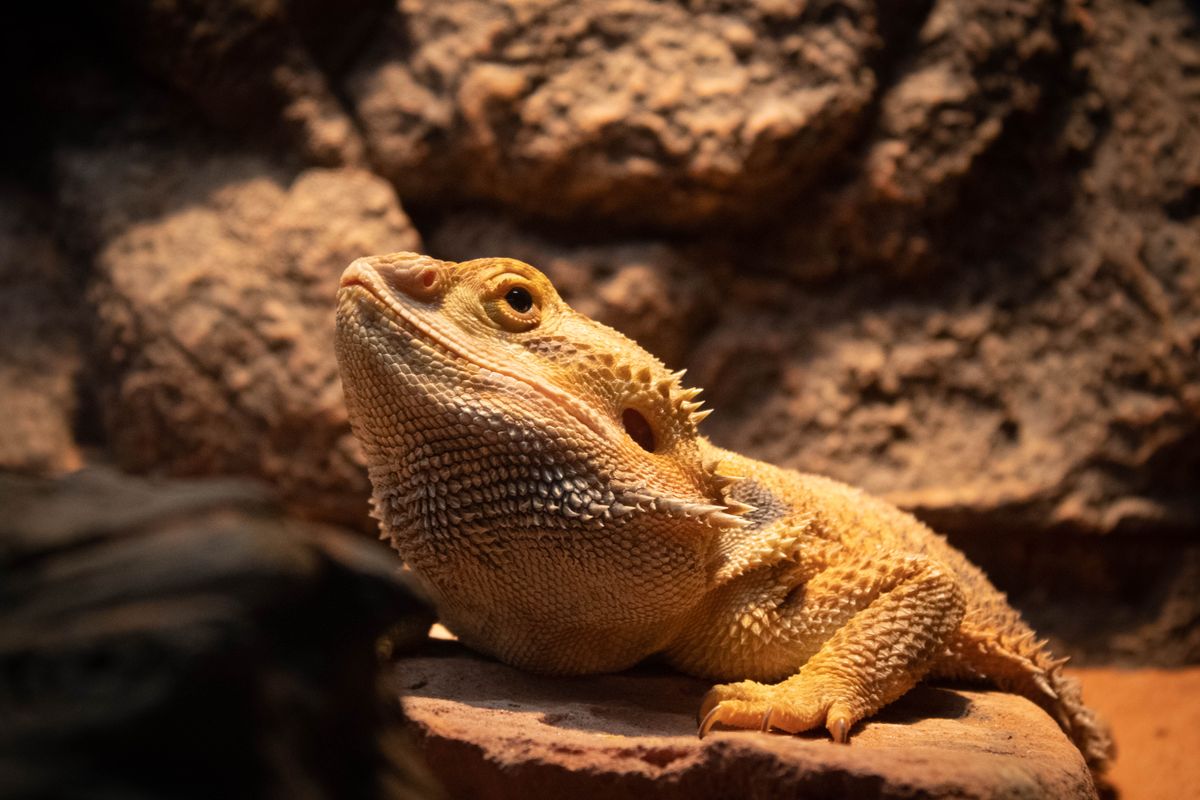
Lighting may be the most important part of a bearded dragon’s setup. These desert lizards rely on strong sunlight for heat and to make vitamin D3. Without proper UVB and basking heat, they can develop metabolic bone disease, digestive problems and weakened immunity. This guide explains bearded dragon lighting step by step.
At a Glance:
- UVB: a high-output T5 linear tube (often 10–12% or similar strength) across about half to two-thirds of the enclosure
- Basking surface: about 95–110°F (35–43°C) for adults; slightly higher for babies
- Cool side: about 75–85°F (24–29°C)
- Nighttime: lights off; can drop to about 65–75°F (18–24°C)
- Day length: 12–14 hours of light
Why Lighting Matters
Bearded dragons are diurnal and come from sunny Australian deserts. They need:
- UVB light to make vitamin D3 in their skin, which helps absorb calcium
- Heat to digest food and keep their immune system working
- Bright visible light for normal behavior and appetite
The Merck Veterinary Manual stresses that many reptile diseases come from inadequate lighting and temperature.
UVB Lighting
Types of UVB bulbs
| Type | Pros | Cons |
|---|---|---|
| T5 high-output linear tube | Strong, even UVB; widely recommended | Needs reflector fixture |
| T8 linear tube | Cheaper | Weaker; must be closer |
| Mercury vapor bulb | Provides heat and UVB | Hot; can be too intense if close |
| Compact/coil UVB | Small | Often weak, uneven; generally not recommended |
Placement tips
- Mount UVB inside the enclosure or over a mesh top, following the maker’s recommended distance.
- Glass and plastic block UVB. Don’t place a bulb behind them.
- Mesh tops reduce UVB output, so bulbs may need to be closer or stronger.
- Place UVB over the basking area and extend across about half the enclosure.
Replace bulbs regularly
UVB output fades before the visible light does. Replace bulbs as the maker recommends, often every 6 to 12 months.
Heat Lighting
- Use a halogen flood bulb or similar basking bulb over a basking platform.
- Measure the basking surface temperature with a temperature gun, not just the air temperature.
- Provide a gradient so your dragon can cool down.
| Zone | Babies and juveniles | Adults |
|---|---|---|
| Basking surface | About 100–110°F (38–43°C) | About 95–105°F (35–41°C) |
| Warm air | About 85–90°F (29–32°C) | About 85–90°F (29–32°C) |
| Cool side | About 75–85°F (24–29°C) | About 75–85°F (24–29°C) |
Never use heat rocks. They can heat unevenly and cause serious burns.
Nighttime
Turn off all lights at night. Colored “night bulbs” can disrupt sleep. If your home drops below about 65°F (18°C), use a ceramic heat emitter or deep heat projector on a thermostat, which gives heat without light.
Use Timers and Thermostats
- Timer: keeps a consistent 12–14 hour day.
- Thermostat or dimmer: controls basking heat and prevents overheating.
Seasonal Changes and Brumation
Some keepers shorten day length slightly in winter. Bearded dragons may enter a slow-down period called brumation. See our guide to bearded dragon brumation.
Common Lighting Mistakes
- Using a weak coil UVB bulb
- Placing UVB too far away or behind glass
- Not replacing UVB bulbs on time
- Measuring air temperature instead of basking surface temperature
- Leaving lights on 24 hours a day
- No cool side for thermoregulation
Signs of Lighting Problems
- Weak legs, tremors or swollen limbs (possible metabolic bone disease)
- Poor appetite
- Lethargy and not basking
- Dark coloring for long periods
- Constipation or impaction
Lighting and Diet Work Together
UVB helps your dragon use calcium, but the calcium must still come from food and supplements. See our bearded dragon diet guide.
When to Call Your Vet
Call a reptile vet if your bearded dragon:
- Shows weakness, trembling or a soft jaw
- Stops eating outside of brumation
- Has burns on the belly or back
- Has swollen eyes or skin damage that could come from bulbs placed too close
Frequently Asked Questions
Can sunlight through a window replace UVB?
No. Window glass blocks most UVB.
Can I take my bearded dragon outside for sunlight?
Supervised outdoor time in safe weather, in a secure, shaded pen, can be beneficial. Never leave a dragon in a glass tank in direct sun, as it can overheat quickly.
Do bearded dragons need light at night?
No. They need darkness to sleep. Use non-light heat if your home is too cold.
How do I know if my UVB is working?
A UV meter can measure output. Otherwise, replace bulbs on schedule.
Is a basking bulb enough without UVB?
No. Heat bulbs don’t produce useful UVB. Your dragon needs both.
This article is for general information only and isn’t a substitute for professional veterinary advice. If you’re worried about your pet’s health, contact your veterinarian or an emergency animal hospital.