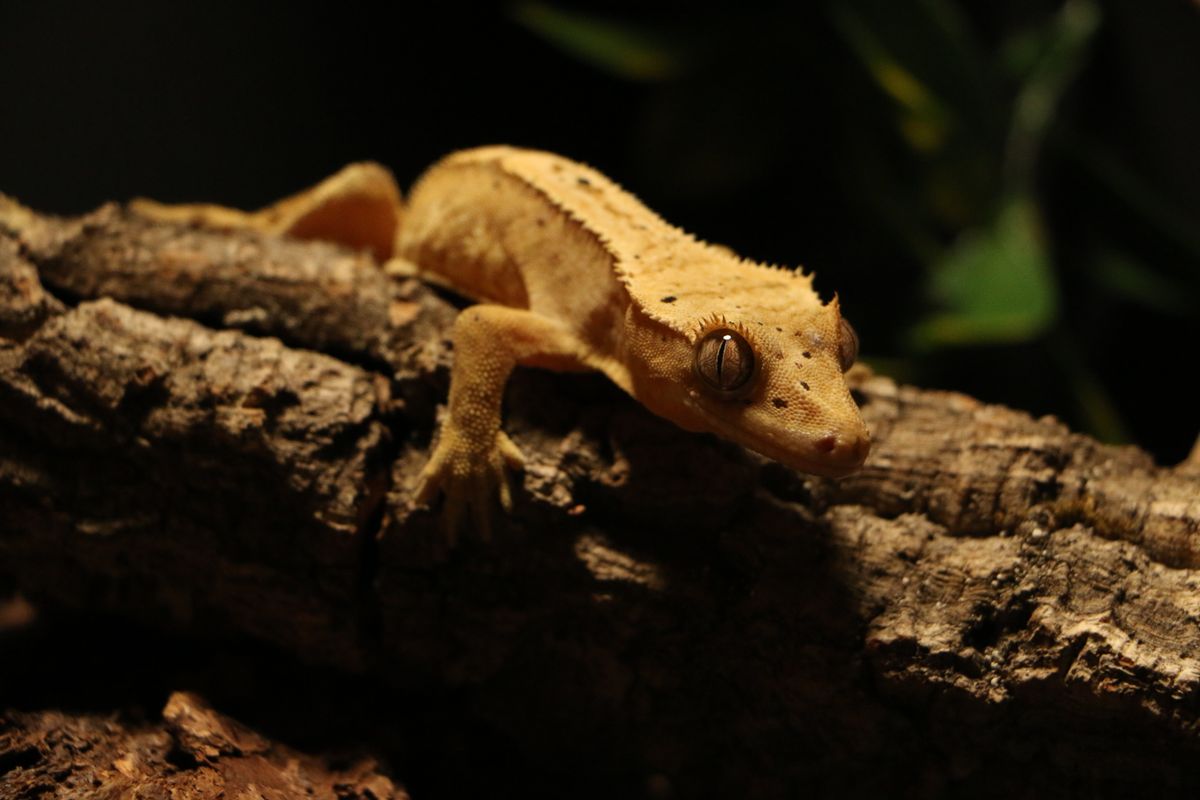
Crested geckos and leopard geckos are two of the most popular beginner reptiles. Both are calm, small and long-lived. But their care needs are quite different. One lives on the ground in dry grasslands, the other climbs trees in humid forests. Here’s a side-by-side look at crested gecko vs leopard gecko care to help you choose.
Bottom Line: Leopard geckos are ground-dwelling, need belly heat and eat live insects. Crested geckos are tree-dwelling, do well at normal room temperatures, need higher humidity and can live mostly on a powdered complete diet. Both are good choices for beginners, depending on your home and preferences.
Quick Comparison
| Feature | Leopard gecko | Crested gecko |
|---|---|---|
| Native habitat | Dry grasslands of South Asia | Humid forests of New Caledonia |
| Adult size | 7–10 in (18–25 cm) | 7–9 in (18–23 cm) including tail |
| Lifespan | 15–20 years | 15–20 years |
| Activity | Dusk and night; ground-dwelling | Night; climbing |
| Enclosure | Horizontal; 20–40 gallons | Vertical; about 18 x 18 x 24 in or larger for adults |
| Temperature | Warm spot about 88–92°F (31–33°C) | Room temperature about 72–78°F (22–26°C); avoid above about 82°F (28°C) |
| Humidity | About 30–40% plus a humid hide | About 50–70% with daily misting |
| Diet | Live insects only | Complete powdered diet plus some insects |
| Eyelids | Yes | No (they lick their eyes) |
| Tail | Drops and regrows | Drops and does not regrow |
| Handling | Usually calm and slow | Jumpy but tolerant once used to handling |
Leopard Geckos
Pros
- Very calm and easy to handle
- Simple feeding routine (a few times a week for adults)
- Lots of color morphs
- Need lower humidity
Things to know
- Must eat live insects, dusted with supplements
- Need a regulated heat source for belly heat
- Can drop their tail if stressed (it regrows)
See our full leopard gecko care sheet.
Crested Geckos
Pros
- No special heating needed in most homes
- Can eat a complete powdered diet, so you don’t need live insects every meal
- Fun to watch climbing and jumping
- Many beautiful patterns and “crests”
Things to know
- Need daily misting to keep humidity up
- Sensitive to heat; can suffer heat stress above about 82°F (28°C)
- Tails drop and don’t grow back, leaving a “frogbutt”
- Jumpy when young; can leap off hands
Diet Differences
Leopard geckos
Live insects such as crickets, dubia roaches and black soldier fly larvae, dusted with calcium and vitamins.
Crested geckos
A commercial complete crested gecko diet mixed with water, offered every 2 to 3 days for adults, plus occasional dusted insects for enrichment and protein.
Both species can develop metabolic bone disease if their diet lacks calcium and vitamin D3.
Enclosure Differences
- Leopard geckos need floor space, hides and a heat source on one side.
- Crested geckos need height, branches, vines and live or artificial plants for climbing and hiding.
Shedding
Both species shed regularly. Leopard geckos need a humid hide, while crested geckos rely on overall enclosure humidity. See stuck shed in geckos.
Which Is Right for You?
Choose a leopard gecko if you:
- Want a calm pet that’s easy to hold
- Don’t mind feeding live insects
- Live in a cooler home where you can provide heat
Choose a crested gecko if you:
- Prefer not to rely on live insects
- Enjoy setting up a planted, vertical enclosure
- Live in a home that stays at moderate temperatures
Health and Vet Care
Both species should see a reptile vet after purchase and yearly afterward. The Merck Veterinary Manual suggests learning a species’ needs before bringing any reptile home.
When to Call Your Vet
Call a reptile vet if your gecko:
- Stops eating for an extended time
- Loses weight or has a thinning tail
- Has a floppy tail, kinked spine or trouble climbing
- Has stuck shed around the eyes or toes
Frequently Asked Questions
Which gecko is easier for kids?
Leopard geckos are usually calmer and easier for children to handle, with adult supervision.
Can crested and leopard geckos live together?
No. They need completely different environments and could stress or injure each other.
Which one lives longer?
Both often live 15 to 20 years with good care.
Do both need UVB?
Neither strictly needs high UVB, but many reptile vets recommend low-level UVB for both to support bone health.
Which gecko is cheaper to set up?
Costs are similar. Leopard geckos need heating equipment and a steady insect supply, while crested geckos need a taller enclosure, plants and a misting routine. Ongoing food costs are often lower for crested geckos.
Do either of these geckos make noise?
Both are mostly quiet. Crested geckos sometimes chirp or bark when startled, and leopard geckos may squeak or chirp when young or stressed.
This article is for general information only and isn’t a substitute for professional veterinary advice. If you’re worried about your pet’s health, contact your veterinarian or an emergency animal hospital.