Bearded dragons are expressive lizards. They wave, bob their heads, puff up their beards and even change color. These signals tell you how your dragon feels, whether it’s relaxed, stressed, territorial or unwell. Here’s a guide to bearded dragon body language.
At a Glance:
- Arm waving: submission or acknowledgment, often seen in young dragons
- Head bobbing: dominance or courtship, mostly in males
- Black beard: stress, territorial behavior or illness
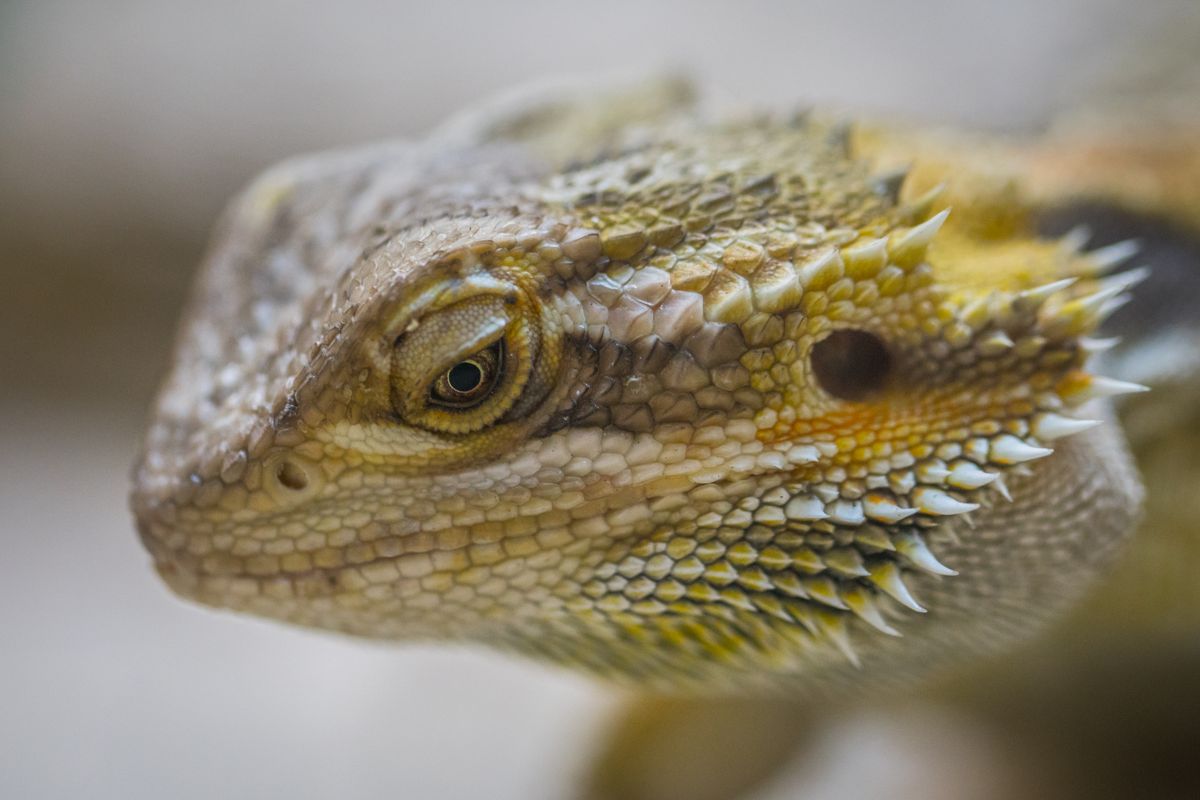
- Puffed-up beard: feeling threatened, or sometimes during shedding
- Glass surfing: frustration, stress or seeing its reflection
Common Signals and What They Mean
| Behavior | Usual meaning |
|---|---|
| Slow arm wave | Submission, “I see you, I’m not a threat” |
| Fast head bob | Dominance, courtship |
| Slow head bob | Can be submissive, especially in females |
| Black beard | Stress, threat, territory or illness |
| Puffed beard | Defense, intimidation, stretching skin during a shed |
| Gaping mouth while basking | Cooling down (thermoregulation) |
| Gaping with hissing | Feeling threatened |
| Flattening (pancaking) | Absorbing heat, or fear |
| Tail up | Alert, hunting, sometimes breeding behavior |
| Glass surfing | Stress, boredom, wants out, sees reflection |
| Closing eyes when touched | Can mean relaxed, or “please stop” |
| Licking objects | Exploring with the tongue |
Arm Waving
Arm waving is a slow, circular wave of one front leg. It’s common in juveniles and females. It signals submission, acknowledging a larger or dominant animal, such as another dragon, a pet or you.
Head Bobbing
Head bobbing varies in speed:
- Fast, jerky bobbing: often a male showing dominance or courting a female.
- Slow bobbing: sometimes a female’s response, or submission.
A male may bob at his reflection, other reptiles or even you.
The Black Beard
A black beard is one of the clearest signals. It can mean:
- Territorial display, especially in males
- Stress from a new environment, handling or another pet nearby
- Breeding behavior
- Discomfort, such as temperatures that are too low
- Illness
If your dragon’s beard stays black for long periods with no clear reason, check husbandry and consider a vet visit.
Puffing Up
A puffed beard and flattened body make a dragon look bigger to threats. Dragons also puff up to stretch skin during shedding.
Glass Surfing
Running back and forth against the glass can mean:
- The enclosure is too small
- The temperature is off
- Your dragon sees its reflection
- Hunger or wanting to explore
- Breeding season restlessness
Try adding visual barriers on the lower glass and checking your setup. See our bearded dragon lighting guide.
Gaping
Sitting with the mouth open while basking is normal cooling behavior. Gaping with hissing and a black beard means your dragon feels threatened.
Color Changes
Bearded dragons can darken or lighten:
- Darker color: absorbing heat, stress or illness
- Lighter color: warm and relaxed, or about to shed
Signs Your Dragon May Be Unwell
Body language can also signal illness. Watch for:
- Constant black beard without a trigger
- Lethargy and not basking
- Closed eyes during the day
- Weak or shaky legs
- Sudden changes in appetite outside of brumation
- Straining to poop, which can signal impaction
Building Trust
- Approach from the side, not above.
- Scoop from underneath, supporting the whole body.
- Keep early handling sessions short.
- Offer food from tongs or your hand.
- Watch for signs of stress and let your dragon return to the enclosure.
When to Call Your Vet
Call a reptile vet if your dragon:
- Has a black beard with lethargy or appetite loss
- Has tremors, weak legs or swelling
- Isn’t eating outside of brumation
- Has discharge from the eyes, nose or mouth
Frequently Asked Questions
Why does my bearded dragon wave at me?
It’s usually a sign of submission or acknowledgment. Young dragons wave more often.
Why does my dragon’s beard turn black when I hold it?
Your dragon may be stressed or not used to handling. Short, gentle sessions help build trust.
Is it bad if my dragon sleeps with its mouth open?
Occasional gaping is normal. Constant open-mouth breathing, with bubbles or wheezing, can signal a respiratory infection.
Why does my dragon stare at me?
Bearded dragons are curious and watch movement. It may be waiting for food or simply observing.
Do bearded dragons recognize their owners?
Many seem to learn their owners’ voices, scents and routines, especially around feeding time. Calm, regular handling helps build that familiarity.
Why does my dragon dig?
Digging can mean a female is ready to lay eggs, even without a male, or that your dragon is preparing for brumation. A female digging a lot should see a vet to check for eggs.
This article is for general information only and isn’t a substitute for professional veterinary advice. If you’re worried about your pet’s health, contact your veterinarian or an emergency animal hospital.