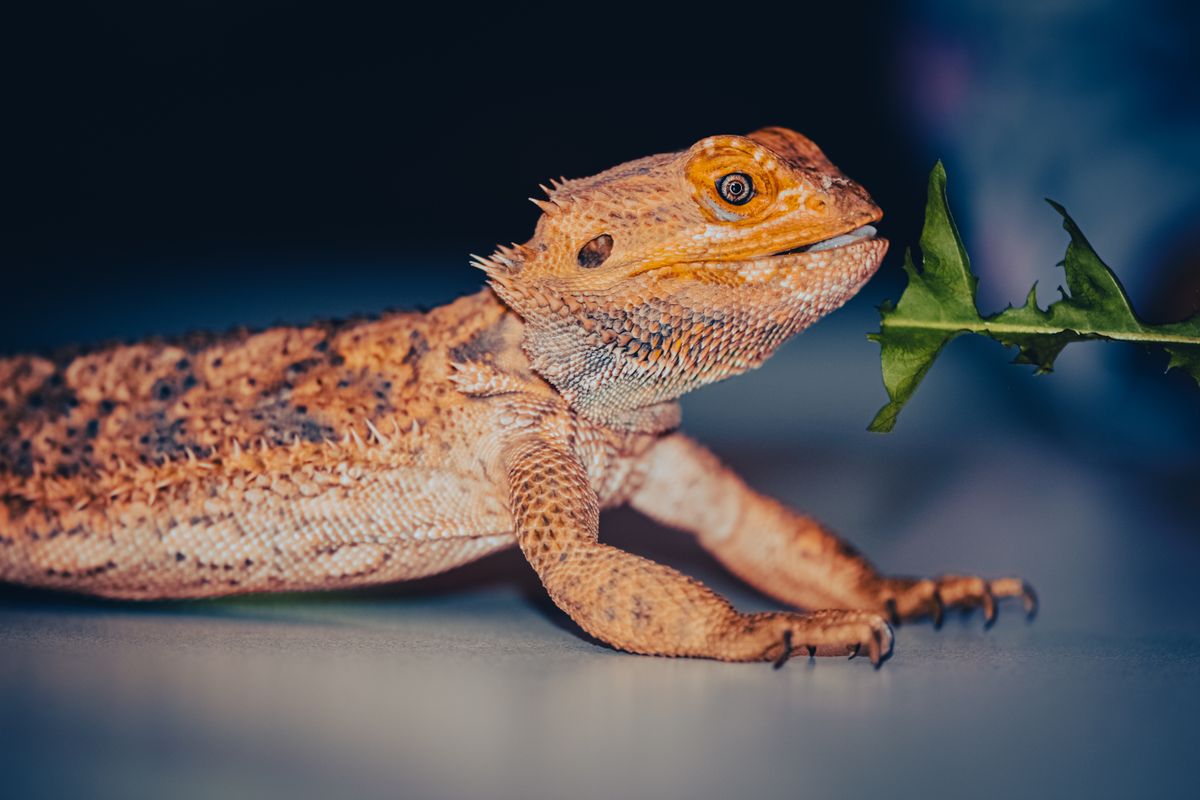
Bearded dragons are omnivores, but the balance of insects and plants changes a lot as they grow. Babies need lots of protein, while adults need mostly vegetables. Getting this right helps prevent obesity, metabolic bone disease and other problems. Here’s a complete bearded dragon diet guide by age.
Quick Answer: Baby bearded dragons eat mostly insects (about 70–80%) with some greens. Adults flip that ratio and eat mostly greens and vegetables (about 70–80%) with insects a few times a week. Dust insects with calcium, offer fresh greens daily and avoid toxic foods like avocado and fireflies.
Diet by Age
| Age | Insects vs. plants | Insect feedings |
|---|---|---|
| Babies (0–4 months) | About 70–80% insects | 2–3 times a day, as many as eaten in 10–15 minutes |
| Juveniles (4–12 months) | About 50/50, shifting toward plants | 1–2 times a day |
| Young adults (12–18 months) | About 30–50% insects | Once a day or every other day |
| Adults (18 months+) | About 20–30% insects | 2–3 times a week |
Fresh greens should be available every day at every age.
Best Feeder Insects
| Insect | Notes |
|---|---|
| Dubia roaches | Excellent staple; high protein, easy to keep |
| Black soldier fly larvae | Naturally high in calcium |
| Crickets | Good staple; remove uneaten crickets |
| Silkworms | Soft, nutritious, great for appetite |
| Hornworms | Hydrating treat |
| Superworms | Occasional; higher fat |
| Waxworms | Treat only; very fatty |
| Mealworms | Occasional; hard exoskeleton |
Insects should be no bigger than the space between your dragon’s eyes, to reduce choking and impaction risk.
Best Greens and Vegetables
Staple greens (feed often)
- Collard greens
- Mustard greens
- Turnip greens
- Dandelion greens (pesticide-free)
- Endive and escarole
- Squash, like butternut and acorn (shredded)
Occasional vegetables
- Bell peppers
- Carrots (shredded)
- Green beans
- Bok choy
- Kale (in moderation)
Fruits (treats only)
- Berries
- Mango
- Papaya
- Apple without seeds
Supplements
- Calcium: dust insects at most feedings for babies and juveniles, and several times a week for adults.
- Calcium with D3 or a multivitamin: usually once or twice a week, depending on your UVB setup and vet’s advice.
- Gut-loading: feed insects nutritious vegetables 24 hours before offering them.
UVB lighting is essential, too. See our bearded dragon lighting guide.
Foods to Avoid
| Food | Why |
|---|---|
| Fireflies (lightning bugs) | Highly toxic; can be fatal |
| Avocado | Toxic |
| Rhubarb | Toxic |
| Spinach, beet greens | High in oxalates that bind calcium |
| Iceberg lettuce | Very low nutrition |
| Wild-caught insects | May carry pesticides or parasites |
| Citrus | Too acidic |
| Onions, garlic | Harmful |
Water and Hydration
Many bearded dragons don’t drink from bowls. Provide a shallow water dish, mist greens before serving and offer occasional lukewarm baths. Signs of dehydration include sunken eyes and wrinkled skin.
Sample Day for an Adult
- Morning: salad of collards, squash and dandelion greens, lightly misted
- Afternoon: bask and digest
- Insect day (2–3 times a week): 10–15 dusted dubia roaches or black soldier fly larvae
Signs of a Healthy Diet
- Steady weight
- Bright eyes and alert behavior
- Normal, formed droppings with white urates
- Regular sheds
Watch for signs of metabolic bone disease, which affects bearded dragons too: weak limbs, tremors and a soft jaw.
When to Call Your Vet
Call a reptile vet if your bearded dragon:
- Stops eating for more than a week outside of brumation
- Has weak legs, tremors or a swollen jaw
- Is losing weight
- Strains to poop or hasn’t pooped in over a week
Frequently Asked Questions
Why won’t my bearded dragon eat greens?
Many dragons prefer insects. Offer greens in the morning before insects, try colorful vegetables on top, or hand-feed. Hunger often helps once insect feeding is reduced.
Can bearded dragons eat only vegetables?
Adults need some protein. A mostly plant diet with insects a few times a week is ideal.
How much should I feed an adult?
A salad roughly the size of their body daily, plus a set number of insects a few times a week. Adjust based on weight and body condition.
Can my bearded dragon be overweight?
Yes. Fat pads on the head, a wide belly and a thick tail base can signal obesity. Reduce fatty insects and increase greens.
Should I leave insects in the enclosure overnight?
No. Remove uneaten insects after feeding. Crickets especially can nibble on a sleeping dragon and cause stress or wounds.
Can bearded dragons eat flowers?
Some pesticide-free flowers, like hibiscus, dandelion flowers and nasturtiums, make colorful, safe additions to salads. Avoid flowers from florists, which are often treated with chemicals.
Do bearded dragons need water bowls?
Yes, offer a shallow dish of fresh water. Many dragons also get water from misted greens and baths.
This article is for general information only and isn’t a substitute for professional veterinary advice. If you’re worried about your pet’s health, contact your veterinarian or an emergency animal hospital.